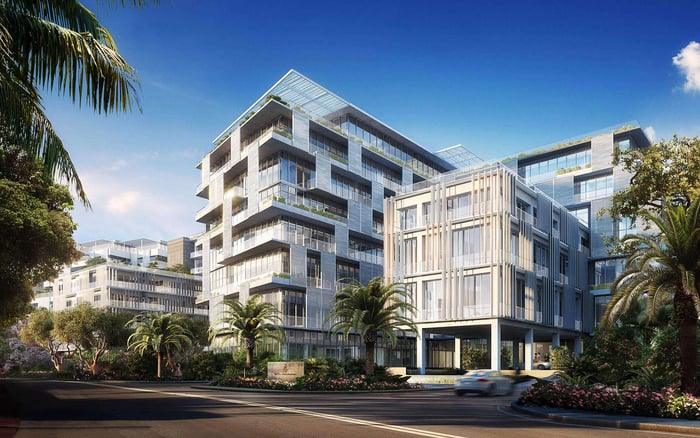
Private elevator-foyer entry can turn a condominium arrival into an extension of the home. At The Ritz-Carlton Residences® Miami Beach, buyers should assess that experience residence by residence, with particular attention to access control, guest movement and service circulation.
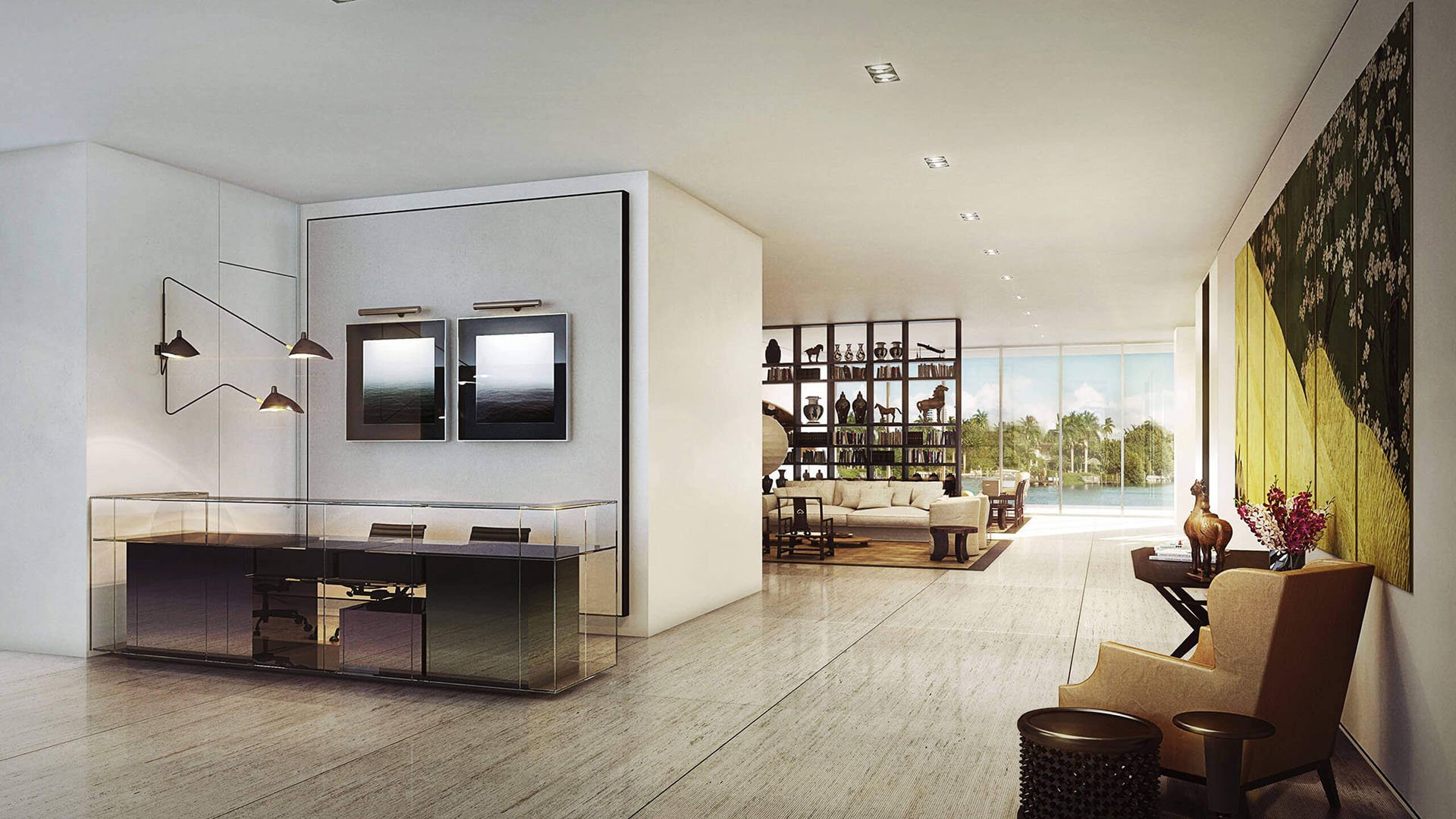
In a conventional condominium, the front door marks the beginning of private space. In a more considered vertical residence, privacy can begin sooner. A controlled elevator journey, followed by a residence-specific foyer or direct entry, shifts the home's emotional boundary. The trip upstairs no longer feels like passage through common circulation; it becomes part of the arrival.
That distinction is especially relevant at The Ritz-Carlton Residences® Miami Beach, a residential-only waterfront development at 4701 North Meridian Avenue. Designed by Italian architect Piero Lissoni, it comprises 111 waterfront condominiums and 15 stand-alone villas, with services managed by The Ritz-Carlton and no on-site hotel component.
For owners accustomed to a private house, elevator privacy can make condominium living feel less institutional. It limits the visible transition between staffed common areas and the residence while creating a more composed threshold for welcoming guests.
Residence 304 offers a useful, unit-specific example. Its layout includes a private elevator foyer, creating an intermediary space associated with the residence rather than a conventional shared hallway entrance. The home contains 2,766 square feet of interior space, 12-foot ceilings and a waterfront terrace spanning the apartment's full width. Unobstructed water views further reinforce the sense of openness after the enclosed vertical journey.
The sequence matters: elevator, private foyer, expansive interior, then water. Design and architecture work together, with circulation preparing the eye for scale and view. The foyer is not merely a security feature; it can serve as a spatial pause, much like an entry court or vestibule in a private estate.
The available details confirm this configuration for Residence 304, but they do not establish a universal elevator standard for every condominium in the development. Buyers should treat private entry as a residence-specific attribute to verify rather than assume that one floor plan represents the entire property.
The property's mix of condominiums and stand-alone villas presents two distinct models of privacy. Villas achieve separation through their individually defined residential form. Condominium homes rely more heavily on the design and operation of vertical access to create a similarly private rhythm.
An elevator foyer can narrow the experiential gap between the two formats. It cannot make a multifamily residence physically detached, but it can reduce exposure to shared corridors at the most personal point of arrival. For buyers who prioritize discretion, that may carry as much lifestyle significance as ceiling height, terrace dimensions or views.
Waterfront ownership adds practical context. Residents may move between the home, common amenities and outside engagements several times a day. A well-managed elevator sequence can make those transitions feel calm and consistent, preserving the property's residential character even when staff, guests or deliveries are active elsewhere.
Across South Florida, controlled vertical arrival has become an important expression of estate-like condominium living. At The Ritz-Carlton Residences® South Beach, private elevators with direct entry are specified for most residences. The concept aligns with the idea of a beach house in the sky, where owners move from the building's shared realm into the home with minimal visible circulation.
Key Biscayne offers another relevant model within the regional brand family: private, key-operated elevators lead to private entry foyers, while service elevators are separately identified. That separation underscores an important principle for sophisticated buyers: privacy depends not only on where the owner arrives, but also on how service functions are routed.
Buyers comparing island living at Oceana Key Biscayne with a South Beach address such as Apogee South Beach can apply the same analytical lens without presuming identical systems. The essential questions concern the specific residence, elevator bank and operating protocol-not simply the prestige of the address.
The phrase “private elevator” can describe several arrangements. An elevator may serve multiple residences but open into private foyers through credentialed floor access. Another may provide direct entry while sharing its cab with neighbors on different levels. A building may also separate resident and service elevators while allowing staff-controlled access at defined times.
A rigorous review should establish who can call the elevator, how destination floors are authorized and whether guests require resident approval. Buyers should determine whether the foyer is deeded, a limited common element or common area, and who maintains its finishes. They should also understand camera placement, emergency access and what happens during maintenance or an elevator outage.
Daily operations deserve equal scrutiny. Clarify how household staff, contractors, packages and catered events reach the residence. Ask whether deliveries use service circulation, whether move-ins follow a separate route and how management handles guest credentials. These details determine whether architectural privacy survives real-world use.
At The Ritz-Carlton Residences® Miami Beach, the best approach is precise and unit-specific. Review the floor plan, stand in the elevator foyer, follow the guest route and walk the service path. Luxury is felt in these transitions, especially when the system works quietly enough to disappear.
Does every condominium have a private elevator foyer? The available details confirm a private elevator foyer for Residence 304, not every condominium. Verify the configuration for the specific home under consideration.
What is the difference between direct entry and a private foyer? Direct entry describes how the elevator opens toward the residence, while a private foyer is a dedicated transition space before the interior.
Why does elevator privacy feel estate-like? It reduces dependence on a shared hallway at the front door, allowing the home's sense of privacy to begin earlier in the arrival sequence.
Is the property connected to an on-site hotel? No. It is a residential-only development with services managed by The Ritz-Carlton and no on-site hotel component.
How many residences are at the property? The development comprises 111 waterfront condominiums and 15 stand-alone villas.
What does Residence 304 demonstrate? It demonstrates a private elevator-foyer configuration paired with 2,766 interior square feet, 12-foot ceilings and a full-width waterfront terrace.
Do stand-alone villas offer the same arrival experience? Villas represent a separately defined ownership format, while condominium privacy depends more directly on elevator and corridor design.
What access-control questions should buyers ask? Ask about credentialing, floor authorization, guest approval, emergency access and whether the elevator cab serves other residences.
How should deliveries and staff access be evaluated? Confirm whether they use service or resident elevators, and review the building's procedures for packages, contractors and events.
Can another Ritz-Carlton property define this building's specifications? No. Regional examples offer useful context, but elevator arrangements must be verified independently for each property and residence.
If you'd like a private walkthrough and a curated shortlist, connect with MILLION.
If branded residences are on your mind — as a home or as an allocation — we would be glad to share what we are seeing, privately.
Begin a quiet conversation