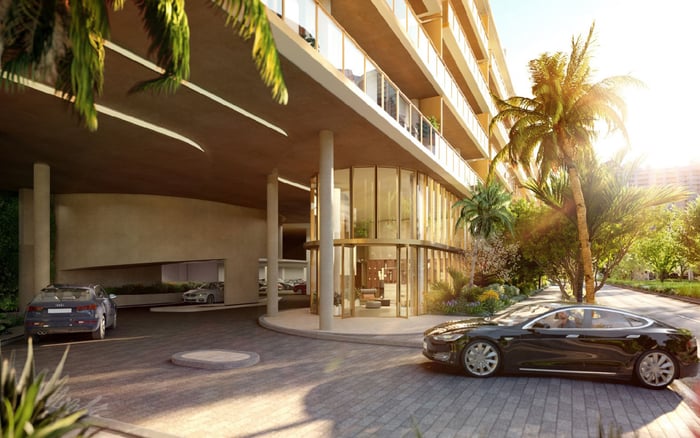
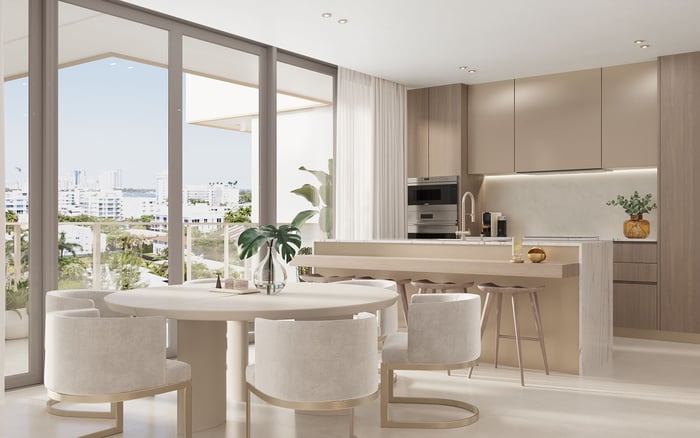
A buyer-focused guide to evaluating view-corridor risk at Aston Martin Residences Downtown Miami, from bay and river sight lines to documents, zoning review, privacy, light, and resale exposure.

At the top of the Downtown Miami condominium market, a view is not merely scenery. It is part of the residence’s emotional appeal, daily livability, and long-term value story. At Aston Martin Residences Downtown Miami, buyers may be weighing Biscayne Bay, Miami River, skyline, marina, or partial side views. Each can feel permanent from a finished residence, yet view-corridor risk deserves its own diligence before a contract is signed.
View-corridor risk means future buildings, infrastructure, or regulatory changes could partially or fully obstruct a view that appears open at the time of purchase. This is not a prediction that a specific obstruction is planned. It is a disciplined way to separate what is durable from what is simply available today.
For MILLION Buyer's Guides readers, the essential point is simple: do not ask whether the building has views. Ask what the exact unit sees, what land those sight lines cross, and what could plausibly change along the way.
The first question is deceptively basic: which view corridor is primary for the residence? Open bay, Miami River, Brickell skyline, Downtown skyline, marina, and partial side views all carry different risk profiles. A buyer should not accept a broad label such as “water view” without understanding whether the premium is tied to a wide bay exposure, a river angle, a narrow water slice, or an oblique skyline composition.
Ask for the view discussion by line and floor, not just by stack. A higher residence may see over conditions that matter to a lower one, while an oblique angle may be more sensitive to future massing than the main view directly ahead. In Downtown, a seemingly small shift in direction can change whether the view crosses water, a public right-of-way, an underbuilt parcel, or a neighboring tower field.
Also ask whether marketing renderings, sales-office view simulations, or photographs assume existing conditions or include known and proposed future development around the building. The goal is not to distrust presentation materials. It is to understand their assumptions.
Not every open view is equal. The most durable portions often rely on physical or civic gaps that are difficult to erase: water, public rights-of-way, parks, baywalks, or the geometry of the river. Those elements can create lasting breathing room within a dense urban market.
By contrast, a view that depends on today’s low-rise or mid-rise conditions may be more vulnerable. Ask whether the sight line crosses vacant, aging, underbuilt, or density-eligible parcels. Ask the broker to distinguish between legally protected views and de facto views that exist only because surrounding land has not yet been developed to its full potential.
Waterfront positioning can be powerful, but waterfront does not automatically mean every angle is insulated. Waterview premiums should be examined with the same precision as interior finishes or amenity access: where is the value coming from, and what could narrow it?
Buyers often focus on height, but view risk has both vertical and horizontal dimensions. Vertical risk asks whether a future structure could rise high enough to affect the specific residence. This is why line-by-line and floor-by-floor view studies matter. A 30th-floor concern may be different from a 50th-floor concern, even within the same exposure.
Horizontal risk is subtler. A new tower may not fully block the main composition, yet it can narrow a diagonal water angle, interrupt a skyline layer, or convert an expansive view into a framed aperture. For buyers drawn to the drama of Miami River and Brickell skyline views, this narrowing can matter almost as much as a full obstruction.
A careful review should include a parcel-by-parcel map showing the unit’s sight lines across neighboring land, current building heights, and plausible future massing. The map should identify what is protected by water or public space and what depends on private parcels remaining as they are.
A real-estate attorney should review whether purchase documents, disclosures, or condominium materials make no guarantee about future views. This is especially important when the view is central to the buyer’s valuation. A residence can be beautifully designed, impeccably serviced, and still have documents that place future view risk squarely on the buyer.
A second layer of diligence belongs with an independent zoning or planning consultant. Ask for a review of surrounding parcels, including as-of-right height, density, possible variances, air-rights transfers, and special approvals. A permit researcher or city planning inquiry can also help identify nearby development applications, zoning amendments, or infrastructure projects that could affect sight lines.
This is the same discipline a buyer might apply when comparing Waldorf Astoria Residences Downtown Miami, Casa Bella by B&B Italia Downtown Miami, or other high-rise opportunities nearby. The question is not which tower is more glamorous. The question is which residence has the clearest evidence behind its view premium.
Future development can affect more than the view itself. It may alter light, privacy, glare, nighttime visual noise, and perceived openness. A residence that still retains a water slice might feel materially different if its side exposure becomes a direct building-to-building condition.
Ask how resale value could be affected if today’s open view becomes a partial view, a narrower angle, or a more urban exposure. Some buyers will accept that risk in exchange for architecture, brand, amenities, or location. Others will place a premium on the most durable sight lines. Either choice can be rational, provided it is informed.
Higher floors may reduce certain obstruction risks, but they do not erase them. The correct question is whether paying more for elevation materially improves the risk profile or simply shifts the concern to future supertall or high-density scenarios.
View-corridor diligence is not unique to Aston Martin Residences. It is part of buying in a dynamic Downtown Miami and Brickell environment. A buyer evaluating Baccarat Residences Brickell or Una Residences Brickell should bring the same questions to bay, river, and skyline exposures.
The strongest buyers do not treat risk analysis as a reason to step back from a trophy residence. They use it to negotiate with clarity, choose the right line, select the right floor, and understand which part of the view is truly worth paying for. In a market where architecture, branding, and water proximity all compete for attention, the quietest diligence can become the most valuable luxury.
What is view-corridor risk? View-corridor risk is the possibility that future buildings, infrastructure, or regulatory changes could partially or fully obstruct a view that appears open today.
Should I ask about the exact view from my unit? Yes. Ask whether the primary corridor is open bay, Miami River, Brickell skyline, Downtown skyline, marina, or a partial side view.
Are higher floors always safer for views? Higher floors may reduce some obstruction risk, but they can still be affected by future supertall or high-density development scenarios.
What is the difference between vertical and horizontal risk? Vertical risk concerns whether future height could block the view, while horizontal risk concerns whether a new structure could narrow or frame an angle.
Can a view be valuable even if it is not legally protected? Yes, but a de facto view should be priced with caution because it may depend on neighboring parcels remaining underbuilt.
Who should review surrounding parcels? An independent zoning or planning consultant can review as-of-right height, density, variances, air-rights transfers, and special approvals.
Should my attorney review view language in the documents? Yes. Ask whether disclosures or condominium materials state that future views are not guaranteed.
Can future development affect more than the view? Yes. It can also affect light, privacy, glare, nighttime visual noise, and the residence’s sense of openness.
How should I evaluate resale risk? Ask how value could change if an open view becomes partial, narrowed, or more directly exposed to neighboring buildings.
Is this diligence only for Aston Martin Residences? No. The same approach is useful across Downtown and Brickell luxury residences where views are a meaningful part of pricing.
To compare the best-fit options with clarity, connect with MILLION.
If branded residences are on your mind — as a home or as an allocation — we would be glad to share what we are seeing, privately.
Begin a quiet conversation