A discreet buyer’s guide to evaluating neighboring development risk in Coconut Grove, from adjacent parcels and zoning questions to view protection, construction disruption, resale sensitivity, and contract strategy.
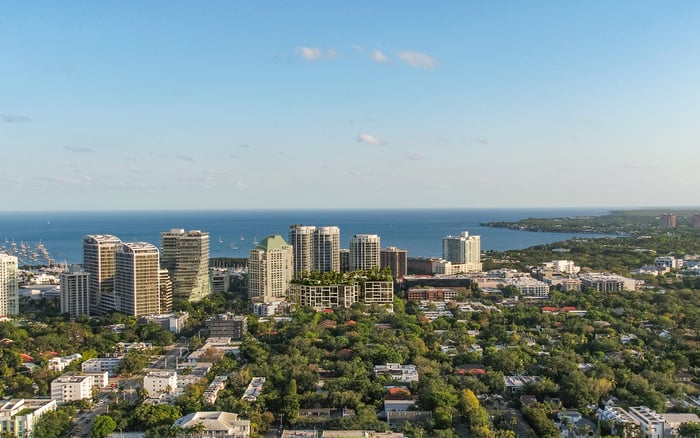
In Coconut Grove, the most valuable amenity is often not inside the residence. It may be filtered light across a garden wall, the quiet of a low-scale street, a glimpse of Biscayne Bay, or the confidence that the home next door will remain visually compatible. For many Coconut Grove buyers, neighboring development risk is not a technical footnote. It is central to pricing, daily enjoyment, and exit strategy.
The first question is direct: what land around the property can change? Ask your advisor to map the parcels on each side, behind the property, and across the street. For a condominium, include nearby vacant lots, older low-rise buildings, surface parking, commercial sites, religious or institutional properties, and any assemblage that could be combined into a larger site. For a single-family home, study oversized lots, corner parcels, alleys, and any neighboring property where the existing structure appears underbuilt relative to the land.
This inquiry is especially relevant when comparing boutique Grove projects. A buyer considering Arbor Coconut Grove may evaluate street character differently from a buyer focused on a larger amenity-driven residence. The point is not to avoid change. It is to understand which parts of the surrounding environment are permanent, which are probable, and which are merely assumed.
A manicured neighboring home can feel reassuring, but luxury due diligence should look past current appearance. Ask what the neighboring parcel is permitted to become under existing rules. Could it be enlarged, subdivided, redeveloped, or combined with another parcel? Are there height, setback, lot coverage, parking, landscape, or tree-related constraints that materially shape what could be built?
Do not rely on verbal comfort that a site is “unlikely” to change. In prime neighborhoods, land value can alter incentives quickly. A home that looks perfectly settled may be owned by a long-term family, an investor, or a future seller with no attachment to the current structure. If the existing improvement is modest relative to the land, assume a future owner may explore redevelopment.
For condominium buyers, ask whether any nearby parcel has an active application, pending hearing, variance request, or visible predevelopment activity. For house buyers, ask whether adjacent owners have recently renovated, listed, transferred ownership, or cleared vegetation. None of these factors alone determines risk, but together they create a portrait of momentum.
Coconut Grove commands a premium because it offers a softer, more residential expression of Miami luxury. Mature landscaping, textured streets, and privacy often carry as much weight as square footage. That makes neighboring development risk highly personal. A technically compliant building next door can still change the way a terrace feels at breakfast or how a primary suite receives afternoon light.
Buyers considering Four Seasons Residences Coconut Grove should ask about potential changes in view corridors, adjacent massing, approach routes, and the long-term character of the immediate blocks. In a low-rise or boutique setting such as Opus Coconut Grove, the questions may become even more intimate: what is outside the bedroom window, what faces the main terrace, and how could the neighboring roofline evolve?
Ask for a clear distinction between protected features and desirable but unprotected conditions. A garden view is not necessarily protected. A line of trees may not be permanent. A quiet neighboring lot may one day host construction staging. Treat these qualities as part of the valuation conversation, not as informal guarantees.
Even if the finished development next door is elegant, the construction phase can affect daily life. Ask what the likely truck access routes would be, whether staging could occur near the property, and how noise, dust, vibration, lighting, and street closures might influence use. For seasonal owners, the issue may be timing. For full-time residents, it may be the cumulative effect on sleep, entertaining, work, pets, and staff routines.
This is not only about inconvenience. Construction can affect leasing assumptions, resale presentation, and the willingness of future buyers to pay a premium during an active build cycle. If you plan to own for only a few years, a neighboring project that breaks ground after closing could overlap directly with your resale window.
The more bespoke the purchase, the more important this becomes. At The Well Coconut Grove, a buyer may be focused on wellness, calm, and an elevated day-to-day rhythm. If adjacent construction could compromise that experience, it should be analyzed before contract, not rationalized afterward.
Development risk rarely produces a perfect answer. The goal is to price uncertainty intelligently. During the diligence period, ask your real estate attorney, land-use professional, architect, or surveyor the questions a sales tour will not answer. What is legally permissible next door? What approvals would be required? What rights, easements, shared walls, drainage patterns, or access conditions could matter? Are there recorded restrictions that limit or shape future development?
For condominiums, review association materials with an eye toward neighboring parcels, not just the building you are buying. Ask management whether adjacent owners, developers, or public agencies have communicated about future work. Ask whether the association has taken positions on nearby applications or prepared for construction impacts.
For single-family homes, request a current survey and examine boundaries, fences, encroachments, tree locations, utility easements, and any condition that could become contentious if a neighbor redevelops. If a property’s appeal depends on a certain feeling of seclusion, consider whether new landscaping, glazing, acoustic treatment, or design changes could mitigate future exposure.
Not all neighboring development risk is negative. Thoughtful nearby investment can reinforce a luxury district, improve streetscape quality, and validate a buyer’s decision to enter the market. A refined project such as Ziggurat Coconut Grove may prompt buyers to think less about avoiding change and more about aligning with the right form of change.
The key is symmetry. If you are paying a premium for privacy, view, quiet, or a rare low-scale setting, the price should reflect the durability of those attributes. If those attributes are vulnerable, the purchase may still be right, but your offer, contingency language, and renovation budget should acknowledge that vulnerability.
Coconut Grove rewards buyers who see beyond finishes. The best residences feel effortless, yet the strongest acquisitions are rarely casual. Ask direct questions early, insist on specific answers, and treat neighboring land as part of the property’s true luxury profile.
What is neighboring development risk in luxury real estate? It is the possibility that nearby parcels may be built, expanded, renovated, or repositioned in ways that affect privacy, views, noise, access, or resale value.
Why does it matter so much in Coconut Grove? Coconut Grove’s appeal is closely tied to scale, landscaping, quiet streets, and a residential atmosphere, so nearby change can influence the ownership experience.
Should I worry if the neighboring property looks well maintained? Yes. Appearance alone does not determine future use. A well-kept property may still be sold, assembled, expanded, or redeveloped by a future owner.
What should I ask before making an offer? Ask what nearby land is currently allowed to become, whether approvals are pending, and whether any easements, setbacks, or restrictions shape future development.
Can a view or garden outlook be protected? Sometimes, but many desirable outlooks are not legally protected. Buyers should confirm whether a valued view is enforceable or simply an existing condition.
How can construction next door affect a luxury purchase? Construction may bring noise, dust, vibration, access interruptions, and resale challenges, particularly if it overlaps with your planned ownership period.
Who should review development risk for me? A real estate attorney, land-use professional, architect, surveyor, and experienced local advisor can each identify different issues before you remove contingencies.
Is neighboring development always bad for value? No. High-quality nearby investment can strengthen an area, but buyers should distinguish beneficial neighborhood evolution from risks that dilute a specific property premium.
Can I negotiate because of neighboring development risk? Yes, if the risk is material. It can support price adjustments, protective contingency language, or a renovation budget for screening, glazing, or acoustic improvements.
What is the most important habit for Grove buyers? Look beyond the residence itself and evaluate the surrounding parcels with the same discipline you apply to finishes, floor plan, amenities, and pricing.
For a discreet conversation and a curated building-by-building shortlist, connect with MILLION.
If branded residences are on your mind — as a home or as an allocation — we would be glad to share what we are seeing, privately.
Begin a quiet conversation