A discreet buyer’s guide to assessing neighboring development risk before purchasing at Tula Residences North Bay Village, with practical questions on views, construction, traffic, entitlements, and long-term value.
Buying at Tula Residences North Bay Village is not only a matter of floor plan, finish level, amenity preference, and price. In a waterfront market that continues to evolve, the more sophisticated question is what may happen around the building after closing. Neighboring development risk is the possibility that adjacent or nearby parcels, roadways, utilities, public spaces, or waterfront edges could change in ways that affect light, views, noise, access, privacy, or resale perception.
For luxury buyers, this is less about fear than precision. A residence can be beautifully designed and still warrant careful study of its surroundings. The most valuable diligence often begins with a simple shift in language: do not ask only what the view is today; ask what could legally, physically, and economically stand in that view tomorrow.
The first conversation should focus on the immediate neighbors. Ask your advisor to identify the parcels that matter most to the residence you are considering: directly across the street, along the same waterfront edge, behind the building, and along primary access routes. For each parcel, ask whether it is improved, underutilized, assembled with adjacent lots, or positioned in a way that might invite redevelopment.
The strongest questions are specific. What is the current use next door? Is there vacant land nearby? Are there older, low-scale structures that could be replaced? Are multiple properties under common ownership or seemingly being assembled? Has any public filing, hearing notice, site activity, fencing, demolition work, or utility relocation suggested future change?
This is also where comparisons become useful. A buyer studying Continuum Club & Residences North Bay Village, Shoma Bay North Bay Village, and Tula should not merely compare amenity decks or interiors. The more disciplined comparison asks how each address sits within its immediate development context.
A proposed project is visible. Entitlement capacity is subtler. Even when there is no announced development next door, the zoning and land-use framework may allow a future owner to pursue greater density, height, or a different use. Buyers should ask for a plain-English explanation of what could be built on surrounding parcels under current rules, and what would require additional approvals.
Key questions include: What height, massing, setbacks, and uses are permitted nearby? Are variances or waivers common in the area? Would a neighboring property need public approvals before changing significantly? How much notice would residents realistically have? Could a future structure affect the unit’s primary view corridor, side view, morning light, afternoon shade, or perceived openness from the terrace?
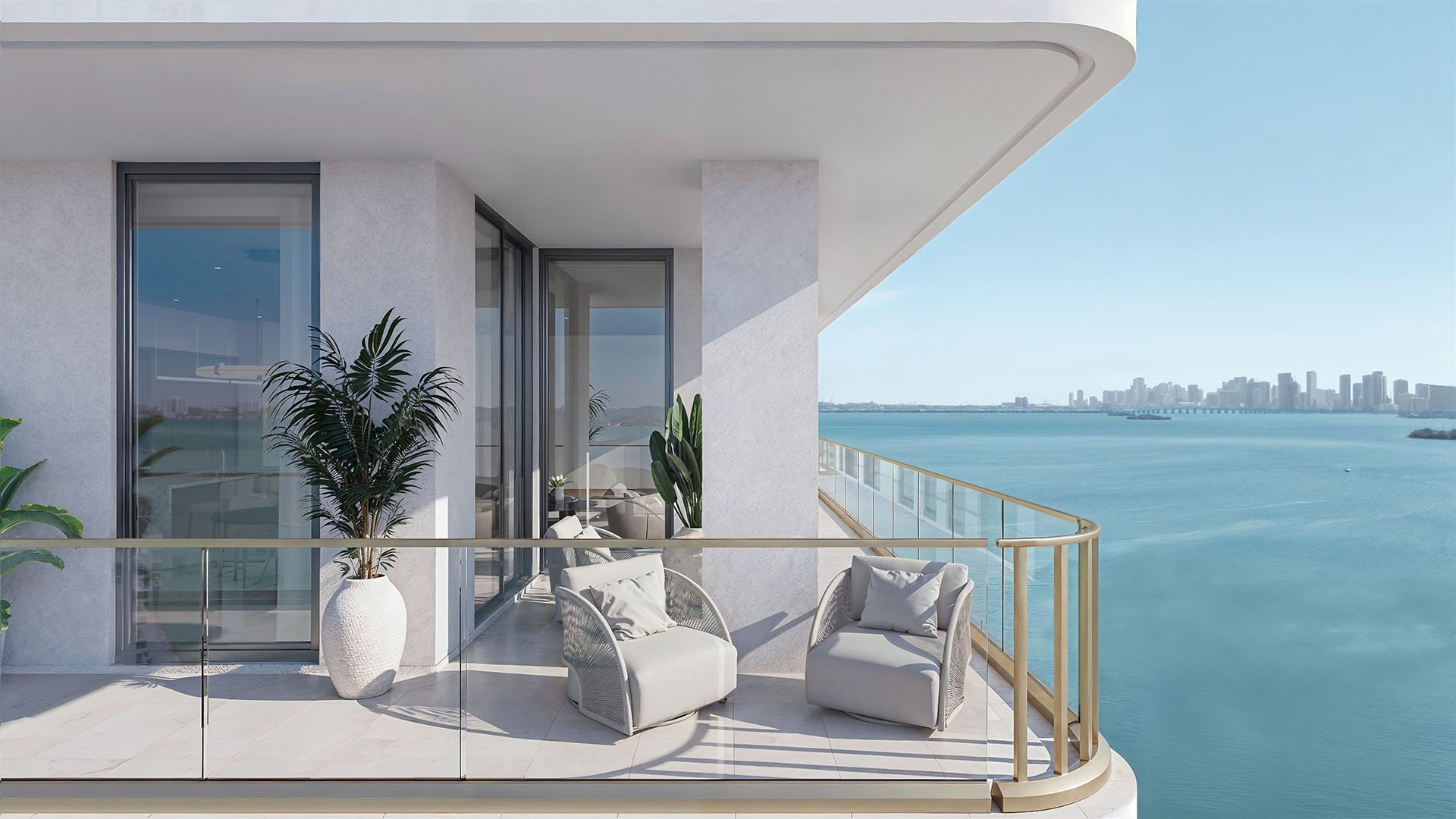
This is especially important for residences marketed around water-view positioning. A water view can be direct, angled, layered, or partially framed. Each category carries a different risk profile. Buyers should ask for a view study from the actual floor and line of sight whenever possible, not only renderings or broad verbal assurances.
Neighboring development risk is not limited to the finished building next door. The construction period itself can alter the living experience. Ask what streets construction vehicles would likely use, where staging might occur, whether cranes could affect visual privacy, and how long major work could reasonably last if a nearby site begins redevelopment.
Noise, dust, traffic, temporary lane closures, delivery rerouting, and utility work can matter more to daily life than a future skyline change. For seasonal owners, the question becomes timing. For full-time residents, it becomes routine. For investors, it becomes leaseability and tenant satisfaction. None of these concerns necessarily make a purchase unattractive, but they should be priced, understood, and documented before commitment.
Ask whether the building’s own management and association documents anticipate nearby construction. Are there protocols for access, security, service vehicles, and resident communication? Does the purchase contract address delays, adjacent work, or changes in surrounding conditions? Your attorney should review those provisions closely.
Luxury value is often embedded in subtleties: a protected corner, a quiet exposure, an open terrace, a particular sunrise, or a sense of separation from neighboring windows. Before buying, isolate the premium you are paying for those qualities and test whether they are durable.
Ask which exposure carries the greatest development sensitivity. A residence with a spectacular principal view may still have a vulnerable secondary exposure. A lower floor may have a different privacy profile than a higher floor. A corner unit may depend on the long-term character of two separate corridors. A terrace may feel expansive today because the adjacent parcel is low-scale, not because the openness is legally protected.
Buyers comparing Pagani North Bay Village with other North Bay Village opportunities should use the same discipline. Brand, architecture, and amenity programming are important, but the unit’s relationship to its neighbors is what determines how the home will feel at 8 a.m., at sunset, and during a future resale showing.
The most elegant residence can be diminished by poor arrival. Ask how future nearby development could affect ingress, egress, valet flow, ride-share pickup, guest access, marina access if applicable, and pedestrian circulation. If several projects in the area are delivered over overlapping timelines, temporary congestion can become a meaningful quality-of-life variable.
Buyers should also ask about streetscape improvements, sidewalks, lighting, curb cuts, utility upgrades, drainage work, and public-realm changes. These items can be positive in the long run while still creating temporary disruption. The question is not whether change is good or bad. The question is whether the buyer understands its sequence, likely impact, and relationship to the specific residence under consideration.
For personal organization, some buyers tag their diligence folders with practical labels such as North-bay-village, New-construction, Waterview, and Investment. The label matters less than the habit behind it: every assumption should have a place, every risk should have an owner, and every material question should be answered before contract deadlines pass.
Once neighboring development risk is understood, it can be handled intelligently. It may affect which line you choose, whether you prefer a higher floor, how you value a view premium, what contingencies you request, or how aggressively you negotiate. It may also confirm that a particular residence is the right fit because its exposure, elevation, and orientation feel resilient.
Ask your advisor to summarize the three most important neighboring risks in writing. Then ask for the three best mitigants. A mature acquisition conversation should include both. If the only narrative is upside, the diligence is incomplete. If the only narrative is risk, the opportunity may be misunderstood.
In South Florida’s ultra-premium market, the best buyers are not pessimists. They are prepared. At Tula Residences North Bay Village, the right question is not simply whether you love the residence. It is whether you understand the neighborhood’s possible next chapter well enough to own with confidence.
What is neighboring development risk? It is the possibility that nearby parcels, roads, utilities, or public spaces could change in ways that affect views, privacy, noise, access, or resale perception.
Should I avoid a building if nearby sites may redevelop? Not necessarily. Redevelopment can enhance an area, but buyers should understand timing, scale, exposure, and unit-specific impact before committing.
What is the first question to ask before buying at Tula? Ask which nearby parcels could most directly affect the unit’s view, light, privacy, and arrival experience.
Are renderings enough to evaluate view risk? No. Renderings are useful, but buyers should request unit-level sightline analysis and discuss what surrounding parcels may allow in the future.
Can a higher floor reduce neighboring development risk? Often it can, but not always. Orientation, distance, permitted heights nearby, and the specific view corridor matter just as much.
What documents should my attorney review? The purchase contract, association documents, disclosure materials, easements, access provisions, and any language addressing surrounding conditions should be reviewed.
Does construction nearby affect resale value? It can affect showing conditions and buyer perception in the short term, especially if noise, access, or view uncertainty is material.
How should investors think about this risk? Investors should consider tenant demand, lease interruptions, renewal comfort, and whether temporary disruption could affect rental performance.
Is waterfront property always protected from future obstruction? No. Waterfront position can be valuable, but side views, angled views, and neighboring exposures still require careful diligence.
What is the best way to shortlist comparable options for touring? Start with location fit, delivery status, and daily lifestyle priorities, then compare stacks and elevations to validate views and privacy.
To compare the best-fit options with clarity, connect with MILLION.
If branded residences are on your mind — as a home or as an allocation — we would be glad to share what we are seeing, privately.
Begin a quiet conversation