A discreet buyer’s guide to evaluating hotel-related traffic, valet flow, ride-share management, resident access, and long-term livability before purchasing luxury real estate in West Palm Beach.
In luxury real estate, traffic is rarely glamorous. Yet in West Palm Beach, where residential addresses, hospitality brands, private clubs, restaurants, waterfront drives, and cultural destinations can sit in close conversation, traffic management belongs near the top of a buyer’s diligence list. The question is not simply whether a residence is beautiful. It is whether arriving home remains calm when hotel guests, ride-share vehicles, valets, service vans, and residents all converge.
For a buyer considering a primary residence, pied-à-terre, or investment property, hotel traffic is a lifestyle issue. It affects privacy, time, noise, lobby serenity, garage access, staff efficiency, and ultimately resale confidence. The best buildings do not leave circulation to chance. They choreograph it through dedicated lanes, clear operational rules, trained personnel, and design choices that keep the residential experience distinct.
This is particularly relevant when reviewing West Palm Beach opportunities such as Alba West Palm Beach, Mr. C Residences West Palm Beach, Forté on Flagler West Palm Beach, and The Ritz-Carlton Residences® West Palm Beach. Each buyer should evaluate not only floor plans and views, but the exact path from street to residence, especially if nearby hospitality activity may influence daily movement.
Begin with the simplest question: where does every vehicle go? Ask the sales team, property manager, or developer representative to walk you through a typical arrival sequence for hotel guests, residents, private drivers, ride-share vehicles, deliveries, moving trucks, and emergency access. Do not accept a broad statement that traffic will be “managed.” Ask for the path.
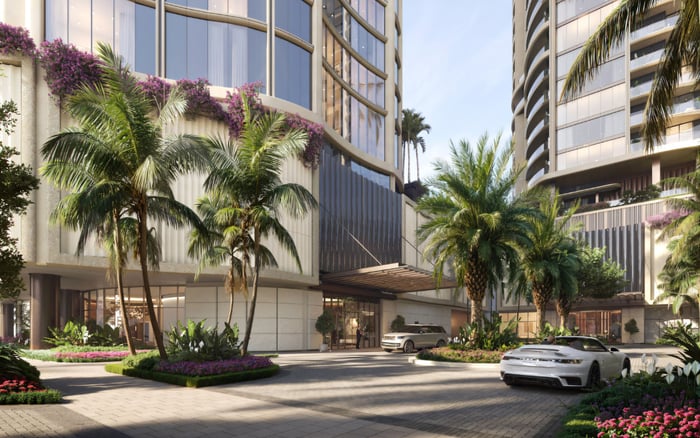
A well-resolved plan should distinguish among drop-off, waiting, valet staging, garage entry, loading, and departure. The most important detail is often not the porte cochère itself, but the queue. If cars stack in the wrong place, even a beautiful entry can become frustrating. Ask whether hotel guests have a dedicated arrival zone, whether ride-share drivers are directed to a specific curb location, and whether residents can bypass hospitality-related congestion during busy periods.
For new-construction purchases, request the latest site plan and any operational notes available to buyers. For completed or near-completed buildings, visit at different times of day. A single weekday tour can flatter almost any address. The better test is a weekend evening, a holiday week, or a period when nearby dining and entertainment uses are active.
The central principle is separation. Luxury residential traffic should not feel like hotel traffic. Ask whether residents have a private garage entrance, a resident-only valet protocol, a dedicated elevator bank, or protected access from parking to lobby. Even when a project is not a condo-hotel, nearby hotel operations can still shape the curb environment. A calm resident pathway is therefore essential.
Buyers should also ask how guests of residents are handled. Are they treated like hotel visitors, or is there a distinct residential guest protocol? Can a resident’s driver wait without joining a general valet queue? Is there a private call-down system for cars? How are house staff, security details, nurses, chefs, and family-office personnel accommodated when a residence is actively staffed?
The answers reveal the building’s true standard of service. In ultra-premium property, privacy is not only visual. It is operational. A resident should not have to negotiate with hotel arrivals to reach the garage, meet a driver, receive a delivery, or welcome a guest.
Traffic planning is most revealing at the edges. Ask the team to describe peak conditions: weekend evenings, holiday periods, charity events, restaurant openings, private parties, seasonal occupancy, and weather events that push more vehicles into covered arrival areas. The question is not whether these moments will happen, but whether the building has a plan for them.
A serious traffic plan should identify who controls the curb, how many staff members are deployed, when additional valet personnel are added, and what happens if vehicles exceed the expected holding area. Ask whether residents receive priority during peak operations. Ask who has authority to redirect vehicles if a queue develops. Ask how ride-share drivers are prevented from lingering in resident lanes.
For buyers comparing Palm Beach and West Palm Beach lifestyles, the distinction often comes down to rhythm. One buyer may prize proximity to restaurants and hotels, while another wants a quieter arrival sequence above all else. Neither preference is wrong. The mistake is failing to define which environment matches your daily life before signing.
Valet service can either elevate a building or complicate it. Ask whether valet is mandatory or optional, where vehicles are stored, how keys are controlled, and whether residents can self-park without passing through hotel-related operations. If you employ a driver, ask where that driver may wait. If you frequently host, ask how multiple guest arrivals are managed.
Deliveries deserve equal attention. Luxury living generates a wide range of service traffic, including groceries, florals, wardrobe deliveries, wine, art handling, catering, maintenance, and moving services. Ask whether loading docks are shared with hospitality operations. Ask whether delivery hours are restricted. Ask how oversized items are received without disturbing the lobby or blocking resident access.
Ride-share traffic is another modern pressure point. A five-star arrival court can lose its composure if drivers stop wherever their apps direct them. Ask whether the building has geofenced pick-up instructions, signage, staff direction, or a designated ride-share zone. The details may sound mundane, but they determine whether the building feels orderly at 8 p.m. on a busy evening.
Operational promises should be reflected in documents, rules, budgets, or management practices. Ask your counsel to review provisions related to parking, valet, loading, commercial use, hotel operations, easements, shared facilities, cost allocations, security, and access control. If the residence shares any element with hospitality or retail uses, understand who pays for what and who has decision-making authority.
Also ask how future changes are approved. A building may open with generous staffing and a quiet arrival plan, but the governing documents matter if operations evolve. Can the association modify valet rules? Can commercial operators change delivery windows? Are residential owners protected if hospitality demand increases? These questions are not adversarial. They are part of sophisticated ownership.
If purchasing for investment, focus on consistency. A residence that feels effortless to access is easier to enjoy, easier to lend to family, and easier to position for a future buyer. Traffic management may not appear on a glossy rendering, but it shapes the daily memory of the address.
Views, finishes, amenities, and brand prestige can dominate the first visit. Before committing, walk the arrival sequence slowly. Enter as a resident would. Enter as a guest would. Imagine arriving with luggage, children, pets, a private driver, or a dinner party. Then imagine the same sequence during rain, a crowded evening, or a high-season weekend.
Ask to see the garage entrance, service entrance, loading area, valet desk, lobby connection, elevator route, and any shared curb zones. Listen as much as you look. Traffic management has a sound: engines idling, doors closing, staff radios, reversing alerts, and conversations at the curb. The most elegant residences reduce these interruptions through planning.
In the end, the right West Palm Beach residence should make movement feel invisible. The goal is not to avoid urban energy entirely. It is to ensure that the building absorbs that energy before it reaches your private life.
Why should hotel traffic matter to a luxury condo buyer? It can affect privacy, arrival time, noise, valet efficiency, garage access, and the overall calm of the residential experience.
What is the first traffic question I should ask? Ask where hotel guests, residents, ride-share vehicles, deliveries, and service vehicles enter, wait, and exit.
Should residents have a separate entrance from hotel guests? Ideally, yes. A distinct residential path helps preserve privacy and prevents hospitality activity from defining daily life.
How can I evaluate traffic before a building is completed? Review site plans, operating protocols, parking documents, loading plans, and any available management rules with your advisor and counsel.
When should I visit a completed building to test traffic? Visit during different conditions, including weekday mornings, weekend evenings, rainy periods, and high-activity local moments.
Is valet always a positive feature? Not automatically. Valet quality depends on staffing, storage logistics, queue control, key management, and resident priority.
What should I ask about deliveries? Ask whether loading areas are shared, whether delivery hours are restricted, and how oversized or frequent deliveries are handled.
Can hotel traffic affect resale value? It can influence buyer perception. A residence with calm, reliable access is generally easier to understand and appreciate.
Should my attorney review traffic-related documents? Yes. Parking rights, shared facilities, easements, valet rules, and cost allocations should be reviewed before contract deadlines.
What is the best way to shortlist comparable options for touring? Start with location fit, delivery status, and daily lifestyle priorities, then compare stacks and elevations to validate views and privacy.
To compare the best-fit options with clarity, connect with MILLION.
If branded residences are on your mind — as a home or as an allocation — we would be glad to share what we are seeing, privately.
Begin a quiet conversation