A buyer-focused guide to evaluating hotel traffic management, valet circulation, rideshare activity, loading operations, event surges, and residential privacy before purchasing in Downtown Miami.
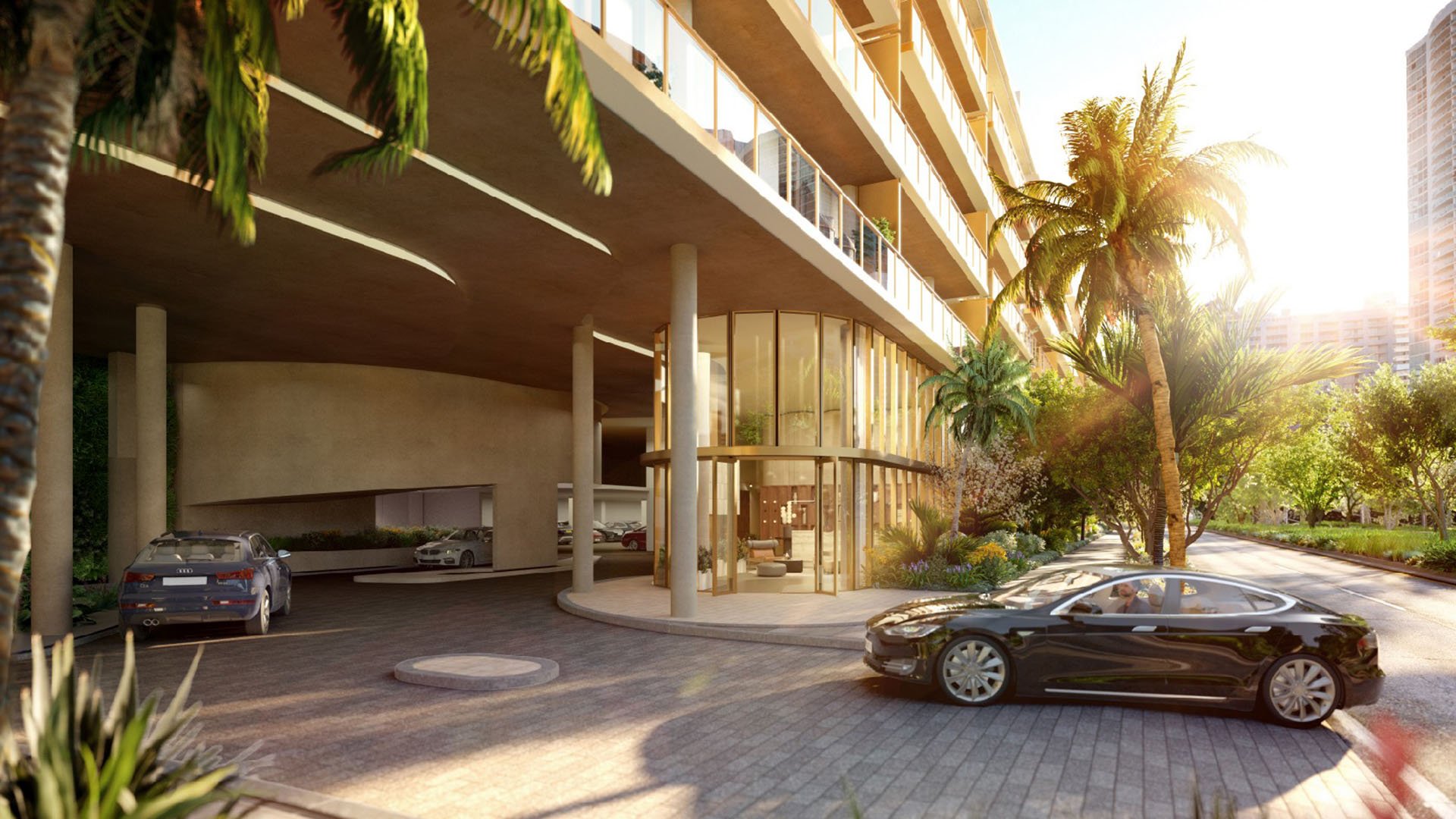
In Downtown Miami, the arrival sequence is part of the residence. A private elevator, a gracious lobby, and a serene porte cochère can lose their effect if the ground plane is dominated by hotel valet queues, rideshare clustering, delivery vans, or event-night congestion. For buyers considering luxury real estate near a hospitality component, traffic management is not a minor operational detail. It is a daily lifestyle question, a privacy question, and, in many cases, a long-term value question.
This is especially relevant as mixed-use towers, branded residences, and hotel-residence concepts continue to shape the urban luxury conversation. A buyer comparing Waldorf Astoria Residences Downtown Miami with other skyline addresses should look beyond finishes and amenities to the choreography of arrival: who enters where, who waits where, who supervises curbside activity, and what happens when the building is under pressure.
The point is not to avoid hotel energy. For many buyers, hospitality programming, restaurants, lounges, and service culture are precisely the attraction. The question is whether that energy is intelligently contained so the residential experience remains composed.
Begin with the site plan. Ask for a clear explanation of vehicular circulation, pedestrian access, service access, and emergency access. The answer should not be vague. In a well-managed building, there should be a practical distinction between the hotel guest journey and the resident journey, even if both exist within a shared architectural envelope.
Key questions include: Is there a separate residential entrance? Does the resident valet operate independently from the hotel valet? Are there separate elevator banks or controlled-access transitions? Where do hotel guests wait for cars? Where do residents wait for cars? Where are rideshare vehicles directed? If the answer is “the staff handles it,” ask how staff handles it on a full weekend evening, during rain, or when several arrivals occur at once.
For buyers studying Downtown Miami towers such as Aston Martin Residences Downtown Miami, the practical test is simple: imagine arriving home at the busiest possible moment. The building should still feel residential, not improvised.
Luxury buyers often ask about valet availability, but the sharper question is valet discipline. Capacity matters, yet the operating rules matter more. A hotel may generate short-stay arrivals, restaurant visitors, lounge patrons, and event traffic. Residents, by contrast, expect recognition, predictability, and speed without the feeling of competing with transient demand.
Ask whether hotel and residential valet teams are separately staffed, separately staged, or separately prioritized. Ask how keys are tracked, how resident vehicles are identified, and whether residential vehicles have preferential retrieval procedures. If a building uses a shared valet platform, ask what contractual standards preserve the residential service level.
It is also worth asking about curbside queuing. A graceful entrance can be compromised by unmanaged stacking, double parking, or vehicles waiting in informal lines. Buyers should understand whether the building has a defined overflow plan and whether that plan has authority behind it.
Rideshare is often the most visible test of traffic management. Hotel guests may arrive without knowing the property, restaurant patrons may summon cars from the nearest curb, and drivers may pause wherever the app directs them. Without a clear pickup and drop-off protocol, the front door can become a cluster point.
Ask whether rideshare pickup is designated, marked, staffed, and separated from the residential arrival path. Ask whether the building can adjust routing during high-demand periods. Ask how the staff communicates with drivers who stop in the wrong place. The most polished buildings make this feel effortless, but that ease is usually the result of rules, training, and repetition.
This applies not only to the core of Downtown Miami but also to nearby Brickell, where hospitality, dining, office, and residential life often overlap. Buyers comparing 888 Brickell by Dolce & Gabbana or Baccarat Residences Brickell should consider whether the building’s curbside experience can remain elegant when the neighborhood is most active.
A building’s luxury is often protected by what residents never see. Loading docks, service corridors, package rooms, catering access, waste removal, and staff circulation all influence the daily quiet of the property. When a hotel is part of the composition, these flows can become more complex.
Ask where hotel deliveries enter, where residential deliveries enter, and whether the same dock serves both. Ask about hours of operation for major deliveries, move-ins, event setup, linen service, food and beverage deliveries, and maintenance access. If back-of-house movement touches residential areas, ask what physical or operational separation exists.
For a condo-hotel or hotel-adjacent residence, this is not an abstract matter. Poorly separated service logistics can create noise, odors, elevator delays, and a diminished sense of privacy. The most desirable answer is a system that feels almost invisible to residents because it was anticipated from the beginning.
Every building can perform on a quiet Tuesday. The real question is how it performs during a private event, restaurant opening, holiday weekend, cultural evening, or heavy check-in period. Event traffic is where management plans either prove their sophistication or expose their limits.
Ask whether the hotel operator must notify the residential association about events that may affect circulation. Ask whether there are caps, staffing requirements, security plans, valet reinforcements, or dedicated traffic marshals. Ask whether resident access is protected contractually or merely by custom.
The ideal response is not a promise that events will never be noticeable. In a vibrant urban location, that is unrealistic. The ideal response is a credible operating plan that keeps residents moving, preserves discretion, and prevents hotel programming from overwhelming the residential threshold.
Even the best-designed entrance depends on governance. Buyers should review the relationship between the condominium association, hotel operator, master association, and any shared facilities structure. The most important questions concern authority: who sets traffic rules, who pays for staffing, who enforces violations, and who can modify the plan over time.
Ask whether residential owners have a formal voice in curb management, valet standards, security protocols, and shared-area operations. Ask how disputes are resolved if hotel revenue goals conflict with residential calm. Ask whether budgets clearly separate hotel expenses from residential expenses where appropriate.
This is where a sophisticated buyer’s counsel and property advisor become indispensable. Architectural renderings may show serenity, but governing documents determine whether serenity is enforceable.
A midday tour can be beautiful and incomplete. If traffic management is central to your decision, visit during multiple conditions: weekday rush, weekend evening, restaurant peak, hotel check-in window, and a rainy period if possible. Watch the curb. Watch the staff. Watch whether residents are recognized quickly and whether guests drift into residential zones.
For buyers reviewing Casa Bella by B&B Italia Downtown Miami alongside other urban luxury options, this practical observation can be as revealing as a model residence. The building’s lifestyle promise should be visible not only in amenity renderings, but in the calmness of ordinary arrival.
Before signing, ask for written clarity on separate entrances, valet standards, rideshare locations, loading dock hours, event protocols, staffing assumptions, security responsibilities, resident priority, and governance rights. Ask what can change later and who must approve those changes. Ask whether the residential association receives advance notice of major hotel or hospitality programming that could affect access.
The principle is consistent: the most valuable buildings do not merely offer service; they protect the conditions that allow service to feel personal. In Downtown Miami, that protection begins at the curb.
Why should a luxury buyer ask about hotel traffic management? Because traffic at the entrance can affect privacy, convenience, noise, and the everyday feeling of arrival.
Is a hotel component always a drawback for residents? No. Hospitality can add service and energy, but it must be governed so residents are not treated like hotel guests.
What is the first traffic question to ask? Ask whether residents, hotel guests, vendors, and rideshare vehicles have clearly separated routes and waiting areas.
Should valet operations be separate? Separate valet operations are often preferable, but clear priority rules and staffing standards are equally important.
How can I evaluate rideshare management? Ask where pickups occur, who directs drivers, and whether the location conflicts with resident arrivals.
Why do loading docks matter in a luxury purchase? Loading docks affect service noise, delivery timing, elevator use, and the invisibility of back-of-house operations.
What should I ask about events? Ask how the building staffs, routes, notifies, and protects resident access during hotel or hospitality events.
Can governance documents affect traffic quality? Yes. They may define who controls shared areas, who pays for staffing, and how resident concerns are enforced.
When should I visit before buying? Visit during busy evenings, weekend periods, and other high-demand moments, not only during a scheduled quiet tour.
What is the best sign of strong traffic management? The best sign is a calm residential arrival even when the hotel or neighborhood is visibly active.
For a confidential assessment and a building-by-building shortlist, connect with MILLION.
If branded residences are on your mind — as a home or as an allocation — we would be glad to share what we are seeing, privately.
Begin a quiet conversation