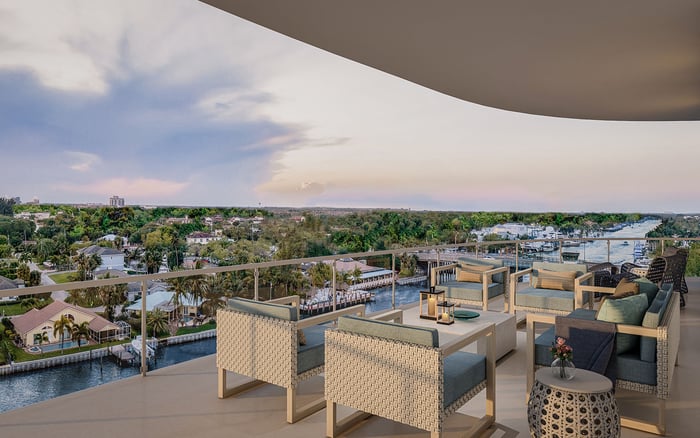
A discreet due-diligence guide for cash buyers considering Forté on Flagler in West Palm Beach, focused on contract timing, escrow, contingencies, title, association rules, insurance, closing costs, and future liquidity.

A cash purchase at Forté on Flagler West Palm Beach can feel elegantly simple: no lender underwriting, no mortgage contingency, and fewer third-party delays. Yet for a luxury condominium buyer, especially in West Palm Beach, the absence of financing does not remove the need for structure. It makes structure more important.
Cash buyers should request the project’s exact cash-contract timeline before signing. That means understanding what happens from offer to contract, from contract to deposit, from deposit to document review, and from final review to closing. A buyer with immediate liquidity may be attractive to a developer or seller, but speed should never blur questions about escrow, title, condominium disclosures, closing costs, and association approvals.
This is particularly relevant along the Flagler Drive corridor, where waterfront positioning, association governance, insurance, and future transfer rules can all influence the ownership experience. For buyers comparing Forté with nearby West Palm Beach options such as Alba West Palm Beach or Mr. C Residences West Palm Beach, the smartest question is not simply whether cash can close faster. It is what protections remain in place when it does.
Before a cash buyer signs at Forté on Flagler, the first request should be a written outline of the cash purchase sequence. Ask when proof of funds is due, when the contract becomes binding, when the initial deposit must be wired, whether additional deposits are staged, and which events must occur before closing.
If the residence is under a developer contract, ask whether deposit deadlines are tied to construction or contract milestones. If the purchase is a resale, ask whether the seller expects a compressed closing and whether all condominium documents, title work, and association requirements can realistically be completed within that window.
Cash creates negotiating leverage only when the buyer understands the calendar. A rapid closing can be attractive, but not if it compresses essential review periods or leaves unanswered questions about title, association approval, insurance obligations, or prorations.
Cash buyers should expect to verify liquidity, but the form of that verification should be clarified before the offer is submitted. Ask whether the developer or seller requires bank statements, a proof-of-funds letter, escrow verification, or other documentation. High-net-worth buyers often prefer discretion, so it is reasonable to ask what level of detail is required, who will review it, and how sensitive financial information will be handled.
The next question is deposit architecture. How much earnest money is required? Is it refundable during any review period? Does it become nonrefundable after a certain date? Are deposits staged, and if so, what triggers each stage? Large cash deposits deserve particular attention because substantial funds may sit outside the buyer’s banking system for an extended period.
Ask who will hold escrow funds, which institution will hold them, and whether the escrow account is interest-bearing. For a significant condominium purchase, the answer may affect both comfort and economics. Buyers should also confirm wire instructions directly with the closing attorney or title company through a secure, verified channel.
A cash contract may remove financing contingencies, but it should not automatically erase every buyer protection. Ask whether the Forté on Flagler purchase contract changes any standard contingencies because the buyer is paying cash. This is a document-specific question and should be reviewed with Florida counsel before signing.
The key is to separate financing from diligence. Even without a lender, a buyer may still want inspection rights, document-review rights, title-review rights, condominium-disclosure rights, and a final walk-through before closing. Each should be clearly preserved or knowingly waived. Silence is not a strategy.
This is equally true when comparing new-construction opportunities across the region. A buyer evaluating West Palm Beach alongside projects such as The Ritz-Carlton Residences® West Palm Beach should not assume that every contract treats cash, disclosures, walk-throughs, or closing deliverables the same way.
Ask for a complete list of condominium documents available for review before closing. The review package should include, as applicable, declarations, bylaws, rules, budgets, reserves, insurance summaries, and any pending association obligations. These documents define the building as much as the floor plan does.
Cash buyers should also ask whether association approval applies even when there is no financing. Some condominium associations may have application fees, background checks, interview procedures, transfer rules, or other approval requirements. The central question is not whether the buyer can pay. It is whether the association process can be completed in time for the desired closing.
For a luxury buyer, governance matters. Pet rules, leasing restrictions, renovation procedures, guest policies, move-in logistics, and transfer approvals can shape daily life and future flexibility. The purchase price is only one part of the commitment.
Ask which closing attorney or title company will coordinate the transaction and whether the buyer may choose independent counsel. A cash buyer has no lender insisting on certain title protocols, so the buyer should be especially attentive to title insurance coverage, title search timing, lien searches, municipal searches, and any open permits or development-related matters that could affect closing.
Entity ownership should also be addressed early. Ask whether title can be taken through an LLC, trust, partnership, or other structure, and what documentation the developer, association, title company, or closing attorney will require. Buyers should coordinate this with Florida counsel, tax advisors, and wealth advisors, particularly when privacy, estate planning, liability planning, or multi-generational ownership is part of the strategy.
Do not wait until the final week to form an entity or prepare trust documents. If an association approval package or title company file must reflect the purchasing entity, timing can matter.
A cash purchase does not eliminate closing costs. Ask which costs remain the buyer’s responsibility, including title insurance, documentary stamp taxes, recording fees, legal fees, condominium fees, and transfer-related charges. The allocation should be clear in the contract, not assumed from custom.
Prorations deserve the same attention. Ask how property taxes, association assessments, utilities, insurance charges, and other prorated items will be calculated at closing. In a high-value residence, even routine prorations can be meaningful.
Because Forté on Flagler is part of a waterfront West Palm Beach ownership conversation, ask whether location affects insurance, flood-zone considerations, windstorm coverage, association master-policy costs, or future assessment risk. This is not a reason for hesitation; it is part of sophisticated coastal ownership. Buyers who study the same questions at Shorecrest Flagler Drive West Palm Beach will recognize that insurance and association budgeting are central to long-term confidence.
Even a buyer purchasing for personal use should ask how easily the residence can be transferred later. Ask whether resale restrictions, leasing rules, right-of-first-refusal provisions, or ownership-transfer limitations could affect future liquidity. These rules can influence an investment thesis, estate planning, and exit strategy.
The most elegant purchase is one where the buyer understands both the closing and the eventual resale. A cash buyer may move quickly, but the ownership documents move with the property. Before signing, ask how the building treats rentals, transfers to related entities, sales to trusts, and any association review of a future purchaser.
In the ultra-premium market, discretion and decisiveness are valuable. Documentation is what protects both.
Should a cash buyer still ask for a contract timeline at Forté on Flagler? Yes. Ask for the exact timeline from offer through closing, including proof of funds, deposits, document review, association steps, and final walk-through.
Does paying cash remove the need for proof of funds? Not necessarily. Ask what liquidity documentation is required, who reviews it, and how financial privacy is handled.
Are deposits always refundable in a cash condominium purchase? No assumption should be made. Ask whether deposits are refundable, nonrefundable, staged, or tied to contract or construction milestones.
Who should hold escrow funds? Ask which attorney, title company, or institution will hold escrow, and whether a large deposit can be placed in an interest-bearing account.
Does a cash buyer still need title insurance? A buyer should ask about title insurance coverage, title search timing, lien searches, municipal searches, and any open permit issues.
Can a cash buyer waive inspections and document review? A buyer may be asked to limit contingencies, but any waiver should be deliberate and reviewed with Florida counsel before signing.
Can ownership be taken through an LLC or trust? Ask whether entity ownership is permitted and what documents the developer, association, title company, or closing attorney will require.
Do association approvals apply to cash buyers? They may. Ask about applications, fees, background checks, interviews, transfer rules, and timing before setting a closing date.
What closing costs remain without financing? Ask about title insurance, documentary stamp taxes, recording fees, legal fees, condominium fees, and transfer-related charges.
Why ask about leasing and resale rules before closing? Leasing limits, resale restrictions, rights of first refusal, and transfer rules can affect future liquidity and long-term flexibility.
If you'd like a private walkthrough and a curated shortlist, connect with MILLION.
If branded residences are on your mind — as a home or as an allocation — we would be glad to share what we are seeing, privately.
Begin a quiet conversation