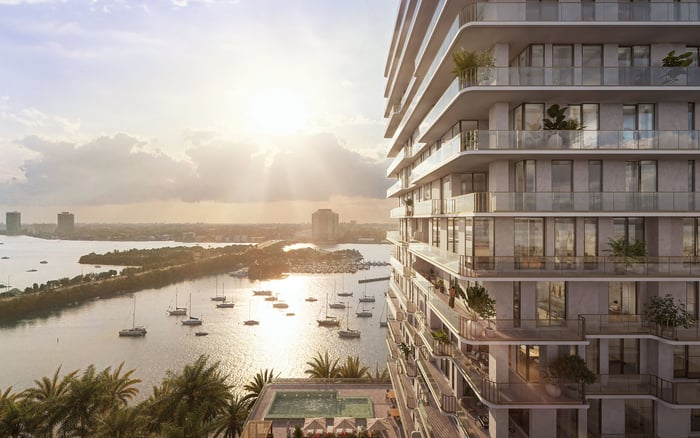
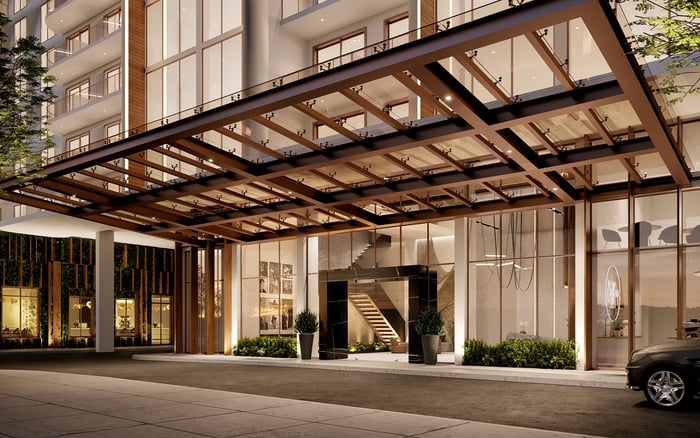
At Tula Residences North Bay Village, reserve liquidity, cash-investment controls, and assessment timing deserve the same attention as the residence itself. The available marketing leaves questions for document-level diligence, not grounds to conclude that a funding deficit exists.
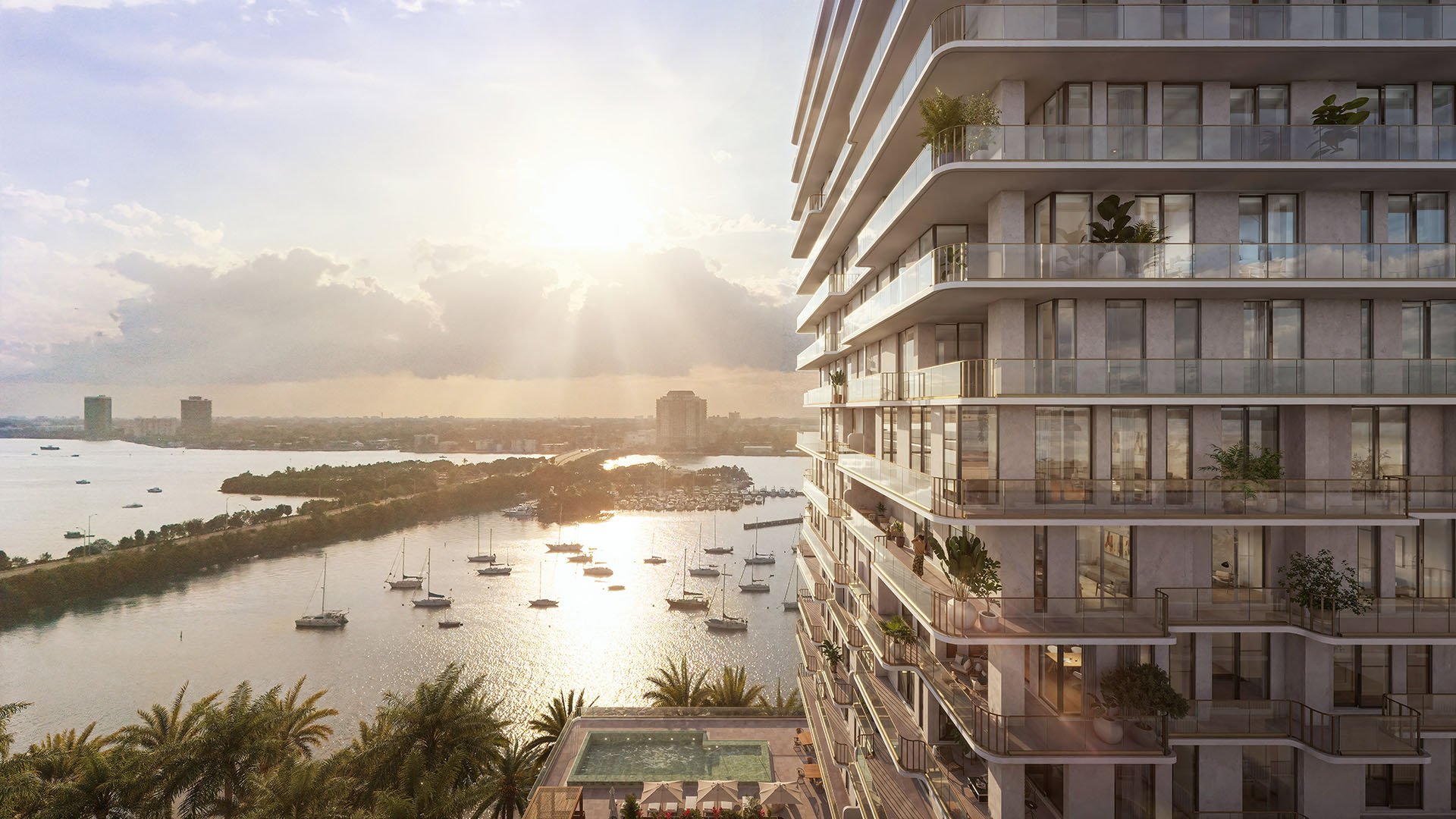
A waterfront residence is both a private retreat and a share in a collective financial obligation. At Tula Residences North Bay Village, marketed at 7918 West Drive, that distinction deserves attention before a buyer treats the monthly association fee as the full cost of ownership.
The project is described as a 21-story condominium with 54 residences. A finalized reserve schedule, opening association cash balances, and a formal policy for investing association funds remain undisclosed in the materials reviewed. Those materials also leave unresolved when major capital contributions could become payable.
These are disclosure gaps, not evidence of inadequate reserves, improper investing, or an announced special assessment. The buyer’s task is to replace unanswered questions with documents, assumptions, and enforceable responsibilities.
Operating cash, replacement reserves, and developer-funded working capital answer different questions. Buyers should request each separately rather than accept a single figure described as association funding.
Operating cash concerns the association’s ability to meet current obligations. Replacement reserves address future capital needs. A working-capital contribution may provide initial liquidity, but its amount, permitted uses, and funding date must be established in the purchase and association documents.
For Tula, these opening balances remain unspecified in the materials reviewed. Request projections at turnover and in years one, five, ten, and fifteen, together with the contribution methodology behind them. A projected balance is meaningful only when the underlying expenses and their timing are clear.
Buyers also considering Continuum Club & Residences North Bay Village can apply the same document request independently. One project’s financial arrangements should never be assumed to describe another’s.
An aggregate reserve number cannot show whether every relevant system has been considered. For Tula, the materials reviewed do not establish whether projected reserves fully cover elevators, roofing, waterproofing, façade systems, structural components, mechanical equipment, and life-safety systems.
Request a component schedule showing replacement costs, useful lives, inflation assumptions, and annual contributions. Ask which costs are included, which are excluded, and what supports those decisions. The objective is to understand how the balance changes as planned work approaches.
The waterfront setting warrants additional questions about seawall work, corrosion, flood-related damage, and storm-hardening. No verified allocation for those items appears in the materials reviewed. That does not establish that an allocation is absent from the association documents or that any particular work is needed.
Insurance assumptions and warranties belong in this discussion, but neither substitutes for understanding the reserve plan. Ask who bears costs that fall outside coverage or contractual remedies.
A reserve balance is not the same as immediately accessible cash. Buyers should establish where association money may be held, who controls it, and how quickly it can be accessed when an obligation comes due.
A formal association-cash investment policy remains undisclosed in the materials reviewed for Tula. Unanswered questions include permitted investments, liquidity requirements, maturity limits, and approval controls.
Request the written policy, if adopted, and ask whether operating and reserve accounts are segregated. Clarify who authorizes transfers, how investment decisions are approved, and how maturities align with anticipated expenditures. If a policy is still proposed, establish who can change it and when owners receive financial information.
The central diligence question is straightforward: could funds be available when needed without an unplanned owner contribution? An attractive projected return does not answer that question.
With 54 residences, Tula has a limited ownership base across which shared expenses may be allocated. That makes the declaration’s allocation formula important. It does not mean every owner necessarily pays an equal share.
An indicative association-fee estimate is approximately $3,690 per month, or $1.80 per square foot per month. Those figures do not establish a final adopted budget, and the estimate excludes special assessments. Buyers should verify the charge for their particular residence against the applicable documents.
For a comparison involving Shoma Bay North Bay Village, request the same separation between recurring charges, reserve contributions, and potential additional funding. A lower headline fee alone cannot establish lower long-term ownership costs.
Thresholds and timetables for major capital calls, special assessments, emergency assessments, and related owner voting requirements remain unspecified in the materials reviewed for Tula. Buyers should infer neither that assessments are imminent nor that owner approval is always required.
Ask counsel to identify the provisions governing who may authorize additional funding, what notice applies, and when payment becomes due. Clarify how ordinary budget shortfalls, emergencies, incomplete work, warranty disputes, and post-turnover defects would be handled.
Request a clear distinction between planned capital expenditures and contingencies. A useful financial review tests what happens if costs rise, work arrives earlier than expected, or available cash falls below projections. These are diligence scenarios, not predictions about Tula.
The essential result is a clear account of who pays, under what authority, and on what timetable.
A topping-out milestone is identified for October 2026. That is not confirmation of completion or occupancy. The schedules also differ: one projection places expected closing in Q4 2026, while another places expected completion in Q3 2027.
Those dates should not be treated as contractual promises or interchangeable events. Request the agreement’s completion and closing provisions, then separately identify the conditions for association turnover and the financial information owners should receive at that point.
The offering package should clarify contractual responsibilities for development, construction, unfinished work, and funding obligations. A reference to a CPS-12 application should not substitute for counsel’s confirmation of the complete documents applicable to the purchase.
The same discipline applies when a search extends to Miami Beach and The Perigon Miami Beach: evaluate each residence’s appeal alongside its own association documents, without assuming comparable reserves or assessment exposure.
For Tula, request the complete offering package, declaration, bylaws, proposed budget, reserve disclosures, insurance assumptions, warranties, and developer-control provisions. Reconcile those materials with the purchase agreement before relying on a projected monthly cost.
The goal is not to eliminate every future expense. It is to distinguish planned obligations from unresolved assumptions and understand how much liquidity ownership may require beyond closing.
For a discreet perspective on South Florida residences and ownership considerations, connect with MILLION.
If branded residences are on your mind — as a home or as an allocation — we would be glad to share what we are seeing, privately.
Begin a quiet conversationTula Residences is marketed at 7918 West Drive, North Bay Village, Florida 33141.
The project is described as a 21-story condominium with 54 residences. Individual expense allocations should be verified in the declaration.
No. The reviewed marketing leaves financial questions unanswered, but that does not establish inadequate funding or prove that reserve documents do not exist.
Request operating cash, replacement reserves, and any developer-funded working-capital contribution separately. Confirm each amount, funding date, and permitted use.
Request projected balances at turnover and in years one, five, ten, and fifteen. Review replacement costs, useful lives, inflation assumptions, and contribution methodology.
No formal policy appears in the reviewed marketing. Buyers should request permitted investments, liquidity requirements, maturity limits, and approval controls.
The indicative estimate of approximately $3,690 monthly excludes special assessments. It does not establish a final adopted budget or a residence-specific charge.
The supplied information does not establish an announced special assessment. The reviewed marketing does not specify assessment thresholds, timing, or related voting requirements.
No. Topping out is a construction milestone, not confirmation of completion or occupancy; closing and completion projections also differ.
Request the complete offering package, declaration, bylaws, proposed budget, reserve disclosures, insurance assumptions, warranties, and developer-control provisions. Reconcile them with the purchase agreement’s funding and timing obligations.