Shoma Bay’s first owner-controlled budget could clarify the cost of its mixed-use conveniences and amenity program. A prospective buyer’s checklist for reconciling dues, shared expenses, reserves, financing and delivery milestones.
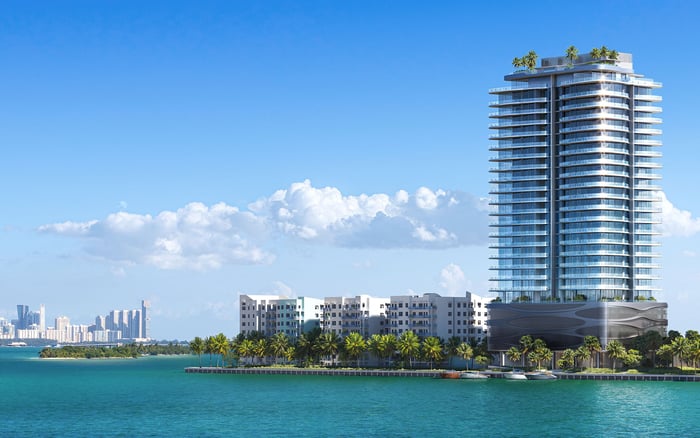
At Shoma Bay North Bay Village, the buyer’s question extends beyond finishes or outlook: what will the promised lifestyle cost to sustain under owner control? Planned at 1850 John F. Kennedy Causeway, the development combines residences, retail and an extensive amenity program. That mix makes expense allocation as relevant as the monthly dues figure.
The first owner-controlled budget could distinguish launch assumptions from the expenses owners will be asked to support. This is a prospective checklist, not evidence that turnover has occurred or fees have increased. A higher budget would require explanation, not an automatic verdict; a lower one would still warrant scrutiny of services, reserves and exclusions.
For a serious buyer, the objective is not simply the lowest assessment. It is a documented relationship between the experience being purchased and the obligations attached to it.
Advertised maintenance of approximately $0.85 per square foot sits alongside monthly association fees of $1,208 to $2,323, equivalent to approximately $1.61 per interior square foot across five advertised residences. These figures have not been established as consecutive adopted budgets. Their dates, inclusions and allocation methods remain unreconciled, so the difference does not demonstrate a dues increase.
At the $1.61 monthly rate, a hypothetical 1,200-square-foot residence would carry $1,932 in monthly association dues. That illustration excludes property taxes, unit insurance and any separately verified assessments. It is neither a unit-specific quote nor a forecast of post-turnover charges.
Request a reconciliation package containing:
The developer budget and the current adopted association budget, with effective dates.
The first owner-controlled budget when available, alongside actual expenditures.
A unit-specific assessment calculation identifying the applicable allocation method.
A schedule of included services, separate charges and reserve contributions.
Compare insurance, payroll, utilities, management, service contracts and reserves line by line. Ask whether apparent savings reflect lower costs, narrower services or expenses paid elsewhere. Buyers also evaluating Continuum Club & Residences North Bay Village should request equivalent documentation rather than compare headline dues alone.
Ask whether the operating plan includes subsidies, guarantees, waived fees or developer-paid services. None should be assumed to exist at Shoma Bay. Establish whether support exists, its written terms and the circumstances under which it ends.
If support is identified, request a budget showing costs without it. Distinguish recurring obligations from one-time opening expenses, and ask how each would be funded under owner control. A change in who pays can matter as much as a change in the underlying price.
The first owner-controlled budget could make these transitions clearer, but it should be read alongside contracts and actual payments. A single annual total cannot establish whether the association is purchasing the same service package on the same terms.
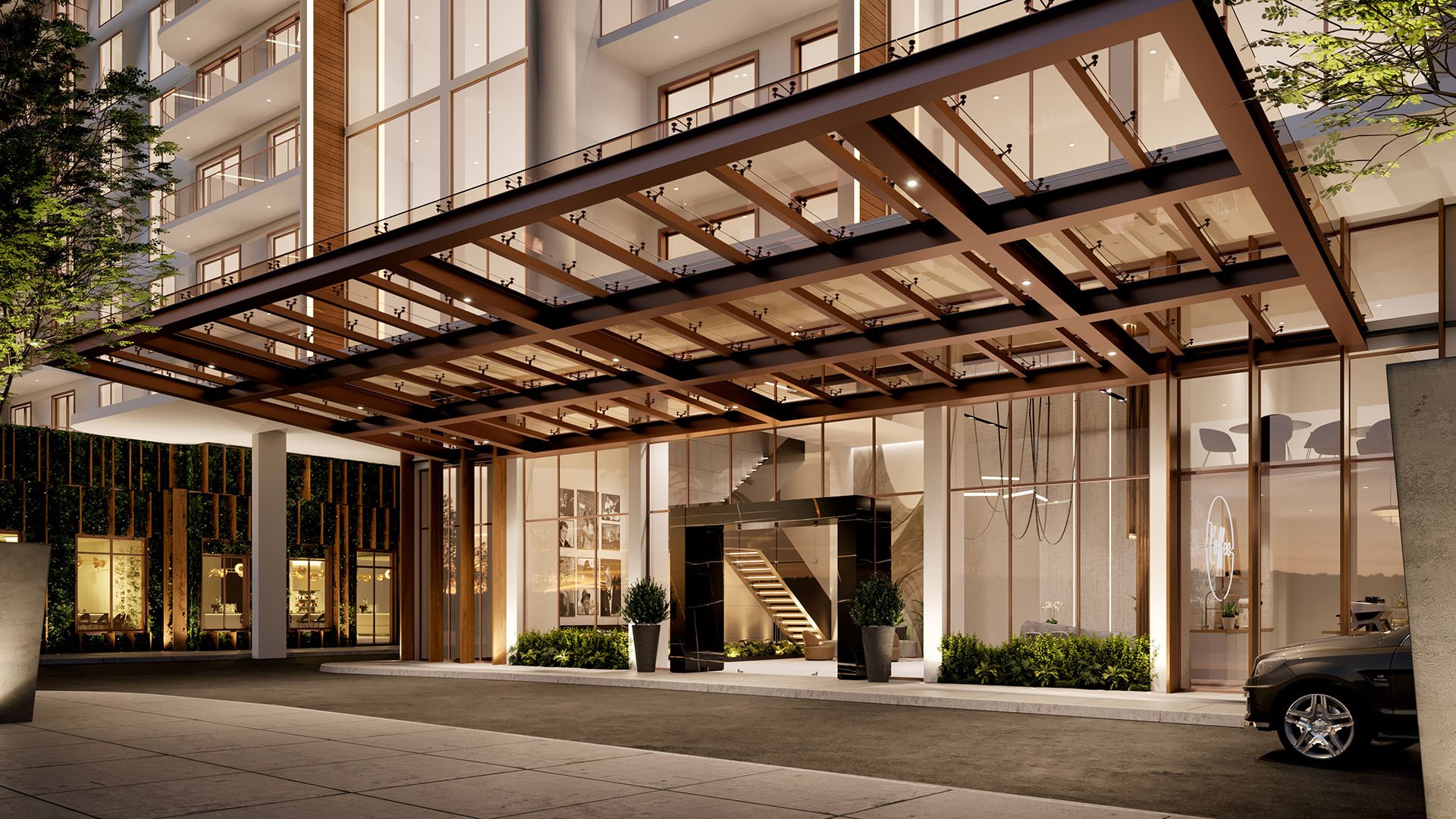
Shoma Bay’s planned 2.8-acre waterfront footprint combines condominiums, a Publix supermarket and a food hall. The planned commercial program comprises approximately 35,037 square feet for Publix and 15,600 square feet of additional retail, including Shoma Bazaar and a rooftop lounge.
For residents, that proximity offers compelling convenience. For diligence, it raises a precise question: which entity pays for which space, system and service?
Obtain the declaration and shared-facility agreements. Have counsel trace responsibility for parking, security, HVAC, elevators, trash and insurance. Ask which costs are separately measured, which follow a contractual allocation and how residential charges can be reconciled to underlying expenses.
Do not assume commercial activity either subsidizes residents or burdens them. The agreements must establish that boundary. The test is whether each material shared-cost line in the budget can be traced to a documented obligation and an understandable calculation.
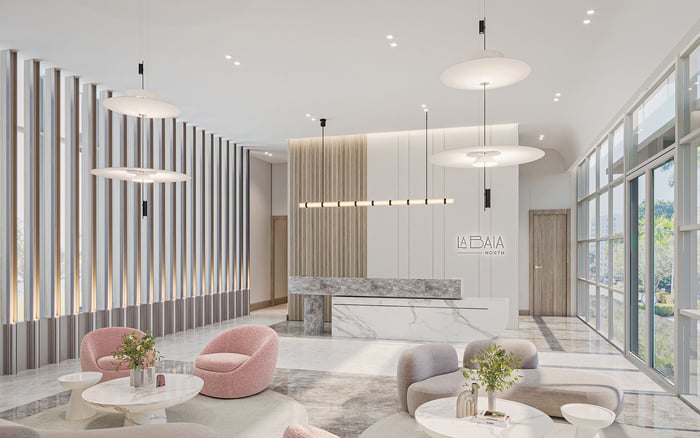
Planned amenities include a rooftop pool, hammam, spa, fitness center and zen garden. A cigar room, wine club, movie room, golf simulator, children’s club and pet spa are also advertised. Their advertised presence does not establish staffing levels, opening hours or annual costs.
Request a service specification alongside the budget. Which spaces require staffing? Which services are included in dues, separately charged or operated by another party? Where does the budget account for cleaning, utilities, equipment servicing and replacement?
For buyers extending their search to Miami Beach and The Perigon Miami Beach, the same discipline applies: compare documented service commitments, not simply amenity names. A room and a staffed service are different purchase propositions.
At Shoma Bay, the owner-controlled budget could clarify the operating scope behind the amenity program. It should not be treated as proof of that scope without supporting contracts and schedules.
Neither advertised fee figure establishes reserve adequacy, underfunding or compliance with Florida requirements. Request reserve schedules, applicable engineering studies, turnover records and warranties. Ask for a clear explanation of funded and unfunded components, with counsel and an appropriate engineering adviser addressing the requirements applicable to the property.
Keep financing review distinct from reserve review. Financing figures include nearly $30 million in August 2025 and $172.5 million in C-PACE financing. Their relationship remains unresolved; the figures should not be added together or treated as association debt.
Have counsel examine financing, title, assessment and release documents before drawing conclusions about whether any repayment obligation survives a residential closing. A financing figure alone does not establish an individual buyer’s or the association’s liability. That question deserves a documented answer, not reassurance based solely on marketing language.
Completion projections differ, ranging from December 2026 to fourth-quarter 2028. Neither should be treated as a guaranteed closing date. Obtain written confirmation of anticipated completion, residential closings and owner-control milestones as separate events.
The rental policy also warrants document review. The stated rental minimum is 30 days, rather than nightly or weekly stays. Confirm the governing restriction before incorporating rental income into a carrying-cost model.
The strongest purchase file would connect unit-specific dues, shared-cost obligations, service commitments, reserves and financing treatment. Build the ownership model from verified charges, adding property taxes and unit insurance without double-counting expenses already included elsewhere.
The first owner-controlled budget could become an important checkpoint, but not a substitute for those documents. The decision standard is straightforward: understand what owners must fund, why they must fund it and how the promised experience is supported.
For a discreet perspective on South Florida ownership and the questions worth asking before purchase, explore MILLION.
If branded residences are on your mind — as a home or as an allocation — we would be glad to share what we are seeing, privately.
Begin a quiet conversationAn actual first owner-controlled budget is not established here. The checklist is prospective and does not imply that developer turnover has occurred.
Shoma Bay is planned at 1850 John F. Kennedy Causeway in North Bay Village.
No. The advertised figures have not been reconciled for dates, inclusions and allocation methods.
It would equal $1,932 in monthly association dues. This hypothetical calculation excludes property taxes, unit insurance and any separately verified assessments.
Request the developer budget, current adopted budget and first owner-controlled budget when available, together with actual expenditures. Compare individual expense lines and the unit-specific assessment calculation.
The planned supermarket, food hall and additional retail make shared-cost responsibility an important diligence question. The declaration and shared-facility agreements should clarify residential versus commercial obligations.
Neither fee figure establishes reserve adequacy or compliance. Review reserve schedules, applicable engineering studies, turnover records and funded versus unfunded components.
Neither financing figure establishes an individual buyer’s or the association’s liability. Counsel should review title, assessment, financing and release documents before reaching a conclusion.
Completion projections differ between December 2026 and fourth-quarter 2028. Buyers should obtain written confirmation and distinguish completion from closing and owner control.
The stated rental minimum is 30 days, rather than nightly or weekly stays. Confirm the restriction in the governing documents.