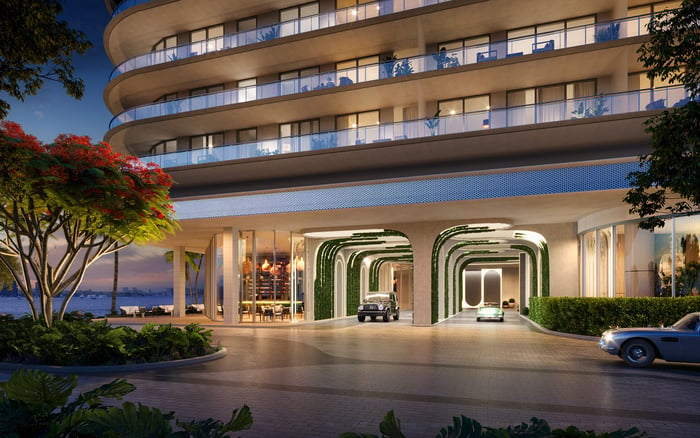
The Perigon’s private elevator entry and carefully appointed kitchens describe everyday luxury, not necessarily extended-outage performance. Buyers should seek written confirmation of generator endurance, elevator operating sequences, and the specific appliance circuits covered by emergency power.

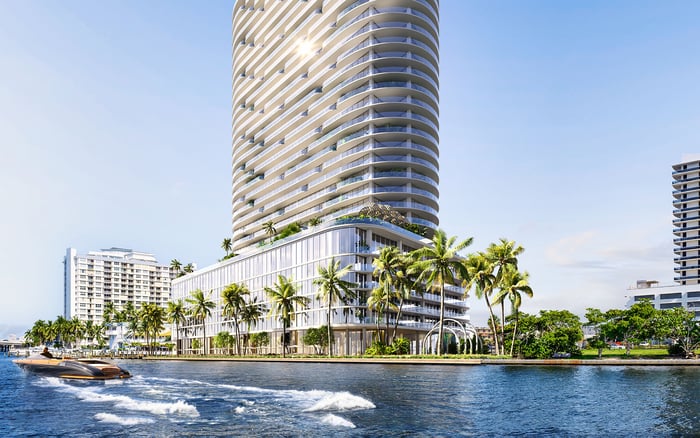
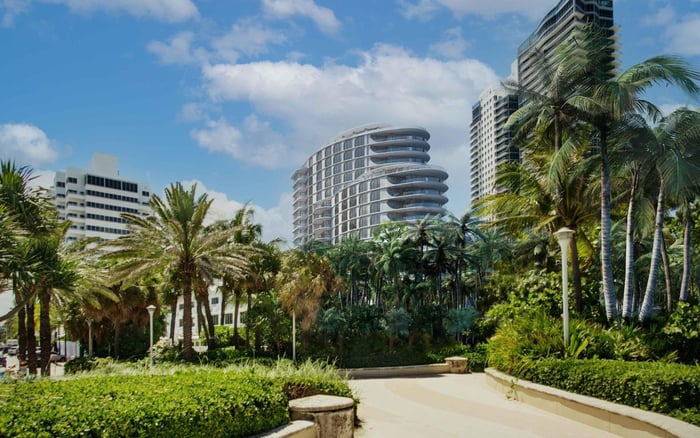
At The Perigon Miami Beach, the residential proposition is carefully considered: a Collins Avenue address, private terraces, 10-foot ceilings, and custom Italian kitchens designed by Tara Bernerd & Partners. Located at 5333 Collins Avenue, Miami Beach, Florida 33140, in Mid-Beach’s Millionaires’ Row area, the project is marketed as a 17-story oceanfront residential tower.
Ownership, however, brings less photogenic questions. How long can backup power support the equipment connected to it? What happens to private elevator access during a power transfer or fire-recall condition? Does the refrigerator inside the residence remain powered through an extended interruption?
The reviewed marketing does not establish a verified generator runtime, a detailed elevator outage protocol, or confirmation of backup power for in-unit refrigerators and freezers. The distinction matters: an unanswered marketing question is not evidence that a capability is absent. It is a reason to request documentation before treating that capability as part of the purchase proposition.
A useful answer about generator endurance is more than a number of hours. For The Perigon, buyers should request written specifications identifying fuel type, usable fuel storage, expected runtime at stated loads, connected equipment, and refueling arrangements. No specific duration should be assumed from the available marketing.
The central purchase question is what that duration covers. Request a clear equipment schedule alongside any runtime statement. Does it cover only designated building systems, or also services inside individual residences? Require a clear distinction rather than accepting a broad assurance that the building has backup power.
Fuel storage and refueling also warrant separate answers. Ask what endurance is represented without replenishment, what replenishment arrangements exist, and which assumptions support any longer-duration estimate. The written response should distinguish a specification from an estimate or an operating commitment.
The same discipline is useful for a buyer also considering 57 Ocean Miami Beach. Compare the questions and documentation, not presumed performance. That comparison alone establishes neither property’s generator capacity nor its outage coverage.
Direct, private elevator entry to each residence is an advertised feature at The Perigon. It describes arrival under ordinary circumstances. On its own, it does not establish continuous elevator service during an interruption or explain the system’s response to a fire-recall condition.
Buyers should request the emergency-power schedule and the manufacturer’s operating sequence. Seek separate explanations of fire recall, transfer to generator power, prolonged-outage operation, and restoration of normal service. These answers belong in the project’s technical documentation; they cannot be inferred from the phrase private elevator entry.
The response should identify which elevators, if any, remain available under the specified conditions and whether access to a particular residence changes. Ask who controls availability, how residents receive instructions, and whether the stated operation depends on conditions not addressed in the sales description.
Do not interpret a general promise of emergency elevator service as a guarantee that every private entry operates normally. Nor should the absence of an operating sequence in marketing be read as proof that no emergency service exists. For a buyer whose purchase depends on dependable access, the precise written sequence matters more than the amenity label.
The kitchens’ design credentials establish their aesthetic ambition. A penthouse appliance listing also identifies a refrigerator, ice maker, gas range, dishwasher, and other equipment. Neither the kitchen description nor the appliance inventory establishes which electrical circuits receive emergency power.
For refrigeration, request the unit panel schedule and emergency-power diagram for the residence under consideration. Seek separate written answers for the refrigerator, freezer, wine storage, ice maker, and kitchen receptacles. Confirmation for one appliance should not stand in for confirmation for the others.
The practical question is whether the identified equipment connects to the documented backup supply, under what operating conditions, and for what stated duration. An answer limited to common areas or building equipment does not resolve the in-unit question. Likewise, a general statement about kitchen power should be matched to the circuits and appliances it covers.
Buyers comparing The Perigon with Shore Club Private Collections Miami Beach can apply the same appliance-by-appliance inquiry. This is a framework for requesting comparable information, not a claim about either project’s refrigeration provisions.
The most effective diligence request brings all three subjects together. Ask for a coordinated package covering generator specifications, the connected-equipment schedule, elevator operating sequences, and the residence’s electrical documents. Request confirmation that every document applies to the unit and configuration under consideration.
Keep design intentions distinct from operating assurances. If a response describes planned coverage, ask how it will be confirmed and which document records it. If two answers appear inconsistent, have the relevant project representatives reconcile them in writing rather than choosing the more reassuring interpretation.
The same discipline can guide conversations about Five Park Miami Beach without assuming equivalent systems. A meaningful comparison rests on documented scope and conditions, not matching language in two brochures.
For an owner who will not always be in residence, these questions are part of household planning. Ask management how owners will receive outage updates, how access questions will be handled, and what procedures apply when refrigeration coverage is uncertain. Treat the answers as planning inputs that still require project-specific confirmation.
Build personal contingency plans around the services actually documented. If food storage or access is essential to your intended use, resolve those points before relying on the residence as an extended-outage retreat. A beautifully appointed kitchen and a private arrival experience remain valuable, but neither answers the question of service continuity.
The appropriate conclusion is neither reassurance nor alarm. The Perigon’s advertised residential features are clear; the three operational matters discussed here remain unestablished in the reviewed marketing. Written specifications can close that gap without diminishing the architecture or overstating its capabilities.
For discreet guidance on evaluating South Florida residences beyond the brochure, connect with MILLION.
If branded residences are on your mind — as a home or as an allocation — we would be glad to share what we are seeing, privately.
Begin a quiet conversationThe Perigon is located at 5333 Collins Avenue, Miami Beach, Florida 33140, in Mid-Beach’s Millionaires’ Row area.
The project is marketed as a 17-story oceanfront residential tower.
No verified generator-runtime figure is established in the reviewed marketing. Buyers should not assume a particular number of backup-power hours.
Request written specifications covering fuel type, usable storage, runtime at stated loads, connected equipment, and refueling arrangements.
No. The advertised private entry feature does not establish a detailed generator-transfer, fire-recall, or prolonged-outage operating protocol.
Request the emergency-power schedule and manufacturer’s operating sequence. Ask which elevators remain available under each specified condition.
Their backup-power coverage is not confirmed in the reviewed project materials. That does not establish that coverage is absent.
No. An inventory identifying a refrigerator, ice maker, gas range, or dishwasher does not establish whether its electrical circuit receives backup power.
Request the residence’s panel schedule and emergency-power diagram. Seek separate answers for refrigerators, freezers, wine storage, ice makers, and kitchen receptacles.
No. An unestablished marketing detail is a reason to seek written confirmation, not proof that a generator, emergency elevator service, or backed-up appliance circuit is absent.