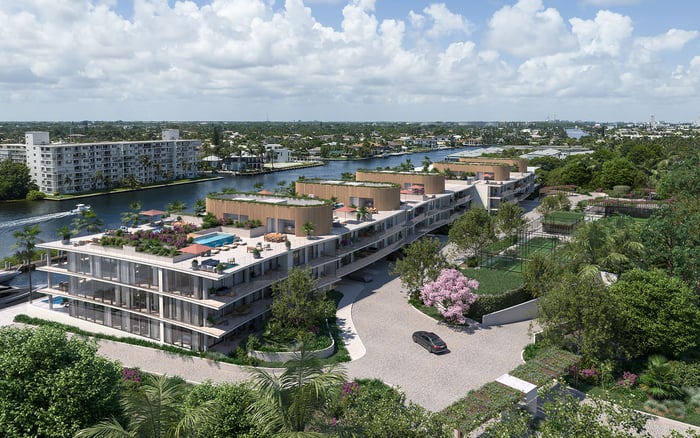
For seasonal owners making Hillsboro Beach their primary address, service diligence should move beyond the sales presentation. Request the documents, staffing coverage, response protocols, gratuity policies, and escalation procedures that clarify everyday ownership.

A seasonal residence can delight over a long weekend while leaving daily operations largely untested. Making Hillsboro Beach your primary address changes the questions. Who takes responsibility when a maintenance request crosses shifts? What happens after hours? Which services are included, and which require separate arrangements?
For a buyer considering Rosewood Residences Hillsboro Beach, the next step is not to infer performance from a name. It is to request the documents that define the proposed ownership experience. The same discipline belongs in any Broward condominium search.
This checklist concerns condominium purchases. Florida’s Chapter 718 condominium framework should not be treated as interchangeable with Chapter 720 homeowners’ association rules. Nor should “primary residence” be read here as tax or homestead advice. The focus is dependable daily living.
Condominium records-access rights generally belong to unit owners and their authorized representatives, not automatically to prospective buyers. Coordinate with the seller and counsel so the appropriate person requests accessible official records during your contractual diligence period.
Associations generally must make official records available within 10 business days after receiving an owner’s written request. Inspection is generally available within 45 miles of the property or within its county, with electronic access also permitted. Reasonable inspection procedures and statutory copying provisions apply.
Start with the declaration, bylaws, current rules, management agreement, and relevant association service contracts. Then request budgets, financial statements, applicable reserve studies, insurance policies, and meeting minutes. Together, these documents help connect the promised experience to authority, funding, and accountability.
Official records generally carry a seven-year retention requirement, but record-specific exceptions matter. Access is not unlimited: do not assume personnel files are inspectable or that an association must create a staffing analysis that does not exist.
Treat each meaningful service as a separate diligence item. Request any existing written description of its hours, scope, charges, exclusions, provider, and supervising manager. Where no document exists, ask for clarification without treating the request as a statutory obligation to create one.
For services presented during the sale, establish whether staff perform the work, arrange an outside provider, or simply offer a referral. These are different commitments. Clarify, too, whether the service belongs to the association, a separate operator, or an owner’s individual contract.
A comparison extending to The Ritz-Carlton Residences® Pompano Beach should use the same questions. Do not assume similarly described services have identical terms. Have counsel distinguish enforceable obligations from descriptions, discretionary offerings, and proposed arrangements.
A staff-to-residence ratio is meaningful only when its components are clear. Ask what the numerator includes: employees on duty, total employees, full-time equivalents, or outsourced personnel. Ask whether the denominator represents all residences or occupied residences. Do not compare ratios built on different definitions.
Request available coverage information by function and shift, including weekends, overnight periods, breaks, vacancies, and absences. Distinguish in-house from outsourced roles, and ask who supplies backup when the scheduled person is unavailable.
These are diligence questions, not established Hillsboro Beach-wide standards. There is no universal ratio to apply here. A clear explanation of who is available for each task, when, and under whose supervision is more useful than a headline count.
Keep the request focused on operational coverage rather than private employee information. If a written coverage schedule is unavailable, record the explanation given and identify what remains unconfirmed before purchase.
Request written response commitments, if available, for routine service, urgent maintenance, and after-hours issues. A promise to acknowledge a request is not a promise to attend, diagnose, or resolve it within the same interval.
Ask management to explain the sequence: where the request is logged, who assigns it, when the owner receives an update, and who takes over if the first response is inadequate. Request emergency and after-hours contact details, along with the procedure for issues involving outside contractors.
Use practical scenarios during diligence. Ask how a late-night water intrusion would be escalated or how an unresolved work order would transfer between shifts. These exercises clarify responsibility without inventing a response-time benchmark.
The 10-business-day records-access rule is not a concierge or maintenance service guarantee. Formal owner inquiries sent to the board by certified mail have a separate statutory written-response framework; they should not be confused with ordinary service tickets.
Discretion is easiest when expectations are clear. Request any written policy on individual tipping, holiday funds, automatic gratuities, and service charges. Ask which payments are optional, how any shared fund is administered, and whether separately arranged services have their own payment terms.
Do not assume a suggested contribution is mandatory or that a service charge is a gratuity. Request the applicable language and a written explanation of how charges appear on an owner’s account.
For buyers also considering The Residences at Mandarin Oriental Boca Raton, the same written-policy request makes a comparison with Hillsboro Beach more useful. Neither branding nor neighboring properties should set assumptions about local tipping amounts or holiday-fund expectations.
Request the building’s complaint and escalation procedures. Identify the manager, the next supervisory contact, and the route to the board. For a recurring service failure, preserve the request, acknowledgment, follow-up, applicable commitment, and any documented expense. Counsel can assess what remedy the governing documents or relevant contract actually supports.
Records denial is a separate issue. Failure to provide access within 10 business days after a qualifying certified-mail request creates a rebuttable presumption of willful noncompliance. An owner denied access may pursue actual damages or statutory minimum damages for willful noncompliance of $50 per calendar day for up to 10 days, beginning on the 11th business day after receipt.
An improperly denied owner may also complain to the state condominium regulator. Those records remedies do not establish entitlement to a particular concierge, valet, or housekeeping performance level. Other disputes require issue-specific advice, not an assumed universal service-complaint process.
Before committing, assemble the governing documents, relevant contracts, financial records, written service descriptions, available coverage information, gratuity policies, and escalation contacts. Mark each important promise as documented, discretionary, proposed, or unresolved.
The goal is not a thicker binder. It is knowing which parts of daily life the building undertakes, what you must arrange yourself, and where accountability begins when expectations are not met.
For a considered approach to your next South Florida residence, explore MILLION.
If branded residences are on your mind — as a home or as an allocation — we would be glad to share what we are seeing, privately.
Begin a quiet conversationProspective buyers should not assume they have the same inspection rights as owners. Arrange access through the seller or an appropriately authorized representative.
Official records generally must be made available within 10 business days after receipt of an owner’s written request. This is an access deadline, not a maintenance response guarantee.
Start with the declaration, bylaws, current rules, management agreement, and relevant service contracts. Add budgets, financial statements, applicable reserve studies, insurance policies, and meeting minutes.
No universal staffing ratio should be assumed. Evaluate available coverage by role and shift, with clear definitions of how any quoted ratio is calculated.
Do not assume an association must create a document that does not exist. Request available coverage information without seeking protected personnel records.
It should distinguish acknowledgment, attendance, diagnosis, and resolution. Ask who handles escalation and updates when the initial response does not resolve the issue.
No building-specific gratuity expectation should be presumed. Request written policies distinguishing optional contributions, automatic gratuities, and service charges.
An owner may complain to the state condominium regulator and, where applicable, pursue actual damages or statutory minimum damages for willful noncompliance. Eligibility depends on the statutory requirements.
No. Service remedies depend on the applicable commitments, governing documents, contracts, and nature of the dispute.
The legal discussion concerns condominiums under Chapter 718. Do not substitute it for the separate Chapter 720 homeowners’ association framework.