A disciplined Continuum purchase separates recurring ownership costs from capital obligations, confirms payment responsibility at closing, and weighs resale timing against the cost of waiting.
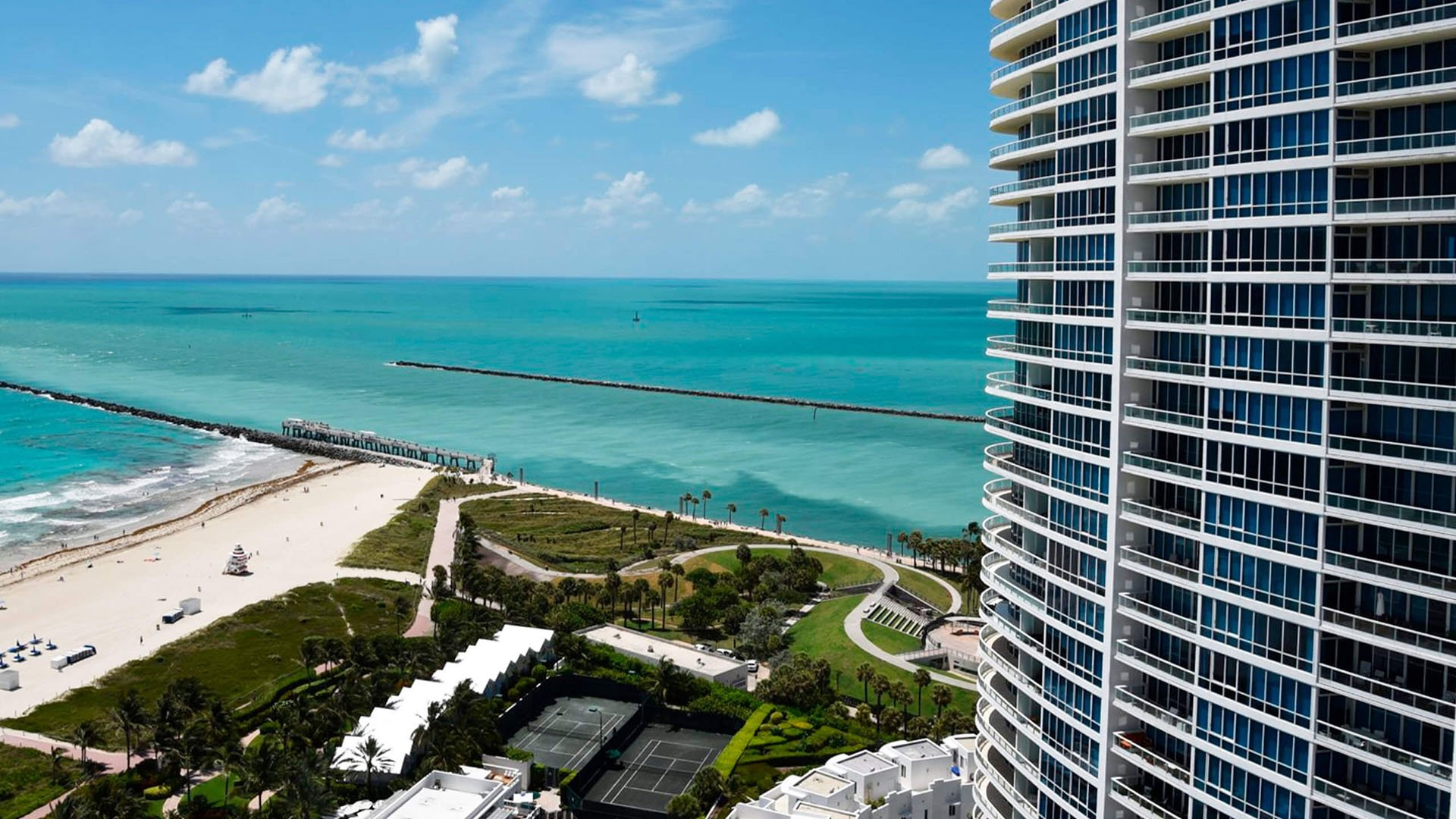
At Continuum on South Beach, the setting is part of the purchase: approximately 12.5 oceanfront acres in Miami Beach’s South of Fifth neighborhood, with the South Tower at 100 S Pointe Drive and the North Tower at 50 S Pointe Drive. The financial decision, however, extends beyond the residence and its asking price.
For a buyer evaluating capital work, the central distinction is between scope and funding. What must be done, what has been approved and when an owner must supply cash are separate questions. A funding obligation can affect both liquidity at acquisition and the economics of a later sale.
Treat the funding structures below as diligence scenarios, not established Continuum payment options. Before underwriting an obligation, confirm the relevant association’s approved budget, unit allocation, payment terms and construction schedule in writing.
Monthly association charges are unit-specific. South Tower residence 3906 lists a monthly fee of approximately $2,457; North Tower residence 707 lists $3,994; South Tower residence 510 lists $4,800. These are listing snapshots, not a universal Continuum fee schedule or a promise of future charges.
Stated inclusions vary, covering combinations of common-area upkeep, security, pools, utilities and reserves. Residence 3906’s maintenance description also includes insurance and internet/Wi-Fi. Verify the applicable unit’s current charges and coverage rather than assuming every owner expense is included.
Residence 707 illustrates the distinction. Its listed monthly fee annualizes to $47,928. Adding approximately $42,484 in 2024 property taxes produces an annual total of $90,412 before financing, special assessments or other owner expenses. The fee and tax figures reflect different reporting periods, making this an illustrative baseline rather than a synchronized annual budget.
Historical taxes are not a forecast of a purchaser’s bill. Build an acquisition-specific tax estimate, then allow separately for financing, owner insurance, interior upkeep and other expenses. Establish the ordinary cost of ownership before adding extraordinary capital demands.
A maintenance description that includes “Reserve Fund,” as residence 510’s does, is a starting point for inquiry. It does not establish that reserves cover all planned work, demonstrate statutory compliance or eliminate future assessments.
Request the current association budget, audited financial statements, reserve study, engineering findings and board minutes. Read them alongside assessment notices and the construction schedule. Together, these documents should help distinguish proposed work from approved commitments, and available funds from anticipated collections.
Apply the same discipline to a comparison with Apogee South Beach. Compare documented obligations rather than treating a lower advertised monthly charge as evidence of a lower total ownership cost. This is a comparison framework, not a statement about either property’s current capital position.
Nearby assessment history provides context, not a Continuum estimate. At Murano at Portofino, owners approved a $27.2 million assessment for repairs and renovations in 2024 after an approximately $30 million assessment two years earlier. Those building-wide figures should not be translated into a Continuum unit-level obligation.
If a capital obligation is confirmed, map it against the proposed closing date and intended holding period. Keep recurring association charges, taxes, financing and other expenses separate from capital payments. Otherwise, an ordinary monthly budget can conceal a substantial cash call.
For a potential lump-sum structure, identify the amount and due date, then test the liquidity remaining after purchase. Allow for personal contingencies and ownership costs without assuming a near-term sale will replenish reserves.
For a potential installment structure, establish the principal, interest, payment frequency, final due date and any payoff provisions. Smaller scheduled payments may preserve initial liquidity; they do not necessarily mean a smaller total obligation. Neither structure should be assumed available at Continuum without confirmation.
Ask counsel to establish payment responsibility at closing, including for installments due afterward. Any agreed seller contribution should be stated precisely in the contract and reconciled with association documentation. Do not rely on a verbal understanding that an assessment is “handled.”
Finally, model schedule slippage without inventing a revised project budget. Test what happens to your cash position if ownership lasts longer than intended or payments fall due before your preferred exit.
Before funding is finalized.
A prospective purchaser may struggle to price an unresolved obligation. If selling at this stage, distinguish approved amounts from estimates and discuss contractual treatment with counsel. An earlier exit is not automatically a better one if uncertainty influences negotiations.
During construction.
If work is underway, evaluate any documented effect on access, amenities and the showing experience. Give prospective buyers the confirmed scope, payment history, remaining obligations and current schedule. Compare the net result of selling now with the cost of continuing to carry the residence.
After completion.
Completion may make the delivered scope easier to evaluate, but it guarantees neither a premium nor a faster sale. Waiting incurs ownership costs, and buyers will still weigh the individual residence against prevailing alternatives.
If Five Park Miami Beach is also on a purchaser’s shortlist, apply the same comparison: documented acquisition cost, recurring expenses, capital exposure and intended holding period. Do not infer relative value from project names alone.
The South Tower asking-price snapshot spans approximately $1.9 million to $19 million. That range describes offered inventory, not closed-sale value or a valuation for a particular residence.
Individual transactions reinforce the need to select comparables carefully. Combined residence 2608/2609, measuring 3,717 square feet, sold for $18.8 million on November 25, 2025, approximately $5,057 per square foot. Residence 3605 sold for $6.7 million on October 21, 2025, approximately $3,737 per square foot. These prices do not demonstrate that capital-project completion caused a premium.
A South Tower snapshot dated April 21, 2026, recorded 14 sales over the preceding 12 months and 26 over 24 months. Those counts establish turnover, not a selling-time forecast. An exit model should allow for a longer hold rather than convert sales counts into a promised marketing period.
Before committing, assemble one decision file: verified recurring charges, an acquisition-specific tax estimate, capital documents, payment dates, closing responsibility and a conservative resale case. Keep unresolved items visible rather than assigning them a zero cost.
The question is not simply whether the residence is affordable today. It is whether the purchase leaves sufficient liquidity to own comfortably through the intended holding period, even if the preferred resale date changes.
For a discreet discussion of your Continuum purchase and broader Miami Beach options, connect with MILLION.
If branded residences are on your mind — as a home or as an allocation — we would be glad to share what we are seeing, privately.
Begin a quiet conversationThe South Tower is at 100 S Pointe Drive and the North Tower is at 50 S Pointe Drive. Together, they occupy approximately 12.5 oceanfront acres in Miami Beach’s South of Fifth neighborhood.
No. Confirm the relevant association’s approved budget, unit allocation, payment terms and construction schedule before treating a capital obligation as established.
The listed monthly fees are approximately $2,457 for South Tower 3906, $3,994 for North Tower 707 and $4,800 for South Tower 510. These unit-specific snapshots require current confirmation.
It combines residence 707’s listed fee annualized at $47,928 with approximately $42,484 in 2024 taxes. The inputs span different reporting periods and exclude financing, assessments and other owner expenses.
No. A listing’s reserve inclusion does not establish adequate capital funding, statutory compliance or protection against future assessments.
Review the current budget, audited financial statements, reserve study, engineering findings, board minutes, assessment notices and construction schedule. Use them to distinguish proposed work from approved obligations.
They are scenarios to investigate, not established options. Confirm availability, amounts, interest, due dates and payoff provisions before modeling either structure.
Have counsel establish responsibility through the contract and association documentation, including installments due after closing. Any agreed seller contribution should be documented precisely.
Completion does not guarantee a higher price or faster sale. Compare the cost of waiting with a conservative sale outcome and the remaining ownership obligations.
Murano at Portofino’s assessments cannot establish a Continuum unit obligation. Continuum transactions offer valuation context but do not prove a capital-work premium or predict an individual selling period.