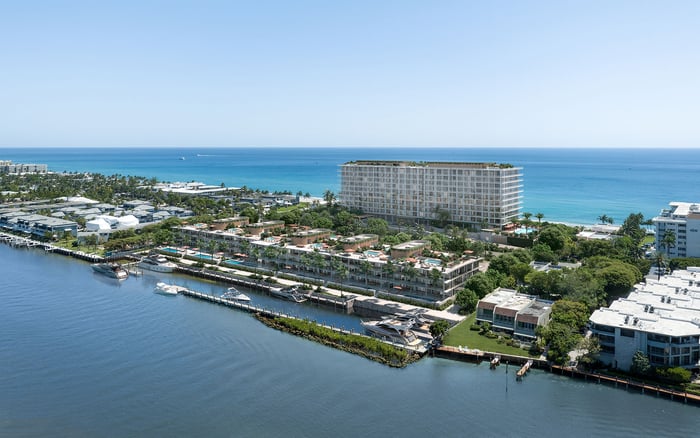
A property-specific framework for evaluating flood designations, wind coverage, hurricane deductibles, and condominium assessment exposure before buying in Hillsboro Beach.

Insurance diligence for a Hillsboro Beach purchase should begin early enough to inform the offer, financing plan, and inspection strategy. Ask the appropriate professionals to identify the current flood designation, applicable map information, available elevation documentation, and the replacement-cost assumptions used for quoting.
The review should focus on the exact residence rather than a nearby property or a general coastal estimate. For buyers considering Rosewood Residences Hillsboro Beach, the analysis should address the unit's proposed coverage together with the condominium association's insurance structure.
Ask a licensed Florida insurance agent, lender, and qualified building professional to explain how the parcel's flood designation and elevation information affect the proposed purchase. The team should work from the same current documents and identify any missing records before contractual deadlines.
A designation alone does not provide a complete view of exposure. Request written guidance on available flood coverage, proposed limits, exclusions, lender conditions, and whether additional protection should be evaluated for the property.
Do not compare proposals by premium alone. Request a side-by-side review of covered perils, exclusions, valuation method, policy limits, wind provisions, flood coverage, occupancy assumptions, and conditions that could affect eligibility or claims.
Each proposal should clearly identify which policy responds to wind, flood, personal property, improvements, additional living expenses, and other relevant categories. Any gap or overlap should be explained in writing by the professionals advising the transaction.
Buyers exploring the broader Broward coastline may also compare residential formats at Armani Casa Residences Pompano Beach and The Ritz-Carlton Residences® Pompano Beach, while keeping every insurance review specific to the selected residence.
For every proposal, ask the agent to present each deductible in the form stated by the policy and as the corresponding dollar exposure for the quoted insured limit. Confirm which event activates it, how often it may apply, and whether separate deductibles govern different causes of loss.
The insured limit used by the carrier should be reviewed independently from the purchase price. Buyers should also consider whether they can comfortably fund the stated out-of-pocket amount while handling repairs, temporary occupancy needs, and other costs that may follow a loss.
A condominium buyer should examine both personal coverage and association-level documents. Request the master-policy declarations, insurance summary, deductible provisions, allocation language, loss-assessment provisions, reserve information, and notices of pending or contemplated assessments.
Ask qualified advisers to explain which building components fall under the association's program and which remain the unit owner's responsibility. The review should also identify how an association deductible or uninsured expense could be allocated and whether the proposed unit-owner policy addresses relevant assessment exposure.
Provide the insurance agent with the available property documents as soon as practical. Request written proposals with enough time for follow-up questions, revised limits, lender review, and specialist input before the applicable contractual period ends.
The final comparison should summarize premium, deductibles, limits, exclusions, valuation assumptions, flood structure, association exposure, and unresolved conditions. Legal, lending, insurance, and building questions should be directed to appropriately licensed professionals before the buyer proceeds.
Why should insurance diligence begin early? Early review gives the buyer time to obtain documents, compare proposals, and address unresolved conditions within the transaction timeline.
Should a nearby property's insurance quote be used as a benchmark? It may provide limited context, but the decision should rely on documentation and quotes prepared for the exact residence.
Which flood documents should a buyer request? Ask the relevant professionals for the current flood determination, applicable map information, and any available elevation documentation for the property.
How should flood-zone information be evaluated? Have the insurer, lender, and qualified building adviser explain how the current designation affects the proposed coverage and transaction.
What should a side-by-side policy comparison include? Compare covered perils, exclusions, limits, valuation assumptions, occupancy terms, wind provisions, flood structure, and deductibles.
How should a buyer review a hurricane deductible? Request the policy wording, triggering conditions, and the corresponding dollar exposure based on the quoted insured limit.
Is purchase price the right basis for reviewing insurance limits? Do not assume so; ask the carrier and qualified advisers to explain the valuation and insured-limit assumptions used in the proposal.
Which condominium insurance records merit review? Request master-policy declarations, the insurance summary, deductible and allocation provisions, loss-assessment language, reserve information, and relevant assessment notices.
Why does association-level exposure matter? Association deductibles or uninsured expenses may affect a unit owner, so the allocation provisions and proposed personal coverage require careful review.
Who should answer unresolved insurance questions? Use appropriately licensed insurance, legal, lending, and building professionals for advice specific to the residence and transaction.
If you'd like a private walkthrough and a curated shortlist, connect with MILLION.
If branded residences are on your mind — as a home or as an allocation — we would be glad to share what we are seeing, privately.
Begin a quiet conversation