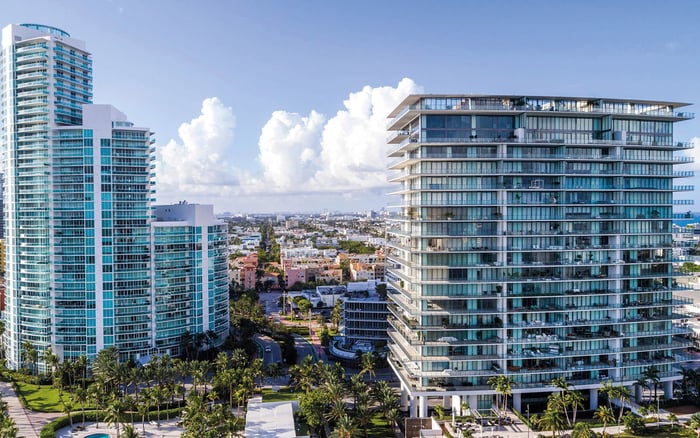
A disciplined North Bay Village condo review connects structural findings, reserve requirements, adopted budgets, and the association’s plan for executing major work.

In North Bay Village, water views and proximity to Miami Beach may frame the initial appeal, but a sophisticated condominium acquisition ultimately turns on less visible considerations. Three files are decisive: the milestone inspection, the Structural Integrity Reserve Study, commonly called the SIRS, and the association’s capital-project funding plan.
Each answers a distinct question. The milestone report addresses safety and structural condition. The SIRS estimates reserve needs for specified major components. The funding plan shows whether the association is translating technical recommendations into budgets, collections, contracts, financing, and completed work. Reading only one layer can create a misleading sense of comfort.
The strongest purchase file connects building condition, reserve funding, and project execution.
This discipline applies across waterfront, investment, and resale decisions. It is equally relevant when evaluating established inventory or comparing it with newer offerings such as Continuum Club & Residences North Bay Village, Shoma Bay North Bay Village, and Tula Residences North Bay Village. The available documents and contractual framework may vary by property, but the buyer’s objective remains constant: understand the building obligation that accompanies the residence.
Florida’s milestone-inspection framework applies to residential condominium and cooperative buildings at least three habitable stories tall. The default initial deadline is December 31 of the year in which a qualifying building reaches 30 years of age, measured from its certificate-of-occupancy date. After the first inspection, qualifying buildings generally face reinspection every 10 years.
Coastal location requires careful interpretation. For a building within three miles of the coastline, the local enforcement agency may establish a 25-year initial deadline based on environmental conditions, including proximity to saltwater. This does not mean every coastal property automatically follows a 25-year schedule. Confirm the certificate-of-occupancy date and applicable deadline with the local authority.
The milestone inspection must be performed by a Florida-licensed architect or engineer authorized to practice in the state. Request the complete report-not merely a certificate, summary, or management representation. Determine whether the review called for further testing, whether repairs were recommended, and whether any item remains open.
A satisfactory milestone result is useful but narrow. It does not establish that reserves are adequate, future work is fully funded, or the board has adopted a viable execution schedule. Conversely, a significant reserve balance does not erase structural defects, repair recommendations, or the need for additional testing.
The SIRS examines reserve requirements for major covered components; it is not another structural-safety certificate. Its scope can include the roof, structural systems, fireproofing and fire protection, plumbing, electrical systems, waterproofing, exterior windows and doors, and other components above the statutory cost threshold.
A covered building’s SIRS must be updated at least once every 10 years. As of January 1, 2026, associations may not waive or underfund reserves required for SIRS-mandated structural components. For buyers, the central issue is not simply whether a study exists, but whether its component estimates and contribution schedule are reflected in the adopted budget and actual reserve practices.
Compare the study with current reserve balances. Then examine the projected timing of component work, anticipated contributions, and any assumptions that could materially affect collections. If the budget contribution trails the SIRS schedule, determine how the difference is being addressed. Monthly dues alone rarely reveal the full picture.
An association required to complete a milestone inspection on or before December 31, 2026, may perform its SIRS at the same time. A SIRS coordinated under that provision must be completed by December 31, 2026. Coordination may be efficient, but it does not merge the purposes of the two exercises. One assesses structural condition; the other addresses reserve needs and funding.
The capital-project funding plan is not necessarily a single document. A buyer may need to assemble it from the adopted budget, recent board minutes, engineering proposals, executed contracts, special-assessment records, loan documents, reserve transfers, and payment schedules. Together, these records show whether identified work has a credible path from recommendation to completion.
Begin with every open item in the milestone report and SIRS. For each, ask four questions: What is the current scope? Has a contract been executed? Which account or financing source will pay for it? What remains to be collected from owners? This process converts a stack of disclosures into an intelligible map of obligations.
Board minutes are especially important. They can reveal scope changes, bid discussions, project delays, financing debates, and contemplated assessments before those matters become evident in the annual budget. Compare engineering proposals with contracts to understand the relationship between estimated and committed costs. Examine loans for repayment obligations that may affect future dues, and trace reserve transfers to determine whether one project has reduced capacity elsewhere.
Professionals bidding on milestone inspections must disclose in writing if they also intend to bid on maintenance, repair, or replacement work the inspection may recommend. Comparable disclosure requirements apply when a professional conducting a SIRS plans to bid on work identified by that study. Buyers should locate these disclosures and understand who prepared the analysis, who proposes the work, and how the association evaluated competing interests.
The diligence period should establish whether both required studies are complete, current, and consistent with the association’s financial decisions. An unfinished or overdue milestone inspection or SIRS creates uncertainty around repair scope, reserve contributions, and possible special assessments. That uncertainty should be investigated, not reduced to a simple pass-or-fail label.
Request the building’s certificate-of-occupancy date, complete milestone report, complete SIRS, current budget, recent financial statements, reserve balances, recent board minutes, active contracts, pending bids, loan terms, reserve transfers, and assessment history. Confirm whether recommended testing has concluded and whether completed repairs received the required follow-through.
For comparison, a buyer considering nearby The Well Bay Harbor Islands should apply the same analytical structure while recognizing that each property will present its own stage of development, governance documents, and future association obligations. No project link or presentation replaces document-level diligence.
Legal compliance is a starting point, not proof of financial strength or freedom from future assessments. The better measure is alignment. Do the milestone findings correspond with the SIRS assumptions? Does the adopted budget follow the reserve schedule? Do minutes and contracts demonstrate that the board is executing necessary work? Are remaining owner obligations clearly quantified and timed?
A well-governed building can still face substantial capital work, just as a visually pristine property can carry unresolved funding questions. The distinction lies in transparency and preparedness. Buyers should evaluate the residence and the association as a single economic proposition, with professional legal, engineering, and financial review tailored to the transaction.
For discreet guidance on North Bay Village opportunities and the documents that shape a confident acquisition, connect with MILLION.
If branded residences are on your mind — as a home or as an allocation — we would be glad to share what we are seeing, privately.
Begin a quiet conversationIt is a building-safety assessment for qualifying condominium and cooperative buildings, performed by an authorized Florida-licensed architect or engineer.
The law applies to residential condominium and cooperative buildings that are three or more habitable stories tall.
The default deadline is December 31 of the year a qualifying building reaches 30 years of age, measured from its certificate-of-occupancy date.
No. For buildings within three miles of the coastline, the local enforcement agency may set a 25-year deadline based on environmental conditions.
After the initial inspection, qualifying buildings generally must be reinspected every 10 years.
A SIRS evaluates reserve needs for specified major building components, including structural systems and other covered capital items.
A SIRS must be updated at least once every 10 years for each covered building.
No. Structural condition and reserve funding are separate inquiries, so the milestone report and SIRS should be reviewed together.
An association with a milestone inspection due on or before December 31, 2026, may coordinate the SIRS with it, with completion required by December 31, 2026.
Request budgets, board minutes, reserve balances, engineering proposals, contracts, loans, reserve transfers, and special-assessment records.