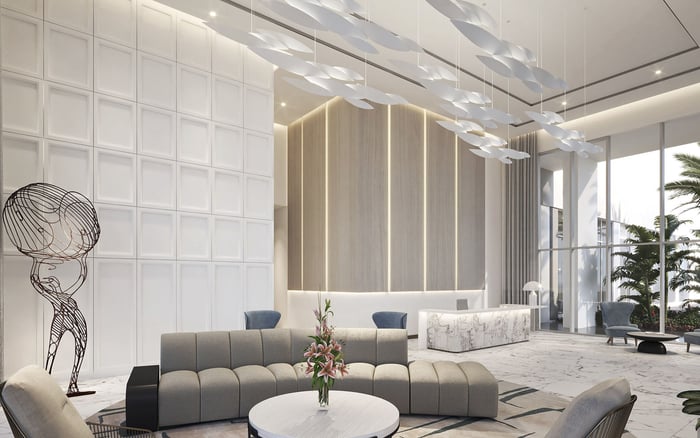
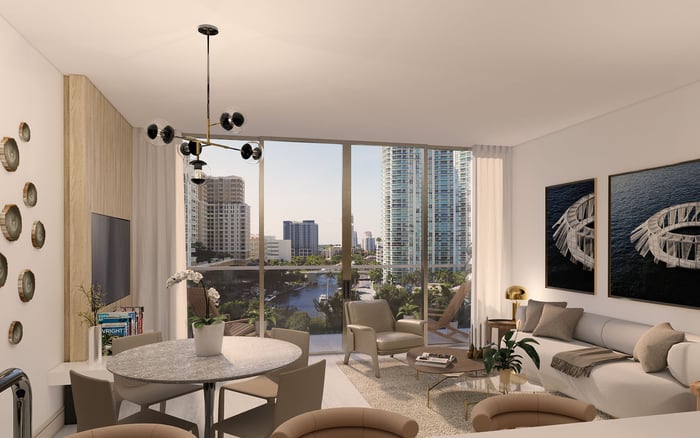
A buyer-focused comparison of Origin Bay Harbor Islands and Sixth & Rio Fort Lauderdale, showing how boutique island calm and connected urban-river living are shaping the long-term definition of luxury in South Florida.
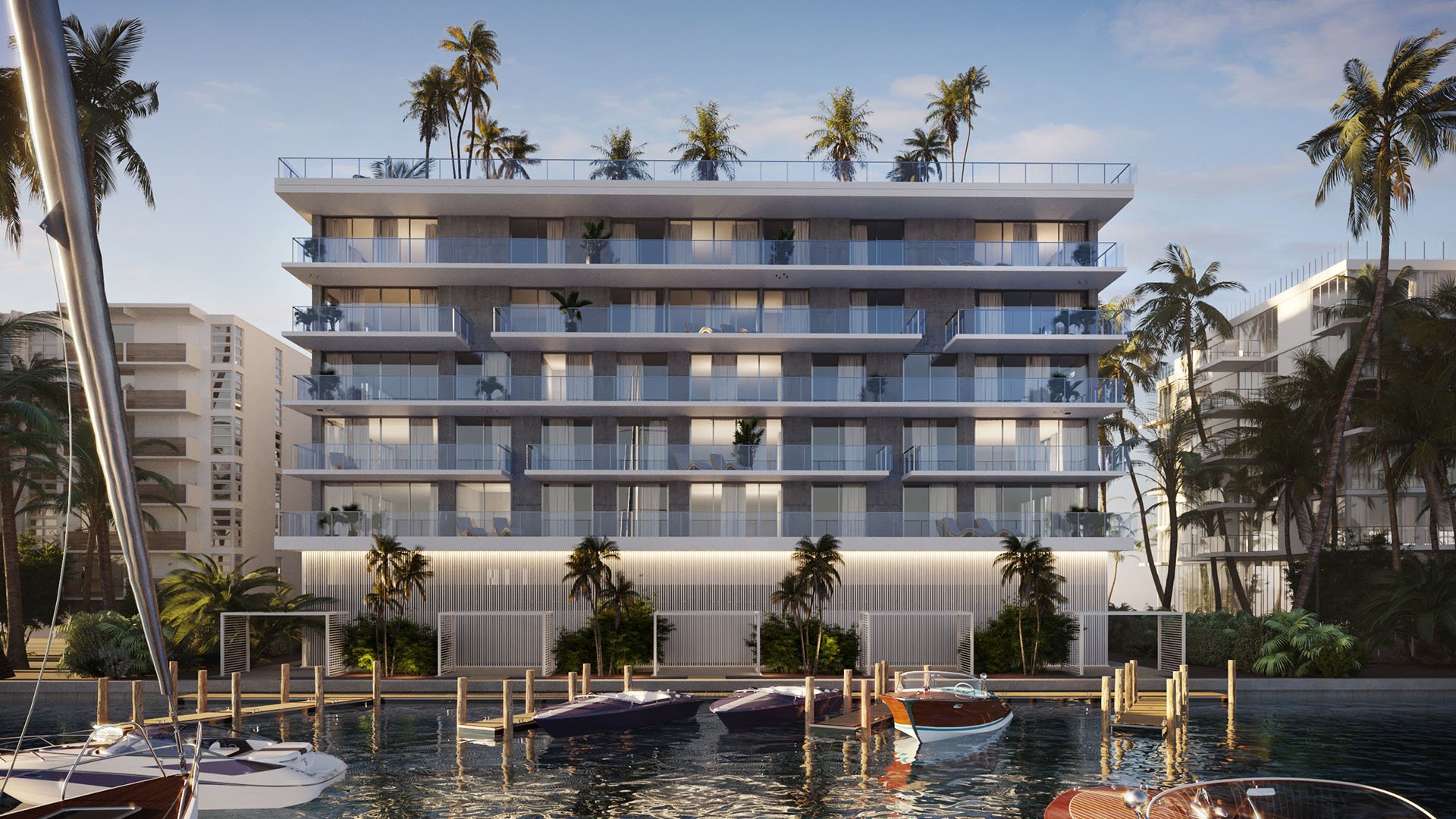
South Florida luxury has never lacked drama. It has glass towers, arrival courts, oceanfront silhouettes, and branded residential theater. Yet for many serious buyers, the more revealing question is quieter: how well does a residence support life after the first season?
That is where Origin Bay Harbor Islands and Sixth & Rio Fort Lauderdale become useful case studies. They are not interchangeable addresses. One speaks to lower-scale luxury living in Bay Harbor Islands, close to Miami-Dade waterfront neighborhoods, Bal Harbour, Surfside, retail, beaches, and a more residential island rhythm. The other speaks to an urban-near-water model in Fort Lauderdale, close to Downtown, the Las Olas-area lifestyle, dining, arts, and river-oriented mobility.
Together, they point to a clear shift in buyer priorities. The most durable South Florida residences are not defined only by views, services, or a recognizable name. They are shaped by privacy, useful proximity, neighborhood integration, and the ability to make ordinary days feel considered.
Origin Bay Harbor Islands represents the boutique side of this discussion, where luxury is measured less by scale than by fit. Bay Harbor Islands has long appealed to buyers who want proximity to the energy of Miami Beach and Bal Harbour without living inside the most kinetic parts of those markets. The appeal is not isolation. It is controlled access to what matters.
For the long-term owner, that distinction is critical. A residence in this setting can support a primary-home lifestyle because daily life does not have to revolve around a single resort experience. The neighborhood format encourages a more grounded routine, with privacy, walkability, and nearby amenities carrying as much weight as headline architecture.
This is also why other Bay Harbor Islands projects, including Alana Bay Harbor Islands and similar nearby offerings, often enter the same buyer conversation. The common thread is not sameness of design or price. It is the idea that lower-scale residential living near premium coastal neighborhoods can feel more livable over time than a larger tower with more spectacle but less neighborhood intimacy.
Origin is useful because it clarifies what many Miami-Dade buyers are really seeking. They may want proximity to the beach, Bal Harbour shops, Surfside dining, and waterfront-adjacent calm, but not the daily friction of a busier resort corridor. In that context, quiet becomes an amenity. Familiar streets become an amenity. A sense of arrival without performance becomes an amenity.
Sixth & Rio Fort Lauderdale tells a different story. Its livability argument is less about island retreat and more about connected convenience. Fort Lauderdale has a distinct advantage for buyers who want a residential base near the city’s urban core while retaining access to water, dining, cultural life, and the river-oriented identity that gives the city its texture.
The project is relevant because it supports a walkable, amenity-rich Fort Lauderdale lifestyle that is not purely beach-oriented. That matters. For some buyers, long-term value is not found in spending every day beside the sand. It is found in a more complete weekly pattern: dinner near Las Olas, a shorter route to business or social commitments, access to arts and dining, and the ability to move through the city without feeling detached from it.
Broward buyers often evaluate Fort Lauderdale through this lens. The question is not simply whether a building is near the water. It is whether the location can make everyday life more efficient and more pleasurable. In that sense, Sixth & Rio sits within a broader residential conversation that may also include properties such as Riva Residenze Fort Lauderdale, where city access and water-adjacent living are both part of the appeal.
This model feels especially relevant for owners who plan to use a residence frequently. A second home may survive on atmosphere alone. A primary or extended-use home must perform in smaller ways: morning routines, evening plans, visiting friends, errands, parking patterns, and the ease of returning home after a long day.
The most productive comparison between Origin Bay Harbor Islands and Sixth & Rio is not which location is more luxurious. It is which rhythm fits the buyer.
For a privacy-focused owner, Origin’s Bay Harbor Islands context makes sense as a softer Miami-Dade landing point. It offers access to prestigious coastal neighborhoods while preserving a calmer residential tone. For an owner who prizes a more connected civic routine, Sixth & Rio’s Fort Lauderdale setting may be more compelling, especially for those who want the city, river, Las Olas-area amenities, and daily convenience in closer alignment.
New-construction decisions in South Florida can become overly focused on finishes and renderings. Those details matter, but they do not answer the deeper question. A home must make its owner’s life easier. Does the setting support weekday routines, not just weekend entertaining? Does the building feel integrated into a neighborhood, not simply placed upon it? Does the location reduce dependency on long drives for dining, services, or social life? Does it offer calm without disconnection, or connection without constant noise?
This is why a project such as The Well Bay Harbor Islands can also be relevant to buyers studying the Bay Harbor Islands lifestyle. The neighborhood itself has become a lens through which buyers consider privacy, wellness-oriented routines, and access to premium coastal amenities without committing to a high-density beachfront tower.
Origin and Sixth & Rio reveal two mature versions of luxury livability. One is island-residential calm, where the reward is discretion and proximity without excess intensity. The other is city-adjacent convenience, where the reward is access, mobility, and a more connected daily routine.
Neither model is inherently superior. The right answer depends on how the buyer actually lives. A household that wants quiet mornings, neighborhood scale, and quick access to Bal Harbour and Surfside may read Origin as the more natural fit. A buyer who wants dining, Downtown energy, arts access, and riverfront mobility may see Sixth & Rio as the more complete long-term solution.
The broader point is that South Florida’s luxury market is becoming more nuanced. Buyers are increasingly able to choose among different forms of permanence: the calm of a boutique island address, the convenience of an urban-near-water residence, or the more traditional resort profile. The most successful choice will be the one that still feels intelligent after the view becomes familiar.
What does Origin Bay Harbor Islands reveal about livability? It shows the appeal of boutique island living with privacy, walkability, and access to Bal Harbour and Surfside-area amenities.
What does Sixth & Rio Fort Lauderdale reveal about livability? It highlights a connected Fort Lauderdale model tied to Downtown access, Las Olas-area amenities, dining, arts, and river-oriented daily life.
Are these projects direct competitors? They serve different lifestyle priorities, with Origin emphasizing island calm and Sixth & Rio emphasizing urban-near-water convenience.
Which is better for buyers seeking privacy? Origin may appeal more to privacy-focused buyers who want a lower-scale residential setting near Miami-Dade coastal neighborhoods.
Which is better for a connected city routine? Sixth & Rio may suit buyers who want easier access to Fort Lauderdale’s urban core and a more integrated daily schedule.
Does long-term livability depend on amenities alone? No. Amenities matter, but location rhythm, walkability, privacy, neighborhood fit, and daily convenience often matter more over time.
Why is Bay Harbor Islands attractive to long-term owners? It offers a quieter residential environment near premium retail, beaches, Surfside, and Bal Harbour without the feel of a larger resort corridor.
Why is Fort Lauderdale attractive to long-term owners? Fort Lauderdale can offer city access, dining, arts, and riverfront mobility while remaining connected to South Florida’s waterfront lifestyle.
Should buyers prioritize views or everyday usability? Views are meaningful, but a residence intended for frequent use should also support routines, access, comfort, and neighborhood integration.
What is the main takeaway for South Florida buyers? The best luxury residence is the one whose setting matches the buyer’s real daily life, not just the most dramatic first impression.
For a discreet conversation and a curated building-by-building shortlist, connect with MILLION.
If branded residences are on your mind — as a home or as an allocation — we would be glad to share what we are seeing, privately.
Begin a quiet conversation