A disciplined framework for family offices evaluating Palazzo della Luna, from residence fit and governance to entity planning, diligence and long-term stewardship.

For a family office, acquiring an exceptional residence is rarely a single decision. It is a sequence of connected judgments involving family use, control, privacy, succession, liquidity and administration. At Palazzo della Luna, the physical proposition is clear: an ultra-luxury condominium on the northeastern side of Fisher Island, conceived as a contemporary counterpart to Palazzo del Sol.
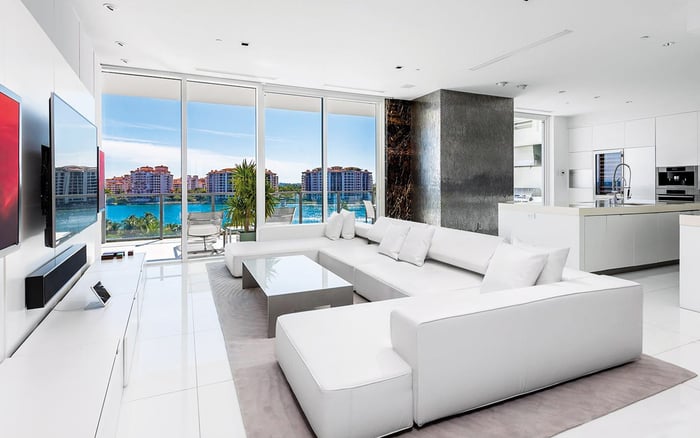
The residences face the Atlantic Ocean and Miami Beach skyline, while the mid-rise, low-density concept favors horizontal living over the vertical density associated with central Miami. Floor-to-ceiling windows, deep terraces and large-scale layouts accommodate family stays, extended-family use and entertaining. Yet architecture should not settle an ownership question that demands its own analysis.
This edition of MILLION Buyer’s Guides treats the home and its holding structure as parallel workstreams. The objective is not complexity for its own sake, but a structure that reflects who will use the residence, who can make decisions and how obligations will be supervised.
Before comparing entities or estate-planning approaches, the office should prepare a practical occupancy brief. It should identify anticipated users, the expected frequency of stays, guest protocols, decision-makers and the person responsible for approvals, payments and records. A home intended for one principal and a residence shared across generations can require markedly different governance.
Palazzo della Luna’s multi-bedroom residences, larger penthouse options and full-floor configurations make this exercise especially relevant. Deep terraces expand the social footprint, and select residences include private plunge pools. Integrated smart-home technology and extensive shared amenities add operational layers that should be assigned to named individuals rather than managed informally.
The brief should distinguish benefits from authority. A relative permitted to stay at the residence need not automatically hold a vote on a sale, renovation or major expense. Likewise, the person coordinating household operations may not be the appropriate party to approve capital decisions. A clear separation can preserve family access without diluting ownership discipline.
A family office should first determine whether the residence itself satisfies the mandate. Only then should counsel test whether direct ownership, a trust, an entity or another arrangement aligns with the family’s legal, tax and estate objectives. The optimal answer cannot be inferred from the property’s prestige, and no structure should be considered acceptable without review of the governing documents and applicable requirements.
The residence-level analysis should address layout, outlook, privacy preferences, terrace utility and the relationship between private space and shared amenities. The structural analysis should separately consider control, beneficial use, succession, financing implications, reporting and exit authority. Keeping the two memoranda distinct helps prevent an attractive floor plan from accelerating a consequential legal decision.
Within Fisher Island, Palazzo del Sol provides the direct architectural lineage, while The Residences at Six Fisher Island and The Links Estates at Fisher Island broaden the discussion of residential formats. These comparisons should sharpen priorities, not replace property-specific diligence.
Sound governance resolves ordinary questions before they become family disputes. Who may authorize guests? Who approves interior work? What spending threshold requires a second signatory? Who receives notices, maintains insurance files and coordinates advisers? What happens if a principal loses capacity or a family branch wishes to stop participating?
A concise ownership charter can record the family’s internal rules, but it should be coordinated with binding legal documents. The office should also establish a calendar for recurring reviews, document retention and decision logs. This administrative layer may not be glamorous, but it often keeps a trophy residence functioning as a supervised asset rather than an unmanaged privilege.
Investment language also demands restraint. Scarcity, privacy and low density may shape a buyer’s thesis, but they do not establish capital preservation, downside protection or market insulation. Those outcomes depend on purchase basis, carrying costs, future demand, condition, governance and the timing of any disposition.
The purchase price is only one component of the commitment. A disciplined underwriting model should incorporate all verified acquisition expenses, recurring condominium charges, insurance, taxes, staffing, maintenance, technology support and reserves for interior renewal. It should also test how family use affects service expectations and operating complexity.
Current asking prices, closed-sale evidence, ownership costs, condominium financials and insurance figures require independent verification for the specific residence under consideration. The office should obtain and review the applicable condominium documents, financial materials, insurance information and any restrictions governing ownership, occupancy, transfers, guests, leasing and alterations.
Sensitivity analysis is more useful than a single annual budget. It can reveal how the family would respond to higher recurring costs, a major interior project, changing use or a longer-than-expected sale period. The purpose is not to predict every outcome, but to ensure that foreseeable variation does not force improvised decisions.
Optionality should be designed, not assumed. A family may value the ability to accommodate changing generations, appoint new decision-makers or eventually sell, but each form of flexibility should have a defined approval path. Too many overlapping rights can make a residence difficult to administer, while excessive concentration can leave the family exposed if one decision-maker becomes unavailable.
The final structure should therefore be tested against practical scenarios: a long family stay, a major repair, a disagreement over access, incapacity, death and a proposed sale. Independent legal, tax, estate-planning, insurance and condominium-document advisers should evaluate the plan before execution. MILLION’s role is to frame the real-estate decision with discretion and precision, not to replace specialist advice.
What distinguishes Palazzo della Luna’s residential concept? Its low-density, mid-rise approach centers on horizontal living, large residences and expansive private terraces.
Where is Palazzo della Luna located? It occupies the northeastern side of Fisher Island in Miami Beach.
What views are associated with the residences? Residences look toward the Atlantic Ocean and the Miami Beach skyline.
Is the property designed for multigenerational use? Its multi-bedroom scale can accommodate families, extended-family stays and entertaining, subject to each household’s needs.
Do all residences include private plunge pools? No. Private plunge pools are a feature of select residences.
Should a family office choose an entity before selecting a residence? The residence and ownership structure should be evaluated separately, then coordinated before closing.
What should an internal ownership charter address? It can define access, approvals, spending authority, recordkeeping and procedures for major decisions.
Can low density guarantee capital preservation? No. Low density may inform an investment thesis, but it does not guarantee performance or downside protection.
Which diligence areas require specialist review? Legal, tax, estate-planning, insurance and condominium documents should receive independent professional review.
Why model an eventual exit at acquisition? Defining sale authority and decision procedures early can reduce ambiguity when family circumstances change.
To compare the best-fit options with clarity, connect with MILLION.
If branded residences are on your mind — as a home or as an allocation — we would be glad to share what we are seeing, privately.
Begin a quiet conversation