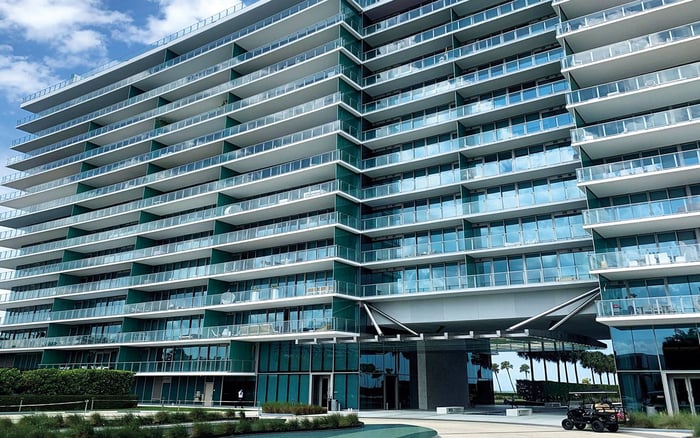
For trust and entity buyers in Key Biscayne, water-leak diligence should connect ownership authority, emergency access, restoration credentials, repair responsibility, and documented completion before closing.

For a buyer acquiring a Key Biscayne residence through a trust or entity, water-leak preparedness belongs alongside the review of finishes, floor plans, and ownership documents. The central question is practical: when water appears and the owner is absent, who can authorize entry, approve stabilization, and receive the information needed for the next decision?
At a property under consideration such as Oceana Key Biscayne, request the association's actual procedures rather than infer them from the residential setting. This is a diligence framework, not a statement about any particular building's practices. A carefully appointed residence deserves an equally deliberate response plan.
The legal owner and the operational decision-maker should be clearly connected. A trust name on title or an LLC in the association's records does not, by itself, tell management whom to call during an incident.
Identify the exact trust or entity owner and designate the representative authorized to receive emergency calls, approve access, sign work orders, and handle insurance decisions. These are recommended arrangements to verify with counsel, not universal legal requirements of entity ownership.
Give the association and property manager a written contact chain for business hours and after-hours incidents. Name a primary representative and a backup, and clarify which decisions each may make. Do not assume the registered agent is also the emergency decision-maker.
For second-home buyers, this arrangement deserves particular attention before extended absences. Ask management to acknowledge receipt and explain how responders will access the contact instructions during a leak.
Request written non-emergency entry procedures and prompt notification after emergency entry. Specify the information you want: why access occurred, who entered, what action was taken, and what remains unresolved. Treat these terms as an agreed communication protocol, not an assumed statutory notice right.
An association's ability to enter a residence and the allocation of repair responsibility are distinct questions. Florida condominium law provides association access during reasonable hours when necessary to repair common elements or prevent damage to common elements or a unit. Have counsel confirm how the applicable access provisions operate for the property.
Before accepting responsibility for repairs, establish whether the failed component is a unit element, a limited common element, or an association-maintained common element. The location of a stain or wet finish does not, by itself, determine who must repair the underlying failure.
Review the governing documents and maintenance allocations with the association and counsel. Ask management to identify the suspected source, explain the component classification, and state its position on responsibility in writing. Keep unresolved allocations separate from decisions about immediate protective work, and seek advice before accepting a broader restoration obligation.
Ask what the initial response includes and who directs the work. A useful scope should distinguish incident stabilization, investigation of the moisture source, drying of affected materials, assessment of any mold condition, and reconstruction of finishes. Do not let a single proposal obscure those separate decisions.
For water-damage work, request moisture mapping, equipment placement records, daily readings, photographs, and a written dry-out completion report. Ask the restoration vendor how its proposed work addresses IICRC S500, the relevant professional water-damage restoration standard.
Records should identify the affected areas and support the vendor's conclusion that drying is complete. Equipment removal alone is not sufficient completion documentation. Establish who receives updates and who reviews the dry-out records before approving the next phase.
Waterfront buyers comparing Key Biscayne with Coconut Grove options such as Park Grove Coconut Grove can carry these same questions into each property's diligence. Verify the answers with the particular association and proposed vendors rather than relying on assumptions about a neighborhood or project.
Florida distinguishes mold assessment from mold remediation. An assessor evaluates the mold condition and develops the assessment or protocol; a remediator performs the cleanup. A general assurance that a restoration company is licensed does not establish the credentials applicable to both roles.
Request the vendor's legal name and applicable mold-license numbers, then verify current status directly with Florida DBPR before authorizing work. Obtain an independent assessment before approving remediation and examine whether the proposed assessor-remediator arrangement creates a conflict of interest. Confirm applicable requirements with DBPR and counsel.
Require a written assessment identifying the moisture source, affected rooms and materials, containment measures, removal methods, and completion criteria. The proposed remediation scope should respond to that assessment, not substitute a broad promise to clean the residence.
Ask whether post-remediation testing is included, who will perform it, and how completion will be documented. Settle these details before authorization, with any exclusions made explicit. Do not assume every proposal includes the same testing or acceptance process.
Drying, remediation, and reconstruction should not be treated as interchangeable approvals. Confirm whether the association controls reconstruction after a property loss and whether owner-directed work requires prior written board approval.
Where approval is required, ask whether it depends on the contractor's qualifications, proposed contract, and repair method. An entity's authorized representative should understand these conditions before signing a reconstruction agreement.
In Key Biscayne, some flood-protection methods require construction permits. Before altering the property, contact the Village Building Division at 305-365-5512 to discuss the actual scope. Do not assume every demolition, wall opening, or drying operation has the same permit requirement.
Owners should report building repairs without a posted Village permit sign to Code Compliance. Clarify permitting with the Village rather than relying solely on a contractor's assurance, and retain the applicable permit records with the restoration file.
Keep incident photographs, drying logs, assessments, permits, invoices, and correspondence together under the property's legal owner and address. Ask that work authorizations and completion documents identify the residence consistently so the trustee, entity representative, manager, and advisers can follow the same record.
A buyer also considering Miami Beach residences such as The Perigon Miami Beach should apply the same discipline without assuming identical association rules. Compare written procedures, responsibility allocations, and vendor documentation property by property.
Before closing, seek a coherent answer to four questions: who receives notice, who authorizes action, who bears the relevant repair responsibility, and what establishes completion. Confirm legal requirements and responsibility allocations with counsel, licensing with DBPR, and scope-specific permitting with the Village. The objective is not a promise that a leak will never occur, but a clear process for responding when it does.
For a discreet perspective on South Florida residences and buyer priorities, explore MILLION.
If branded residences are on your mind — as a home or as an allocation — we would be glad to share what we are seeing, privately.
Begin a quiet conversationDesignate an authorized representative and a backup in a written contact chain shared with the association and property manager. Do not assume the registered agent is the emergency decision-maker.
No. Written non-emergency entry procedures and prompt notification after emergency entry are recommended terms to request, not assumed statutory notice rights.
Florida condominium law provides association access during reasonable hours when necessary to repair common elements or prevent damage to common elements or a unit. Counsel should confirm how the applicable provisions operate for the property.
Not by itself. Review the failed component's classification and the governing documents' maintenance allocations before accepting responsibility.
An assessor evaluates the condition and develops the assessment or protocol. A remediator performs the cleanup, and buyers should verify credentials applicable to each role.
Request the vendor's legal name and applicable mold-license numbers, then verify current status directly with Florida DBPR before authorizing work.
It should identify the moisture source, affected rooms and materials, containment measures, removal methods, and completion criteria. Obtain an independent assessment and examine potential conflicts in the proposed vendor arrangement.
Request moisture mapping, equipment placement records, daily readings, photographs, and a written dry-out completion report. Ask how the proposed work addresses IICRC S500.
No. Ask whether testing is included, who performs it, and how completion will be documented before approving the remediation scope.
Confirm whether the association controls reconstruction or requires prior written board approval. Contact the Key Biscayne Building Division at 305-365-5512 about the actual scope before altering the property.