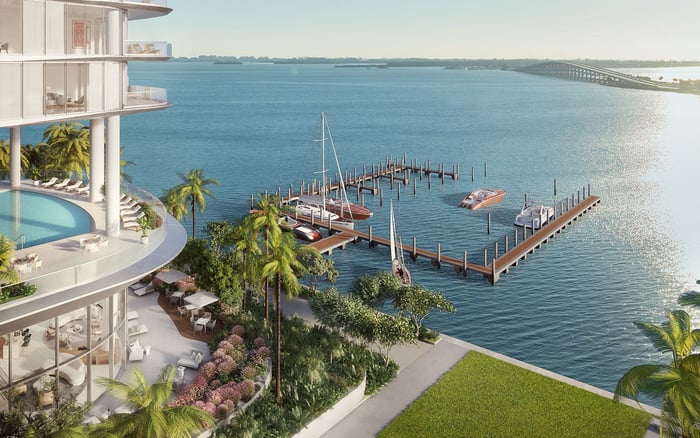
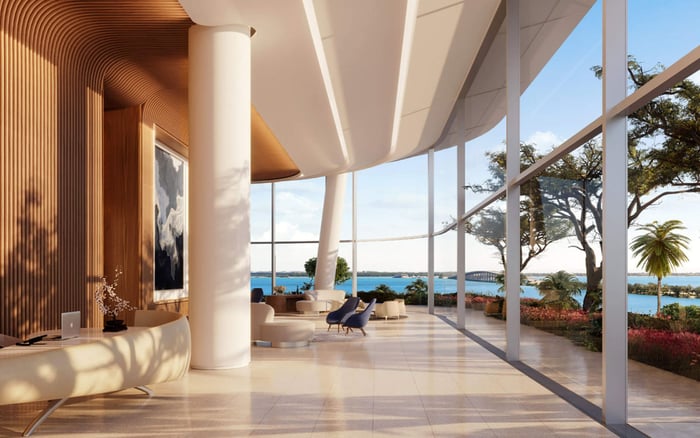
For collectors considering a Key Biscayne residence, the essential questions extend beyond wall space. Establish the delivery route, freight-booking terms, storage rights, environmental controls, and installation approvals before relying on a home to accommodate your collection.
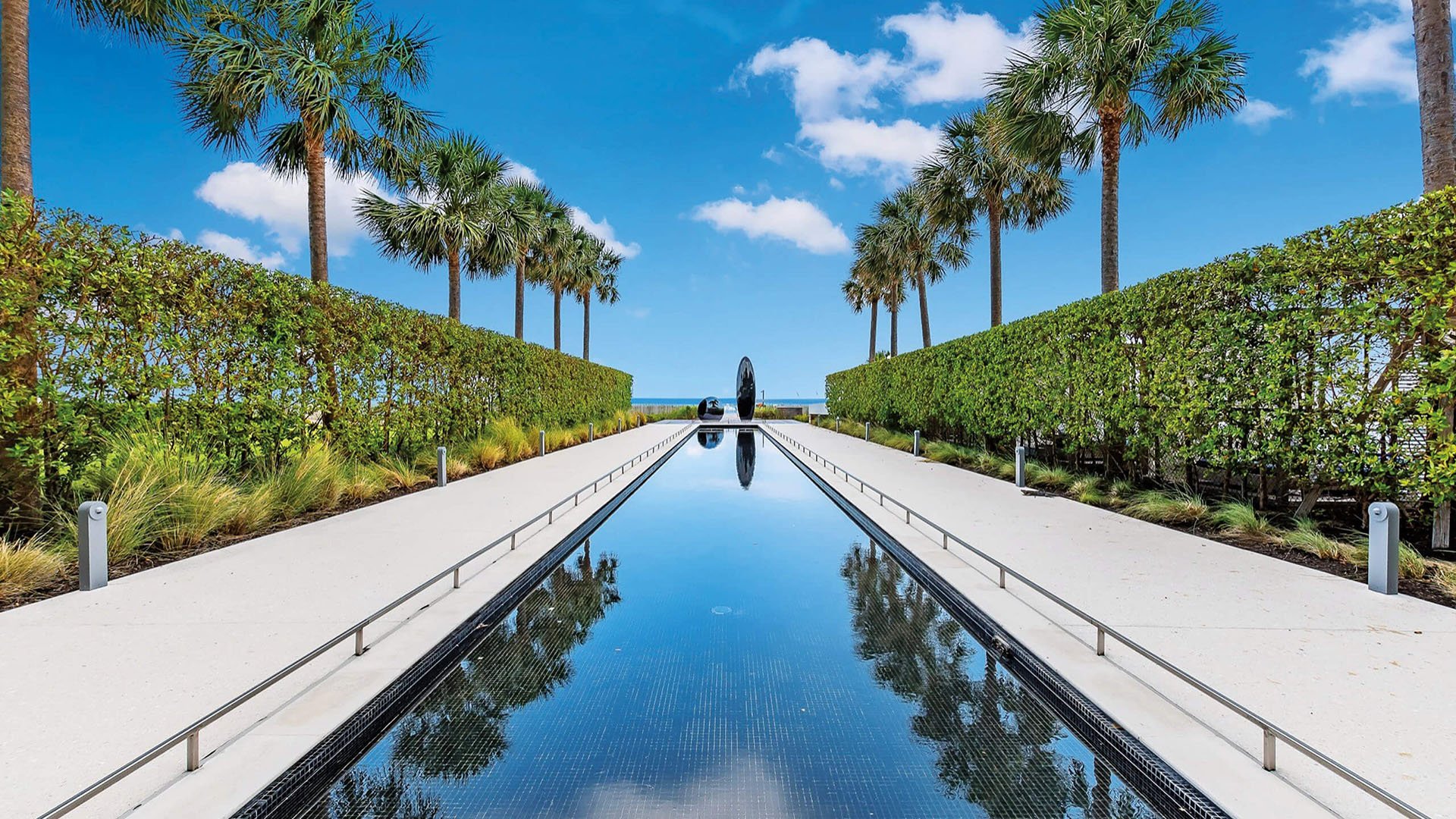
A residence may offer the right setting for a collection without a confirmed route for bringing it home. Before reserving in Key Biscayne, establish how the largest work will travel from the delivery vehicle to its intended position, where it can wait, and who must authorize its installation. Treat these as purchase questions, not details to delegate after committing.
For a buyer considering Oceana Key Biscayne, begin with a written request tailored to the collection. Ask management to distinguish existing building capabilities from arrangements that require separate approval. A property's identity should never substitute for confirmation of freight access, storage conditions, or installation permissions.
Prepare an inventory of crated dimensions, weights, intended locations, and proposed mounting methods. Have the art handler and installer identify which items require a site inspection before either commits to delivery.
Confirm the approved delivery entrance and trace the route through unloading, corridors, elevator doors, the elevator cabin, and the residence entrance. Request measurements at the narrowest transitions, including turns. The question is not simply whether a work fits inside an elevator, but whether its crate can safely reach and leave it.
Do not assume a freight elevator is available. Ask which elevator, if any, may be used for artwork, what load limits apply, and whether management will review the proposed route with the handler. Establish whether protective coverings are required and who installs and removes them.
Key Biscayne's frequent heavy afternoon rain makes the handoff from vehicle to building especially important. Ask whether unloading is sheltered, where a delayed shipment may wait, and what happens if weather interrupts the appointment. The arrival plan should identify an approved holding location rather than rely on an improvised pause at the entrance.
Treat an elevator booking as a set of terms, not merely a calendar entry. Ask how far ahead reservations can be made, whether access is exclusive, and whether unloading, protection, transport, and cleanup must all fit within the same window.
Request written answers on delivery hours, vehicle restrictions, staffing, insurance documentation, deposits, fees, cancellation terms, and overruns. These are building-specific questions, not assumed features or universal condominium requirements. Establish who can confirm the booking and whether a purchase reservation allows access to be scheduled before closing.
If your search extends to Coconut Grove and Park Grove Coconut Grove, use the same delivery questionnaire. Compare written answers property by property rather than carry assumptions from one building to another. Ask whether a preliminary logistics review is possible before committing, even if the delivery appointment must wait.
Storage deserves the same documentary attention as the residence. Ask whether it is included in the purchase and whether the right is deeded, assigned, licensed, or revocable. Request the governing language and clarify whether access continues after a transfer or can be changed by the association.
Document the exact location, usable dimensions, access hours, security arrangements, and recurring charges. Confirm whether artwork and its packing materials are permitted. Distinguish long-term storage from temporary staging: permission to keep an object in a designated space does not necessarily establish where a crate may sit during installation.
For an owner comparing a Brickell option such as Una Residences Brickell, carry this distinction into the review. Request separate answers on the right to use storage, its physical suitability, and permission to stage a delivery. None should be inferred from an amenity description.
“Climate-controlled” requires a precise explanation. Ask whether the proposed storage space provides both cooling and dehumidification. Request operating temperature and humidity ranges, monitoring arrangements, responsibility for responding to deviations, and backup-power details. Have your conservation adviser assess those specifications for the actual works rather than adopt a generic numerical target.
Ask the same operational questions about any room proposed for unpacking or temporary holding. Clarify which systems remain active during an outage and whether management can provide monitoring records. The objective is to understand actual conditions and response procedures, not simply confirm that air-conditioning exists.
Key Biscayne is a barrier island with groundwater-saturated limestone bedrock. Without infrastructure updates, substantial low-lying areas face future tidal flooding. That island-level context warrants property-specific questions, not a conclusion about an individual building.
For low-level storage, request elevation, drainage, and flood-protection details. Obtain the property's FEMA flood zone, available elevation information, flood-insurance requirements, building insurance summary, and claims history. Review environmental suitability and flood exposure separately; cooling and dehumidification do not establish protection from water intrusion.
Permission to bring artwork inside is not permission to modify a wall, ceiling, or structure. Present the mounting proposal early and ask management and the Village which reviews apply. Do not assume that every artwork needs a permit or that an art installation is automatically exempt.
Confirm whether an association approval letter is required before Building Department submission for the proposed scope. Establish who prepares drawings, whether engineering review is necessary, who pays review and consultation fees, and which documents management requires before work begins.
Use the Village's official permitting portal where applicable. Submitting an application does not authorize work; any required building permit must be issued before the permitted work begins. Keep municipal authorization and building oversight as separate checkpoints in the schedule.
Map installer access separately from delivery access. Ask about designated entrances, public-walkway restrictions, contractor vehicles, permitted working hours, and removal of crates and installation debris. Do not assume that property dumpsters are available for disposal. Require the installer to include removal arrangements in the proposed scope.
Before committing, assemble a concise file containing the measured delivery route, booking terms, storage rights, environmental specifications, property-level flood information, and installation approval sequence. Assign each unresolved question to management, the Village, the handler, or the installer, with a clear next step.
Ask your adviser and counsel how material unresolved conditions should be addressed in the reservation or purchase documents. The aim is not to demand certainty where review is still required, but to distinguish confirmed capabilities from permissions still outstanding-before the collection's arrival becomes a deadline.
For a considered approach to South Florida residences and collection-specific due diligence, connect with MILLION.
If branded residences are on your mind — as a home or as an allocation — we would be glad to share what we are seeing, privately.
Begin a quiet conversationRequest written confirmation of the delivery route, freight-booking terms, storage rights, environmental controls, and installation approval sequence. Identify any permissions that remain outstanding.
No. Ask management which elevator, if any, is available for artwork and confirm its dimensions, load limits, and approved access route.
Clarify the delivery window, exclusivity, staffing, documentation, charges, and cancellation or overrun terms. Ask whether preparation and cleanup must fit within the booked period.
Determine whether storage is included and whether the right is deeded, assigned, licensed, or revocable. Confirm its location, dimensions, access hours, security, and recurring costs.
Ask whether it includes cooling and dehumidification, then request operating ranges, monitoring arrangements, and backup-power details. Have a conservation adviser assess suitability for the collection.
Key Biscayne's rainfall and low-lying flood exposure warrant questions about storage elevation, drainage, and flood protection. Assess the individual property rather than assuming island-wide conditions describe every building.
Request the property's FEMA flood zone, elevation information, flood-insurance requirements, building insurance summary, and claims history.
No. Confirm separately whether the proposed mounting or structural work requires association review, engineering review, or a municipal permit.
An application does not authorize work. Any required building permit must be issued before the permitted work begins, and building-specific approval requirements must also be satisfied.
Ask about approved entrances, walkway and vehicle restrictions, working hours, and disposal arrangements. Do not assume crates or installation debris can be placed in property dumpsters.