Rosewood Residences Hillsboro Beach pairs resort-caliber amenities with a standalone condominium structure. For buyers approaching contract and closing, the absence of an on-site hotel changes the privacy analysis, but operating documents still determine guest access, reservations, costs and daily use.
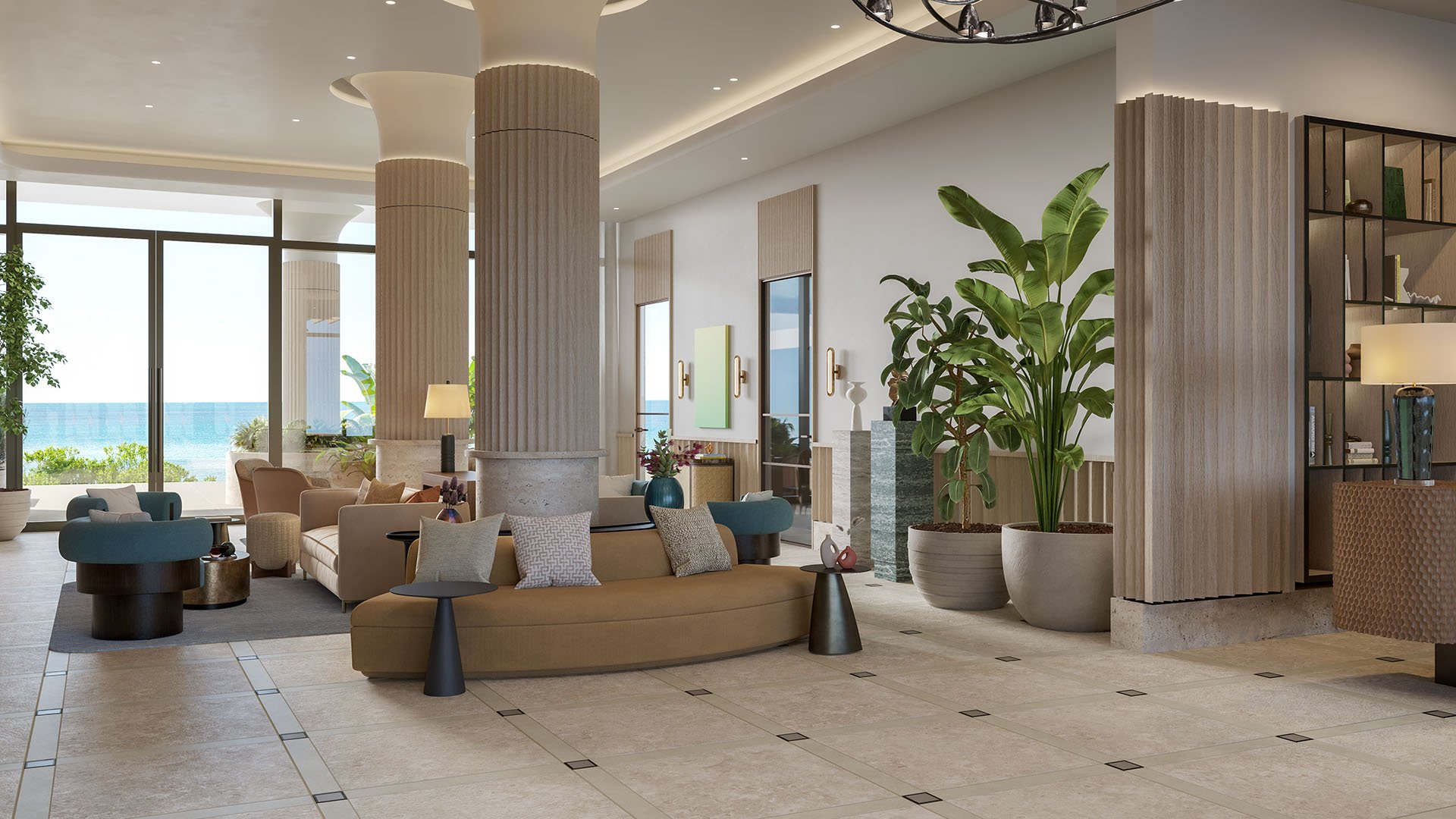
At Rosewood Residences Hillsboro Beach, the most consequential luxury may be structural rather than decorative. Conceived as a standalone branded condominium, the development has no on-site hotel-and no recurring population of nightly guests. That distinction can shape how owners experience arrivals, pools, dining, wellness spaces and guest accommodations long after closing.
The property is legally identified as 1180 Hillsboro Mile Condominium and marketed as Rosewood Residences Hillsboro Beach. Hillsboro Mile Property Owner, LLC is the developer. Rosewood’s name and marks are used under license agreements, while Rosewood Hotels and Resorts, LLC is neither the developer nor the offeror and does not make the developer’s sales representations. Related Group and Dezer Development partnered with Rosewood Hotels & Resorts on the branded residential project.
For a purchaser, those identities are not fine print. They clarify which entity is selling the condominium, which party supplies the brand and where contractual representations reside. The controlling purchase agreement and condominium documents-not the aura of a hospitality name-govern the acquisition.
A hospitality brand can shape the experience, but the condominium documents shape the ownership.
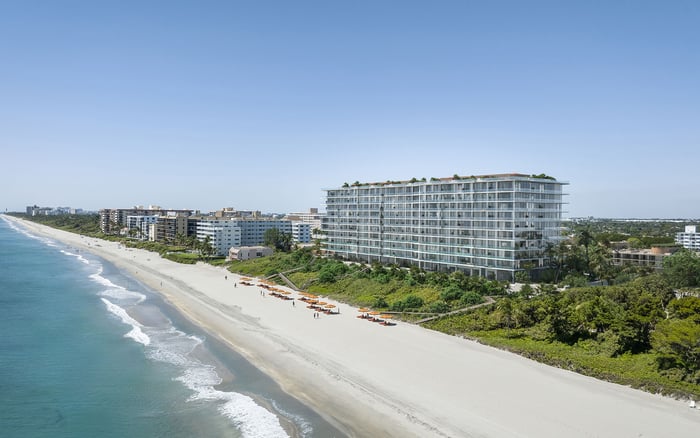
The development comprises 92 condominium residences and villas across roughly 12 acres at 1180 Hillsboro Mile, on the coastal stretch known as Millionaire’s Mile. The homes are divided between a 10-story oceanfront tower and a three-story Intracoastal building. The concept pairs resort-style living with the comfort of a private home rather than operating as a conventional resort hotel.
That model removes one predictable source of circulation: transient hotel guests checking in and out each day. In practical terms, owners are not expected to share amenity areas with a changing roster of nightly travelers. The result is a more residential privacy profile than that of a mixed hotel-residence development.
It does not, however, create a sealed environment. Owners’ visitors, household staff, building employees, vendors and event attendees can still generate activity, while occupancy patterns may shift with the seasons. Privacy therefore depends not only on the absence of hotel rooms, but also on access controls, guest rules, staffing, event practices and management execution.
This is a central consideration for Broward buyers evaluating oceanfront branded residences. The label denotes affiliation, not a uniform operating model. A purchaser comparing Rosewood with Four Seasons Hotel & Private Residences Fort Lauderdale should examine each project’s legal and operating structure rather than assume that comparable service levels produce comparable circulation.
Lower transient turnover may remove a meaningful source of amenity wear. Fewer short-stay users can mean less repeated luggage movement, fewer daily arrivals and departures, and less hotel-driven use of recreational spaces. Yet that possibility should not be mistaken for a promise of uncrowded facilities or lower common charges.
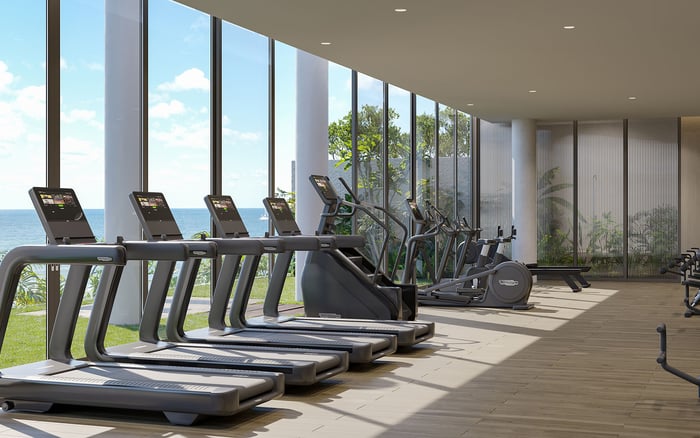
The amenity program remains operationally substantial. It includes oceanfront and Intracoastal pools; tennis, pickleball and padel courts; two fitness centers; and a spa with a hammam, sauna, hydrotherapy pools and treatment rooms. Conference rooms, meeting rooms and waterfront lounges accommodate resident functions. Twenty-four-hour security and valet service add further staffing requirements.
The signature oceanfront restaurant is dedicated to residents, while in-residence dining and catering extend food service into the homes. The arrangement delivers hospitality-style convenience within a residential format. It also requires the condominium to support restaurant, wellness, recreation and service operations without public hotel inventory.
Actual wear and cost will depend on owner occupancy, invited guests, events, maintenance standards and the operating budget. A lightly occupied building with exacting service can still carry significant expenses. Conversely, a busy residential community can concentrate demand on popular spaces. Buyers should assess the budget and maintenance assumptions, not simply the projected number of users.
The guest accommodations are luxury rooms for residents’ friends and family rather than public hotel inventory. That distinction is appealing to owners who want visiting family nearby without introducing a conventional hotel population. Still, marketing materials do not define the practical reservation experience.
Before closing, a purchaser should obtain the rules governing booking windows, fees, cancellation terms, blackout periods, length-of-stay limits and owner-priority procedures. The same scrutiny should extend to restaurant reservations, spa appointments, treatment-room access, catering, meeting rooms, lounges and private events. “Dedicated to residents” should not automatically be interpreted as a legally residents-only promise. Operating rules may address invited guests, events or other approved users.
The relevant question is not simply whether an amenity exists. It is whether an owner can use it when desired, under understandable terms and with a reservation hierarchy aligned with expectations. Buyers comparing other service-rich properties, including W Pompano Beach Hotel & Residences and Auberge Beach Residences & Spa Fort Lauderdale, can apply the same document-first discipline while recognizing that each development may be structured differently.
For pre-construction purchasers, the closing review should connect the sales narrative to enforceable documents. Counsel can confirm the legal identity of the condominium and developer, the role and limits of the brand license, and the provisions governing management, access and operating rules. The declaration, association materials, current budget, purchase agreement and amendments warrant coordinated review.
Particular attention should be paid to whether guest-suite procedures are fixed or left to later management rules; whether restaurant, spa and event spaces have stated access priorities; how owner guests are registered; and what authority exists to revise fees or reservation policies. Buyers should also understand how maintenance and service costs are allocated through the condominium structure.
A 2027 completion target has been publicized, but an individual purchaser’s closing date remains governed by the applicable contract and construction schedule. Contractual notices, completion conditions and closing procedures therefore carry more weight than a generalized target.
This is the practical purpose of MILLION Buyer's Guides: separating an elegant operating concept from the documents that define ownership. Rosewood’s standalone model may offer a persuasive privacy advantage by eliminating nightly hotel turnover, while its extensive amenities preserve a resort-caliber rhythm. The enduring value of that proposition will depend on the rules, budgets, staffing and access protocols purchasers can evaluate before taking title.
For discreet guidance on South Florida luxury ownership, explore MILLION.
If branded residences are on your mind — as a home or as an allocation — we would be glad to share what we are seeing, privately.
Begin a quiet conversationNo. It is a standalone branded condominium without an on-site hotel or nightly hotel inventory.
The property is legally identified as 1180 Hillsboro Mile Condominium and marketed as Rosewood Residences Hillsboro Beach.
Hillsboro Mile Property Owner, LLC is the condominium developer.
No. Rosewood Hotels and Resorts, LLC is not the developer or offeror, and the Rosewood name and marks are used under license agreements.
The development contains 92 condominium residences and villas across roughly 12 acres.
No. The luxury guest rooms are described as accommodations for residents’ friends and family.
No. Owner occupancy, visitors, events, staffing and operating rules will still influence use and crowding.
It can remove one source of turnover and wear, but actual conditions depend on residential use, guests, events and maintenance standards.
Buyers should confirm booking windows, fees, cancellation terms, blackout dates and owner-priority procedures for guest rooms and other reservable amenities.
A 2027 completion target has been publicized, but each purchaser’s closing date depends on the applicable contract and construction schedule.