At Rosewood Residences Hillsboro Beach, advertised finish choices should not be confused with post-closing alteration rights. Buyers should verify approval authority, contractor eligibility, access logistics, costs and scheduling before committing to a customization plan.

A beautifully resolved residence can still invite a personal touch: bespoke millwork, a different stone palette or a reconfigured dressing room. At Rosewood Residences Hillsboro Beach, the buyer’s question is not simply whether a design is possible. It is whether the proposed team can execute it, with whose approval and on what timetable after closing.
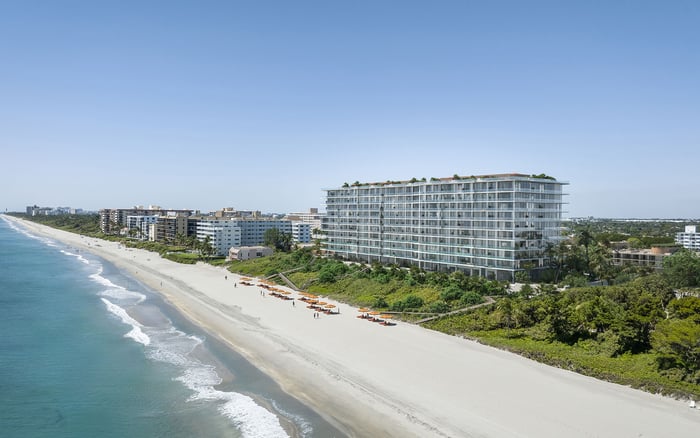
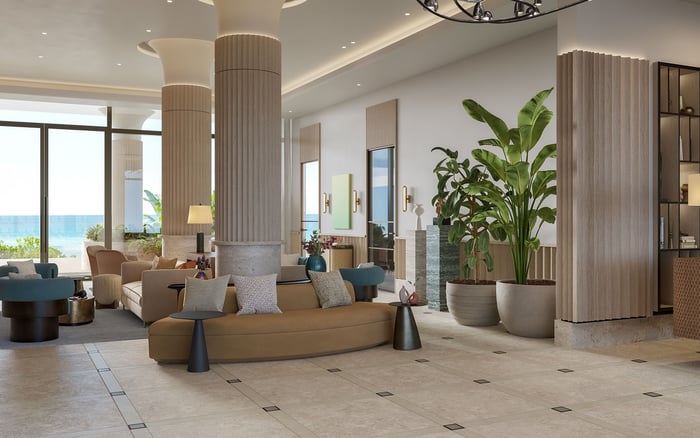
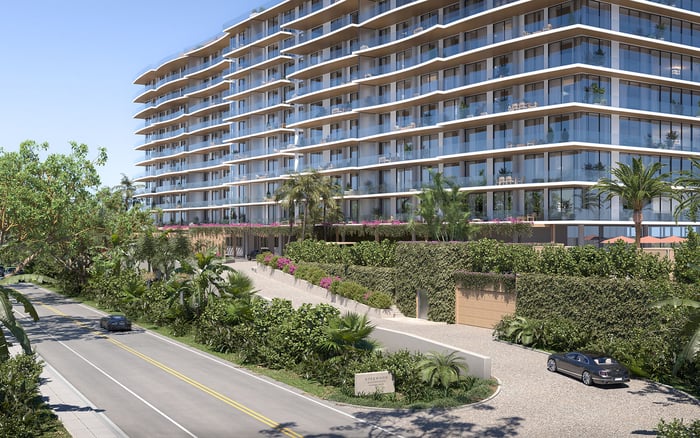
The development at 1180 Hillsboro Mile comprises 92 residences: 70 oceanfront condominiums in a 10-story building and 22 Intracoastal villas in a three-story building. Related Group and Dezer Development are developing the project in partnership with Rosewood Hotels & Resorts, with architecture by Arquitectonica and interiors by Studio Piet Boon.
That pedigree establishes a design proposition, not an unrestricted right to alter it. If imposed, contractor-access restrictions could extend schedules or increase costs. Buyers should establish the applicable rules in writing rather than infer them from branding, service levels or sales conversations.
Rosewood Hillsboro Beach is marketed as a standalone residential development without a hotel component. Planned services include concierge and butler support, 24-hour security and valet, and in-residence dining and catering. Neither the residential-only configuration nor those services establishes who can approve an owner’s construction work.
Request the declaration, bylaws, current rules, alteration manual and any applicable design guidelines. Have counsel identify the controlling provisions and approval authority before and after association turnover. Ask whether approval issued during developer control remains effective if work begins under a different management or governance arrangement.
Separate administrative coordination from substantive consent. A concierge’s ability to arrange a delivery is not permission to bring in a construction crew. Likewise, do not assume Rosewood holds a design veto or that the developer’s preferred contractor is mandatory. Obtain a written explanation of each party’s role.
Custom European wood or stone flooring is advertised as an owner’s option. That is a documented finish choice, not evidence that an owner can freely replace flooring after closing or select any installation assembly.
Residence combinations have also been described as a buyer option. Confirm whether that option remains available for the residences under consideration, when it must be elected and whether it applies only to developer-delivered work. A combination offered during construction is not an enduring post-closing entitlement.
For each proposed change, ask whether it belongs in the purchase agreement, a developer change order or a later owner-alteration application. Confirm selection deadlines, pricing, responsibility for design coordination and warranty consequences. Resolving that distinction before closing can prevent a preferred finish from becoming a separate renovation with its own approvals and access arrangements.
Before commissioning detailed drawings, ask whether outside contractors are permitted and what qualifies them for access. Clarify whether a preferred-vendor list is optional and whether any particular scope must be performed by the project’s general contractor or designated subcontractors.
Request the required insurance limits, certificates, indemnities and worker-registration procedures. Ask who reviews these submissions, how incomplete applications are handled and whether approval applies to the contractor, the specific scope or both. These are verification questions, not established Rosewood Hillsboro policies.
For buyers also considering The Ritz-Carlton Residences® Pompano Beach, use the same contractor questionnaire. Compare written answers rather than assume that one branded address permits the same vendors or follows the same review process as another.
Permission to undertake work and practical access to perform it are separate questions. Confirm working hours, noisy-work windows, holiday restrictions and any seasonal limitations. Ask how worker check-in, elevator reservations and delivery access would function for your proposed scope.
Have the contractor test the full sequence: material arrival, unloading, staging, installation, debris removal and daily cleanup. Limited elevator availability or noisy-work windows could leave fewer productive hours in a nominal construction day. If storage is unavailable, deliveries might need to be divided, potentially adding handling costs and coordination.
Obtain common-area protection requirements and ask whether ongoing developer construction could affect owner-contractor access. Establish who coordinates competing bookings and how canceled reservations are handled. The objective is not merely a start date but a workable sequence that reflects the building’s written requirements.
Submit a concise scope matrix rather than ask whether customization is generally allowed. Identify wall changes, slab penetrations, kitchen or bathroom relocations, flooring assemblies, waterproofing and connections to shared building systems separately. Ask which items require technical review, additional drawings or further approval.
For a residence combination, request confirmation of the exact proposed configuration and any conditions attached to it. For flooring, ask about acoustic criteria and acceptable installation methods. For wet-area work, clarify waterproofing responsibilities and any inspection or testing requirements before pricing the design as approved.
Exterior and terrace proposals need their own written answers. Aesthetic compatibility, building approval and any required permitting are distinct questions, not interchangeable assurances.
Request a complete schedule of alteration deposits, review charges, supervision fees and protection requirements, if applicable. Distinguish refundable security from nonrefundable charges and ask what triggers deductions or release. Confirm whether revised drawings or an extended work period would generate additional costs.
Across a Broward search that includes Four Seasons Hotel & Private Residences Fort Lauderdale, compare the cost of delivering the intended interior, not simply the purchase price. Ask each property the same questions without presuming equivalent policies.
Ask your contractor to separate construction costs from access-related allowances. This makes it easier to identify whether the budget depends on uninterrupted workdays, immediate elevator availability or unrestricted deliveries. None should be assumed.
Do not treat a delivery estimate as a contractual commitment. Verify the applicable schedule through current purchase documents and written updates.
Establish three separate milestones: closing, permission for contractors to begin and completion of the customized residence. Ask whether alteration applications can be reviewed before closing and whether work may start immediately afterward. Have counsel and the design team reconcile approval conditions, warranty implications and the contractor’s schedule before you commit to fabrication or a move-in date.
The strongest purchase plan aligns the residence you want with a documented route to completing it.
For discreet guidance on aligning a South Florida purchase with your customization priorities, connect with MILLION.
If branded residences are on your mind — as a home or as an allocation — we would be glad to share what we are seeing, privately.
Begin a quiet conversationThe development is located at 1180 Hillsboro Mile in Hillsboro Beach, Florida.
It comprises 92 residences: 70 oceanfront condominiums in a 10-story building and 22 Intracoastal villas in a three-story building.
No. The standalone residential configuration does not establish contractor-access policies or post-closing alteration rights.
No. The advertised European wood or stone flooring choice is a finish option, not evidence of unrestricted alteration rights.
Residence combinations have been described as a buyer option, but buyers should verify current availability and whether the option extends to post-closing work.
Do not assume preferred contractors are mandatory or optional. Request written eligibility rules and clarify whether particular work requires designated contractors or subcontractors.
Request the declaration, bylaws, current rules, alteration manual and applicable design guidelines. Confirm who approves work before and after association turnover.
If imposed, limited work windows, elevator reservations or delivery constraints could reduce productive hours and complicate sequencing. Have the contractor build the schedule around confirmed requirements.
Ask about alteration deposits, review charges, supervision fees, insurance and common-area protection requirements. Separate refundable deposits from nonrefundable expenses.
No; verify the applicable schedule through current purchase documents and written updates. Separately confirm when owner contractors may begin work and when customization can realistically be completed.