International-owner convenience can be valuable in South Florida luxury real estate, but it should be tested against governance, daily usability, carrying discipline, and long-term resale fundamentals before becoming the deciding factor.

For an international buyer, South Florida can feel unusually accommodating. The region is accustomed to seasonal ownership, cross-border families, multilingual service expectations, and residences built to function smoothly when an owner is away. That convenience has real value. It can make a second home easier to enjoy, easier to maintain, and less stressful to share with family or guests.
The risk is treating convenience as a substitute for fundamentals. A residence that feels effortless during a sales presentation may still require a disciplined review of governance, carrying costs, service depth, rental rules, insurance obligations, privacy, and resale strength. In the ultra-premium market, the best purchase is rarely the one with the longest list of conveniences. It is the one whose conveniences support a property that already makes sense.
Buyers considering Brickell, Miami Beach, Sunny Isles, and other high-demand South Florida enclaves should begin with a simple principle: international-owner convenience should confirm a decision, not create one.
Convenience is often used as a broad selling word, but buyers should break it into operational categories. The first is access. Can the owner arrive smoothly, settle in quickly, and use the residence without friction? The second is oversight. Can the property be cared for while the owner is abroad, with clear communication and accountability? The third is administration. Are payments, approvals, service requests, deliveries, and maintenance matters handled in a way that suits the owner’s time zone and language preferences?
The fourth category is lifestyle continuity. A residence may be easy to lock and leave, but it must also support the way the owner actually lives when in town. A buyer who visits for cultural events, business meetings, boating weekends, school holidays, or extended winter stays will value different conveniences. A well-serviced tower in Brickell may be ideal for one international owner, while a quieter oceanfront setting in Miami Beach or a high-amenity residence in Sunny Isles may better serve another.
The question is not whether the property is convenient in the abstract. The question is whether it is convenient for the buyer’s actual pattern of use.
International owners often rely heavily on building management, front desk teams, association procedures, and approved vendors. That makes governance central. A beautiful lobby and an attentive first impression are not enough. Buyers should review how the residence is managed, how decisions are made, how maintenance is coordinated, and how quickly issues are escalated.
This is especially important in new construction, where service expectations may be shaped before every operating detail has been tested over time. New buildings can offer appealing systems, fresh amenities, and a modern approach to access and security. Still, buyers should distinguish between what is promised, what is documented, and what will be governed by association rules once the property is operating.
A serious buyer should ask practical questions. Who authorizes access when the owner is abroad? How are water leaks, appliance failures, deliveries, storm preparations, and vendor visits handled? Are there restrictions on staff, guests, pets, vehicles, or short stays that could affect the owner’s plans? These answers may matter more than a concierge brochure.
Service can elevate ownership, but it does not repair a weak asset. A residence should still be judged on location, floor plan, views, privacy, building quality, neighborhood demand, and likely buyer depth at resale. For some purchasers, the property is primarily an investment. For others, it is a personal retreat. In both cases, convenience should sit inside a broader value framework.
A convenient residence in a less desirable line, with compromised light, awkward circulation, or limited privacy, may be less compelling than a slightly less serviced property with enduring physical strengths. Similarly, a building with elegant amenities may not be the right choice if its rules do not align with the owner’s intended use.
International buyers should also account for the emotional pull of convenience. It is easy to overvalue anything that reduces friction during the purchase process. A polished sales experience, flexible communication, and turnkey presentation can be persuasive. Yet the true test begins after closing, when the owner needs repeatable performance, transparent costs, and a building culture that remains consistent season after season.
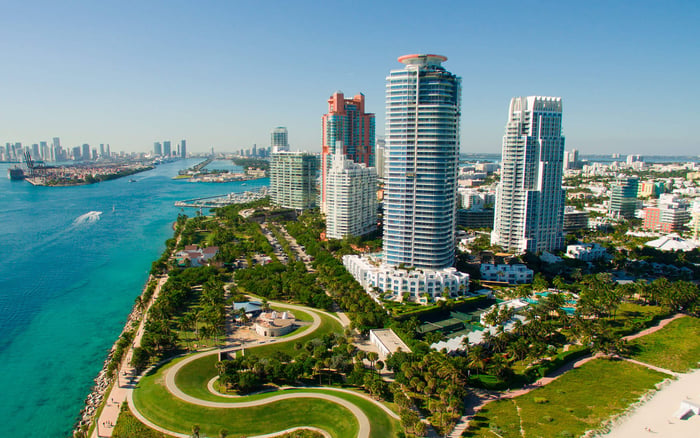
South Florida’s luxury market is not one lifestyle. Brickell offers an urban rhythm, close to offices, restaurants, and the vertical energy of downtown living. Miami Beach speaks to buyers who want a coastal setting with culture, hospitality, architecture, and a sense of resort cadence. Sunny Isles often appeals to those seeking newer towers, broad water views, and a residential oceanfront atmosphere.
Each area can be convenient for international owners, but for different reasons. A buyer flying in for short business-oriented visits may prioritize elevator efficiency, valet systems, and proximity to dining and meetings. A family using the home for longer seasonal stays may care more about beach access, storage, children’s routines, and the ease of hosting relatives. A buyer focused on privacy may find that the most convenient property is not the busiest or most amenitized, but the one with the least daily friction.
Before comparing buildings, buyers should compare the week they imagine living. Where will mornings begin? How will evenings unfold? How often will the residence be vacant? Who will use it when the principal owner is not present? A property that answers those questions elegantly is more valuable than one that merely looks convenient on paper.
True convenience has a cost structure. Staffing, amenities, insurance, reserves, maintenance, valet operations, security, technology, and building upkeep all influence the owner’s experience. A highly serviced property may be worth its premium, but buyers should understand the ongoing obligations before deciding that convenience justifies the purchase.
The best question is not simply, “What does this make easier?” It is, “What does this make easier, at what recurring cost, and with what level of control?” International owners should be particularly attentive to payment procedures, assessment exposure, communication protocols, and how financial notices are delivered. Distance can turn small administrative oversights into unnecessary stress.
Convenience is strongest when it is predictable. A residence that offers clear processes, responsive management, and transparent expectations can feel calmer than one with a more glamorous service promise but less operational clarity.
When it is time to sell, the next buyer may not value convenience in exactly the same way. Some will pay a premium for ease of ownership, particularly in buildings with strong service cultures and desirable locations. Others will focus on view, scale, finish quality, privacy, and neighborhood prestige before considering international-owner features.
This is why convenience should be treated as one component of marketability, not the entire thesis. A future buyer may appreciate remote management, lock-and-leave design, or hotel-style assistance, but those features must be attached to a residence with durable appeal. If the property’s core attributes are strong, convenience can amplify demand. If they are weak, convenience may only soften objections.
A disciplined buyer should imagine the future resale conversation. What will be easy to explain in one minute? What will photograph well? What will remain scarce? What will still feel relevant if service trends change? Those answers help prevent overpaying for features that may be less distinctive later.
Before allowing international-owner convenience to decide the purchase, buyers should rank the property across five dimensions. First, location fit: does the area match the owner’s actual travel, family, business, and leisure patterns? Second, physical quality: does the residence offer strong light, layout, views, privacy, and finishes? Third, operating confidence: are building rules, management practices, and access procedures clear? Fourth, cost discipline: are ongoing obligations understood and acceptable? Fifth, exit logic: would a future buyer understand the property’s appeal quickly?
Only after those questions are answered should convenience become the tiebreaker. If two residences are equal in quality, location, cost profile, and resale logic, the one that better serves an international owner may deserve priority. But if convenience is being used to excuse a weaker location, awkward plan, unclear governance, or inflated carrying burden, the buyer should pause.
Luxury ownership should feel effortless, but it should not be careless. In South Florida, the most successful international purchases tend to pair emotional ease with disciplined selection. Convenience is valuable when it protects time, preserves privacy, and supports the property’s long-term desirability. It becomes risky only when it is asked to do the work of fundamentals.
Should convenience decide between two otherwise similar residences? Yes, if the residences are genuinely comparable in location, quality, cost, and resale logic. Convenience works best as a tiebreaker, not as the main investment thesis.
What is the most important convenience for an international owner? Reliable oversight when the owner is abroad is often more important than visible amenities. Clear access, maintenance, communication, and escalation procedures matter deeply.
Is new construction always easier for international buyers? Not always. New construction can offer modern systems and fresh amenities, but buyers should still review rules, governance, costs, and operating expectations.
Does Brickell suit international owners? Brickell can suit buyers who want an urban base with dining, business access, and vertical convenience. The right fit depends on travel habits and daily lifestyle.
Does Miami Beach offer a different kind of convenience? Miami Beach often appeals to buyers who value a coastal lifestyle, hospitality energy, and cultural access. Building rules and neighborhood cadence should still be reviewed.
Why do some buyers consider Sunny Isles? Sunny Isles may appeal to buyers seeking oceanfront living and newer residential towers. Buyers should compare privacy, service culture, and carrying costs carefully.
How should an investment buyer evaluate convenience? An investment buyer should ask whether convenience improves marketability without masking weaknesses. Resale depth, rules, costs, and property quality remain central.
Can a second home be too service-heavy? Yes, if the owner pays for services that do not match actual use. The best service package supports the owner’s lifestyle without unnecessary complexity.
What documents should buyers review before closing? Buyers should review association rules, budgets, maintenance procedures, use restrictions, and access policies with qualified advisors. The goal is operational clarity.
What is the main takeaway for international buyers? Convenience is meaningful when it supports a fundamentally strong residence. It should reduce friction, not distract from due diligence.
For a tailored shortlist and next-step guidance, connect with MILLION.
If branded residences are on your mind — as a home or as an allocation — we would be glad to share what we are seeing, privately.
Begin a quiet conversation