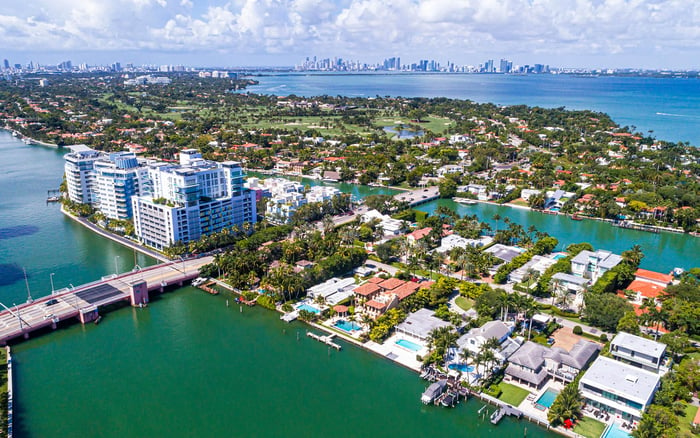
A discreet buyer guide for evaluating Arte Surfside when simplifying a multi-state residential portfolio into a South Florida home base.

For buyers consolidating homes from multiple states, the decision to focus on Arte Surfside should begin with a question more disciplined than taste. The issue is not simply whether a residence feels refined on arrival. It is whether the building, the neighborhood, and the ownership structure can absorb the practical demands of a life previously spread across several addresses.
This is where the best luxury decisions become quieter. A buyer moving from two, three, or more homes into a more concentrated South Florida base is not only purchasing square footage. They are choosing a new operating system for family visits, seasonal routines, art and wardrobe storage, household staffing, pets, cars, guests, privacy expectations, and legacy planning. Some answers may be available only through direct review of condominium documents, current inventory, legal counsel, and building-level conversations.
That does not make the search less elegant. It makes it more serious. In Surfside, where oceanfront living intersects with Bal Harbour, Miami Beach, and the broader coastal corridor, the right questions often matter more than the most seductive first impression.
Before asking whether Arte Surfside fits, define what is being consolidated. A second-home buyer giving up a New York pied-à-terre, an Aspen seasonal property, and a Palm Beach weekend house will have different requirements from a family shifting from Chicago, Dallas, and the Hamptons into one Florida anchor.
The essential exercise is to map how the home will actually be used. Will it become the primary residence, a seasonal base, or the one property that must perform as both private retreat and family gathering point? Will adult children visit for holidays? Will friends stay for long weekends? Will one spouse live there more consistently than the other? Will the residence need to support remote business days, formal entertaining, and complete quiet within the same week?
For a buyer comparing Surfside with neighboring options such as The Delmore Surfside, the conversation should move beyond architecture into use. A building can be exceptional and still be wrong for the way a particular family arrives, hosts, stores, secures, and departs.
The luxury buyer's greatest risk is not lack of access. It is assuming that every detail has already been solved because the setting is rare. For Arte Surfside, any serious evaluation should verify residence availability, floor plan configuration, pricing, carrying costs, association rules, transfer procedures, rental limitations, pet policies, renovation boundaries, staff access, parking, storage, and closing requirements through the proper professional channels.
None of these questions should be treated as administrative afterthoughts. They shape whether consolidation feels liberating or restrictive. If a buyer is replacing several homes, the new residence may need to do more than a typical seasonal condominium. It may need to hold a broader wardrobe, serve different generations, accommodate visiting caregivers or staff, and support a more compressed calendar of arrivals.
The most discerning buyer's guides begin with what cannot be seen in a rendering or a lobby tour. How does the building handle deliveries? What are the expectations around guests? What is the process for service providers? How private are entries and circulation? What rules would affect an owner who is away for extended periods? These answers belong in the first round of inquiry, not the week before contract deadlines.
Surfside appeals to a particular kind of buyer because it is neither the densest version of Miami Beach nor the most isolated expression of coastal living. It sits within a refined northern beach corridor where daily life can feel residential while still remaining close to dining, shopping, private clubs, cultural events, and family destinations across Greater Miami.
For multi-state consolidators, that balance can be meaningful. A home that is too remote may fail when relatives visit or business schedules compress. A home that is too exposed may undermine the privacy that made consolidation appealing in the first place. Surfside asks the buyer to decide how much stillness, access, and neighborhood rhythm should exist around the residence.
A buyer may compare Arte with nearby coastal benchmarks such as Fendi Château Residences Surfside or look slightly south toward Miami Beach properties including The Ritz-Carlton Residences® Miami Beach. The point is not to crown one address in the abstract. It is to understand whether the buyer wants a Surfside cadence, a Miami Beach cadence, or a broader coastal lifestyle that changes by season.
Bal Harbour should also be part of the mental map, not only as a shopping and dining reference but as a lifestyle neighbor. Its proximity can influence how a buyer experiences Surfside day to day, especially when entertaining guests who expect ease without sacrificing discretion.
Consolidation is often presented as simplification. In reality, it can reveal how much friction a household has been distributing across multiple properties. One house held the art. Another held the summer clothes. A third handled guests. A fourth functioned as the quiet escape. When those roles compress into one South Florida residence, the floor plan and building operations need to be judged with unusual precision.
A buyer should ask where luggage lands after a late flight, how groceries arrive, where seasonal items live, how private work calls are handled, and whether guests can be hosted without disturbing the owner's everyday routine. If the residence is intended to become the family's Florida headquarters, it must support both ceremony and repetition. The ceremonial side is the dinner, the terrace, the view, and the arrival. The repetitive side is laundry, maintenance, packages, keys, pets, staff, and parking.
That is where a purchase becomes deeply personal. The best home is not always the most dramatic one. It is the one that removes the most operational noise.
Every condominium carries a civic life of its own. For a buyer accustomed to single-family homes in multiple states, condominium governance deserves close attention. Rules can shape renovations, guests, leasing, pets, staffing, deliveries, amenity use, insurance responsibilities, and the cadence of ownership meetings.
This is not a negative. Strong governance can preserve privacy, consistency, and long-term value. But a buyer consolidating assets should understand the culture of the building before committing. Ask how decisions are made, what approvals are required, what documents govern owner behavior, and how the building communicates with residents who are away.
The more valuable the residence is intended to become within the family system, the more important these details become. If Arte Surfside is being considered as the property that replaces several others, its rules should feel compatible with the buyer's life rather than merely acceptable.
A disciplined search may include Surfside, Bal Harbour, Miami Beach, Sunny Isles Beach, Brickell, Coconut Grove, and Palm Beach. Each area answers a different version of the consolidation question. Some buyers want beach and quiet. Others want dining and business access. Others want boating, schools, clubs, or a more urban sense of arrival.
Within the northern coastal corridor, properties such as The Surf Club Four Seasons Surfside may enter the conversation because the area itself attracts buyers who value a polished residential rhythm. Yet the comparison should remain focused. Do not let a wider tour dilute the original thesis. If the purpose is to consolidate homes, then every candidate should be tested against the same core questions: Can it simplify life, host the family, protect privacy, and remain enjoyable when used intensively?
The most compelling choice will usually reveal itself through friction. If a residence requires too many exceptions, too many workarounds, or too much imagination to function, it may be better admired than owned.
The decisive questions for Arte Surfside are practical, but they are not pedestrian. What role will this residence play in the family portfolio? Which former homes will it replace emotionally and functionally? How often will the owner be present? Who else needs access? What must be stored on site? What services need to be routine rather than requested as favors? What rules could limit the owner's preferred use?
Then the financial and legal questions follow. What are the current ownership costs? What documents govern the association? What are the transfer and closing requirements? What approvals are needed for alterations? What insurance obligations apply? What professional advice is needed for residency, estate, tax, and entity planning?
Finally, ask the simplest question: if every other home were gone, would this one still feel complete? For the right buyer, Surfside can offer the rare combination of restraint, proximity, and coastal calm. For the wrong buyer, even a beautiful residence may feel too narrow for the life it is expected to absorb.
Is Arte Surfside a good fit for buyers consolidating homes from multiple states? It can be worth evaluating if Surfside matches the buyer's preferred balance of privacy, access, and coastal living. The fit depends on verified residence details and building rules.
What should a buyer verify first? Start with availability, pricing, floor plans, ownership costs, condominium documents, and use restrictions. These items shape whether the home can function as a true consolidation property.
Why does Surfside appeal to luxury buyers? Surfside offers a quieter coastal setting with proximity to Bal Harbour and Miami Beach. For some buyers, that balance is more useful than a busier urban location.
Should tax residency drive the purchase decision? Tax and residency planning should be handled with qualified professional advisers. The real estate decision should still be tested against daily use and long-term household needs.
How should buyers compare Arte Surfside with nearby buildings? Use the same questions for every property: privacy, rules, storage, guest use, staff access, and ease of arrival. Consistent comparison prevents emotional overbuying.
Is a condominium different from consolidating into a single-family home? Yes, because condominium governance and shared operations affect daily ownership. Buyers should review the rules carefully before assuming flexibility.
What role does storage play in consolidation? Storage can be central when multiple households are being simplified into one residence. Buyers should verify what is included or available before committing.
Should buyers focus on amenities first? Amenities matter, but operations, rules, and floor plan usability usually matter more for consolidation. A beautiful amenity package cannot fix a poor household fit.
Can Arte Surfside work as a second home? It may, depending on how the buyer plans to use the residence and what building policies allow. Seasonal use should be reviewed against access, maintenance, and guest needs.
What is the most important final question? Ask whether the residence can replace friction across several former homes. If it simplifies the buyer's life without narrowing it, the search is on the right track.
For a confidential assessment and a building-by-building shortlist, connect with MILLION.
If branded residences are on your mind — as a home or as an allocation — we would be glad to share what we are seeing, privately.
Begin a quiet conversation