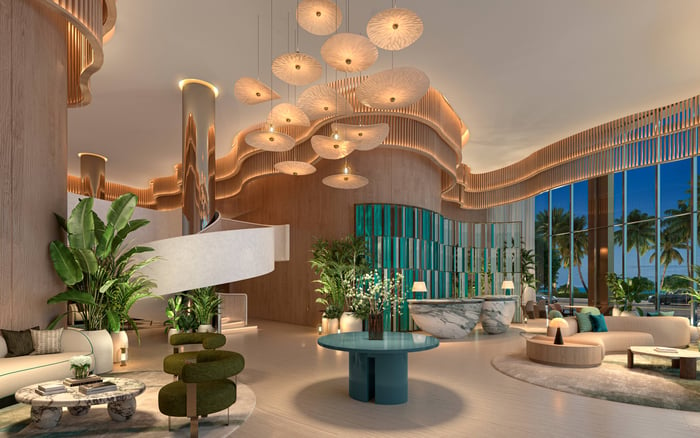
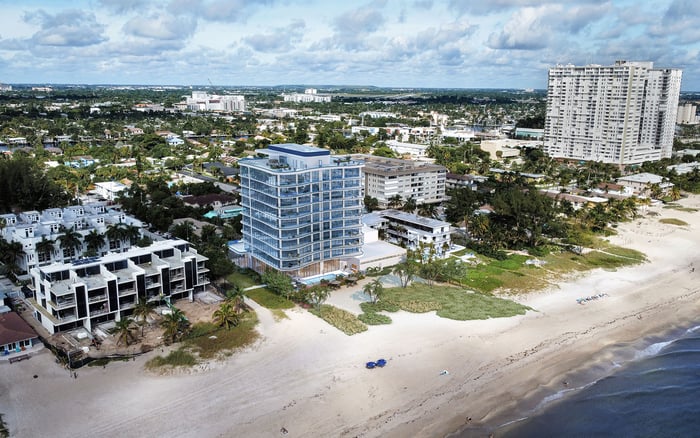
A practical buyer’s guide to evaluating beach access, ocean wind, salt-air exposure, and real terrace usability at Waldorf Astoria Residences Pompano Beach.
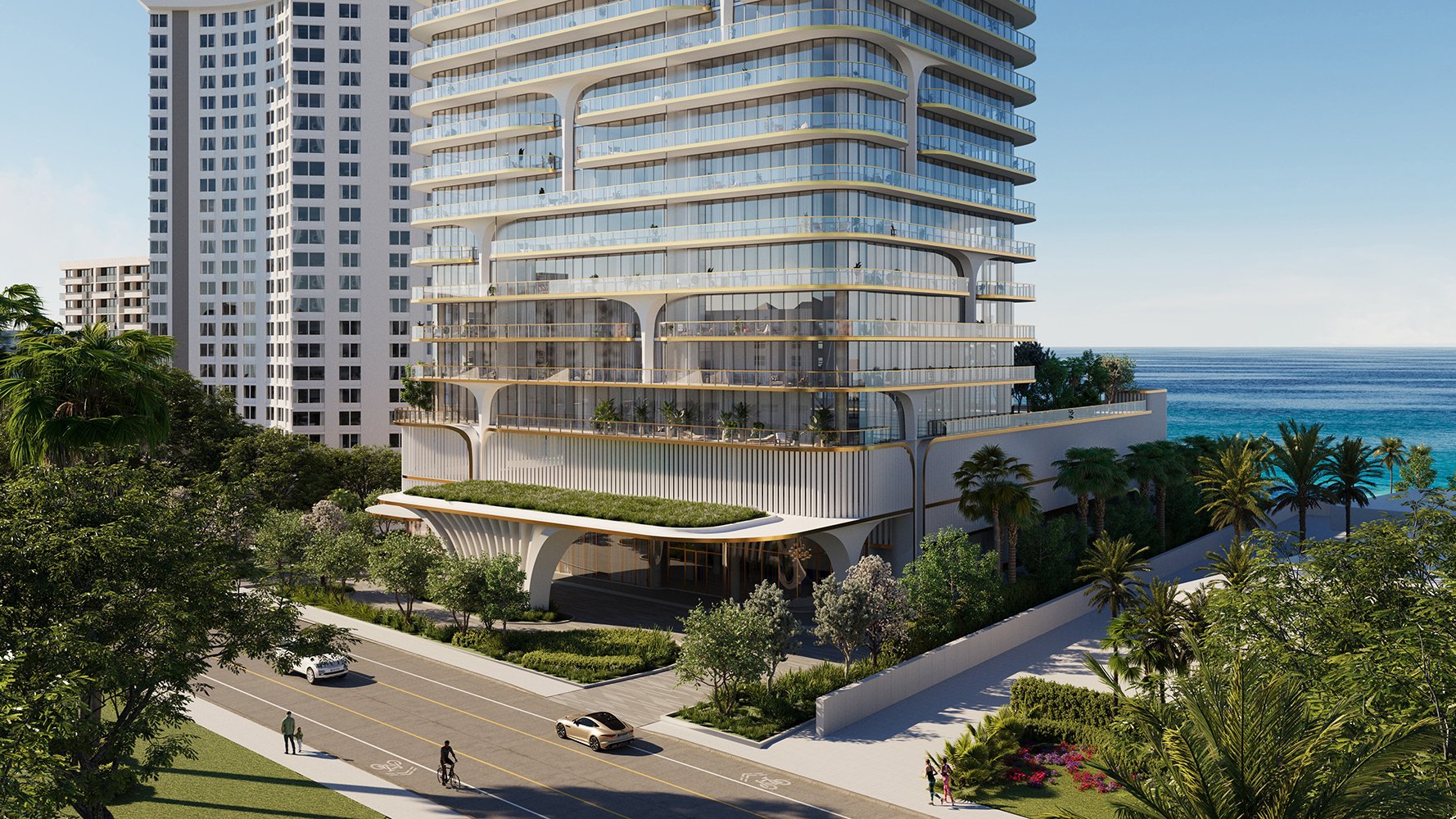
For buyers considering Waldorf Astoria Residences Pompano Beach, the appeal begins with a rare premise: proposed ultra-luxury branded residential living on the Atlantic Ocean in Pompano Beach. That oceanfront setting is central to the project’s identity, particularly for purchasers weighing life directly on the sand against residences across A1A, on the Intracoastal, or farther inland.
Yet the most sophisticated buyers tend to ask a quieter question: how does the beach actually function day to day? Beach access is not merely a lifestyle phrase. It is a practical sequence involving resident routes, guest movement, service circulation, beach equipment, dune-adjacent landscaping, and the policies that govern outdoor areas. A residence feels effortless only when those details are understood before contract, not after move-in.
That distinction matters along the Broward coastline, where buyers may also compare nearby branded and oceanfront projects such as Armani Casa Residences Pompano Beach, The Ritz-Carlton Residences® Pompano Beach, and W Pompano Beach Hotel & Residences. The name on the porte cochère matters, but the lived experience often comes down to how seamlessly the building connects private interiors, common amenities, pool decks, and the sand.
Oceanfront living delivers the romance buyers seek: direct light, moving water, sea air, and the sense of being in conversation with the Atlantic. It also brings more direct exposure to onshore wind, salt air, and storm conditions than an inland or Intracoastal address. That does not diminish the value of the setting. It simply means the setting should be evaluated with realism.
At Waldorf Astoria Residences Pompano Beach, ocean-facing residences are likely to deliver the strongest direct water views. They may also be the most exposed to easterly sea breezes and storm-driven wind. For some buyers, that movement of air is part of the pleasure. For others, it affects how often the terrace is used for coffee, dinner, reading, or entertaining.
West-facing residences may involve a different trade. They can shift attention toward city, sunset, and Intracoastal-oriented views, with potentially different patterns of wind and terrace comfort. In many luxury purchase decisions, the question is not whether east is better than west. It is whether a specific exposure supports the buyer’s daily rituals.
Terrace square footage is useful, but it is not the full story. Terrace value depends on usable depth, shade, railing design, column placement, door swings, furniture rules, and the way wind behaves at a particular height. A deep terrace with strong proportions can feel like an outdoor room. A shallower or more exposed terrace may function primarily as a view platform.
Buyers should ask for precise terrace dimensions, then look beyond the headline number. How much depth remains after railings, columns, planters, and door clearances are considered? Can a dining table be placed comfortably, or is the space better suited to lounge seating? Does the terrace allow circulation around furniture, or does it require constant rearranging?
Guardrail design is another understated factor. Glass, open railings, parapets, and screening strategies can affect perceived wind, privacy, furniture placement, and view quality. A transparent rail may preserve the horizon beautifully, while other configurations can feel more sheltered. The right answer depends on the buyer’s preference for openness, calm, and enclosure.
Corner and flow-through residences require especially careful evaluation. Cross-breezes can be a luxury in mild weather, but wind pressure can also change how doors operate and how comfortable outdoor seating feels. The experience can vary materially by stack, elevation, and exposure.
A buyer comparing two similarly priced residences should not rely only on view category. The more useful comparison includes terrace depth, shade, prevailing wind comfort, railing configuration, and distance to beach-access routes. It should also include how the residence connects to outdoor common areas, because pool-deck programming and beach service shape the daily experience as much as the private balcony.
This is where Pompano Beach is becoming increasingly nuanced for luxury buyers. The city’s oceanfront offerings are not interchangeable, and a residence at Ocean 580 Pompano Beach may invite a different lifestyle comparison than a branded tower directly focused on resort-style services. The correct due diligence is not simply asking, “What is the view?” It is asking, “How will this specific home live in January, July, and during unsettled weather?”
Branded residences often bring a higher level of service expectation, design consistency, and operational discipline. That can be a major advantage, but buyers should not assume private terrace use is unrestricted. Condominium documents, brand standards, design guidelines, and association rules may affect grills, heaters, umbrellas, planters, storage, outdoor furniture, and other terrace items.
The same caution applies to beach use. Marketing language may describe an elegant coastal lifestyle, but residents should understand the legal and practical details of how they, their guests, and service staff reach the sand. Access paths, furniture placement, and dune-adjacent landscaping may be influenced by coastal protection rules and association policies.
A thoughtful buyer will therefore review the governing documents with the same attention given to floor plans and finishes. The goal is not to find restrictions for their own sake. It is to understand whether the future rhythm of living matches the buyer’s expectations: morning beach walks, shaded lunches outdoors, family visits, evening entertaining, and seasonal terrace use.
Before selecting a residence, ask to compare unit stacks by exposure, height, terrace size, usable depth, shade, wind comfort, and proximity to beach routes. Ask how beach service is expected to operate, where residents and guests move through the property, and whether service staff have separate or designated circulation patterns.
Ask how furniture, umbrellas, planters, and storage are regulated on terraces. Ask whether any terrace features shown in renderings are included, optional, or subject to rules. Ask how doors, railings, and outdoor spaces are designed to perform in a coastal environment.
Most importantly, treat the terrace as a lifestyle room, not a line item. Oceanfront luxury is most successful when the outdoor space is not merely impressive in a plan, but genuinely livable in the conditions that define South Florida’s Atlantic edge.
Is Waldorf Astoria Residences Pompano Beach an oceanfront project? Yes. It is a proposed ultra-luxury branded residential project on the Atlantic Ocean in Pompano Beach.
Does oceanfront mean unrestricted beach access? Not necessarily. Buyers should review how residents, guests, and service staff access the sand and what rules may apply.
Why does wind matter for ocean-facing residences? Atlantic-facing homes can experience more direct onshore breezes, salt air, and storm-related exposure than inland or Intracoastal properties.
Are east-facing terraces always the best choice? They may offer the strongest direct water views, but they can also be more exposed to wind. The best choice depends on how the terrace will be used.
What should buyers ask about terrace dimensions? Ask for usable depth after railings, columns, planters, and door swings are considered. Practical layout matters more than headline square footage.
Can association rules affect terrace furniture? Yes. Rules may address grills, heaters, umbrellas, planters, storage, and furniture types, especially in a branded residential environment.
Why are corner residences different? Corner or flow-through layouts may create cross-breezes and different door-operation comfort, depending on stack, height, and exposure.
Do west-facing homes have advantages? They may offer city, sunset, and Intracoastal-oriented views with different wind and terrace-comfort patterns than direct oceanfront exposures.
Should buyers review beach service plans? Yes. Beach service, pool-deck programming, and outdoor common areas can strongly influence the daily luxury experience.
What is the main buyer takeaway? Evaluate the residence by real-world livability: access, exposure, terrace comfort, rules, and how the outdoor spaces function over time.
For a confidential assessment and a building-by-building shortlist, connect with MILLION.
If branded residences are on your mind — as a home or as an allocation — we would be glad to share what we are seeing, privately.
Begin a quiet conversation