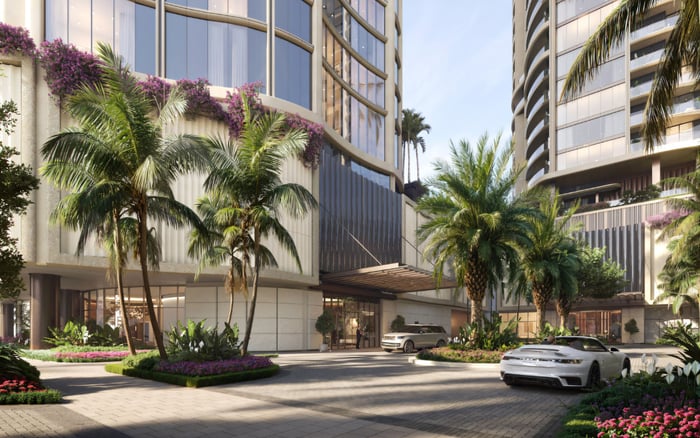
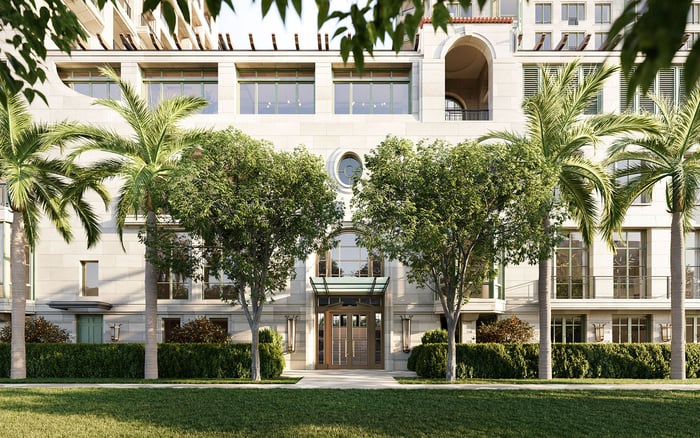
For collectors considering Mandarin Oriental Residences, West Palm Beach or W Pompano Beach Hotel & Residences, private elevators and hospitality services are only the starting point. Written freight-route measurements, receiving permissions, environmental specifications, and responsibility assignments should guide the purchase and installation plan.
For a collector, a residence is both a home and an environment entrusted with objects that may be difficult to replace. The essential questions arise before installation: can a crated work reach the apartment, where can it wait, and who is responsible at each handoff? Private elevator entry and attentive service are appealing, but neither establishes an art-handling protocol.
At Mandarin Oriental Residences, West Palm Beach and W Pompano Beach Hotel & Residences, the buyer's task is to translate advertised features into building-specific documentation. The recommendations below are due-diligence requests, not confirmed operating policies or promised services. The essential deliverables are a measured route, written receiving rules, and a collection-specific climate plan.
Mandarin Oriental's planned Intracoastal waterfront development comprises 87 private residences. Its planned 31-story tower includes two- to four-bedroom residences, two multilevel private villas, and a full-floor penthouse. Direct-access private elevators are an advertised feature, but their cab dimensions, door clearances, and rated capacities remain unestablished here.
For a buyer with large canvases, sculpture, or substantial crates, request drawings that identify the intended delivery route and its finished dimensions. Do not assume a private elevator can serve as a freight elevator. Ask which lift is authorized for art deliveries, whether protective padding reduces usable clearance, and who approves the handler's proposed route.
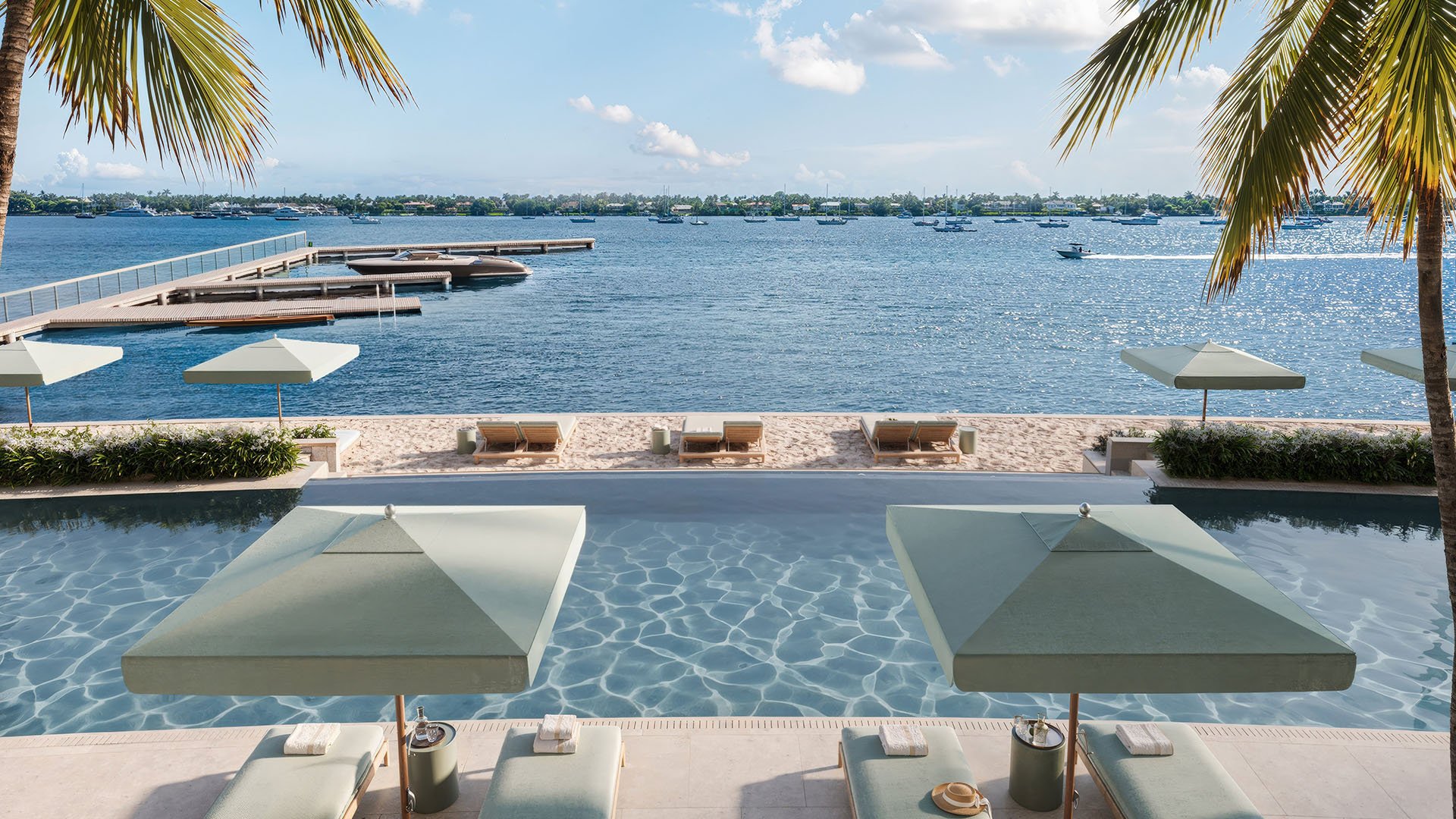
Waterfront access is a separate matter. Dock and boat-slip construction remains subject to permits, approvals, and developer changes; it should not be treated as an authorized delivery route. With no definitive contractual completion date established here, align shipment planning with the purchase documents rather than an assumed move-in calendar.
W Pompano Beach is a combined hotel-and-residences development at 20 North Ocean Boulevard. Advertised private elevator entry to each residence does not establish oversized-crate access or a verified service-elevator route. Buyers should ask who controls residential deliveries and whether hotel and residence receiving procedures are separate.
Precise receiving, climate-controlled warehousing, and white-glove installation described for the project concern furniture, fixtures, and equipment across guestrooms, residences, and amenity spaces. They do not establish a post-closing service for individually owned art. Before relying on those services, request written confirmation of eligibility, fees, storage location, insurance, and responsibility for transport and installation.
Apply the same discipline when comparing The Ritz-Carlton Residences® Pompano Beach: ask each property the same collection-specific questions without presuming equivalent services. At W, loading-bay rules, truck-height limits, staging permissions, and after-hours delivery procedures remain matters to clarify.
Commission a route review with the proposed art handler, using the actual packed dimensions and weight of each significant piece. Request a dimensioned plan covering the loading position, unloading area, doors, corridors, turns, ramps, thresholds, elevator, and residence entrance. Include ceiling heights and maneuvering space, not merely straight-line clearance.
Obtain elevator cab dimensions, clear door openings, rated capacity, reservation procedures, unloading limits, and common-area protection requirements. Ask who verifies measurements against completed finishes. Treat a route drawn before construction is complete as provisional until the relevant conditions can be checked.
Document a fallback if the planned route proves unsuitable. Ask whether another authorized route exists, who must approve it, and how delays would be handled. Keep alternatives conditional: do not assume that lobby access, waterfront access, or an unscheduled delivery will be permitted.
Request approved-handler requirements, insurance limits, installation hours, and access procedures. Clarify whether the owner may select a specialist or must use an approved provider. Ask how liability for damage to artwork or common areas is allocated among the handler, receiving staff, installation team, owner, and building.
Receiving deserves its own written plan. Confirm whether crates may be stored temporarily, where unpacking and condition inspection may occur, and whether photography, acclimatization, and crate disposal are allowed. Identify who accepts delivery, signs the receiving record, and communicates visible damage or delays.
For installation, request anchoring approvals and protection standards before scheduling work. Assign a named point of contact for each handoff. The objective is a documented sequence from arrival through placement-not a general assurance that staff will coordinate the details.
Mandarin Oriental's advertised features include individually zone-controlled HVAC, quiet operation, advanced air purification, and integrated controls for lighting, shades, climate, security, and entertainment. These features do not establish active humidity control, room-specific environmental monitoring, humidity-data logging, or operation during an outage. W's listed HVAC filter-change service likewise establishes maintenance, not collection-specific environmental control.
Ask for room-by-room mechanical plans, active dehumidification specifications, sensor locations, alarm thresholds, and access to historical readings where available. Have a collection specialist define appropriate temperature and relative-humidity targets for the works involved. A generic comfort setting is no substitute for a documented conservation brief.
For buyers also considering Alba West Palm Beach, use the same brief to frame questions without assuming comparable equipment or performance. Ask who commissions the systems, who can adjust them, and how readings will be reviewed when the residence is unoccupied.
Request written response procedures for leaks, hurricanes, HVAC failure, and power loss. Confirm exactly which elevators, residence HVAC systems, sensors, alarms, and communications equipment receive backup power. Do not infer residence-level coverage from a general reference to emergency systems.
Define who receives alerts, who may enter the apartment, and who can authorize protective action during the owner's absence. Ask how an interrupted delivery would be managed if receiving space or elevator access became unavailable.
Finally, have counsel seek appropriate logistics and environmental terms in the purchase, alteration, or owner-services documents. Keep verified dimensions, approved procedures, service scope, and unresolved conditions together, then revisit provisional items before scheduling delivery. For a collector, the most useful assurance is a clear allocation of permissions and responsibilities.
For a considered approach to South Florida luxury residences, explore MILLION.
If branded residences are on your mind — as a home or as an allocation — we would be glad to share what we are seeing, privately.
Begin a quiet conversationNo. Both projects advertise private elevator access, but that does not establish usable crate clearances, rated capacities, or an authorized freight route.
Request finished door openings, elevator dimensions and capacity, corridor turns, ramps, thresholds, ceiling heights, and maneuvering space. The handler should assess the actual packed dimensions and weight of the artwork.
Its advertised features include zone-controlled HVAC and advanced air purification. Those descriptions do not establish active humidity control or room-specific art monitoring.
No. The listed HVAC filter-change service is a maintenance offering, not confirmation of humidity control or environmental monitoring for artwork.
That language concerns project furniture, fixtures, and equipment and does not establish a post-closing service for individually owned art. Buyers should confirm the service scope in writing.
It should not be assumed to be an authorized delivery route. Dock and boat-slip construction is subject to permits, approvals, and developer changes.
Confirm temporary crate storage, unpacking, acclimatization, condition inspection, photography, and crate disposal. Identify who accepts delivery and documents visible damage.
Request handler insurance requirements and written responsibility for damage to artwork and common areas. Clarify the roles of the owner, handler, receiving staff, installation team, and building.
It should address leaks, hurricanes, HVAC failure, and power loss, including which systems receive backup power. Document alert recipients, access permissions, and authority to take protective action.
Seek appropriate terms in purchase, alteration, or owner-services documents with counsel. Keep verified measurements, approvals, service scope, and unresolved conditions in a consolidated file.