A residence-level guide to Bal Harbour’s event calendar, separating local sound exposure, regional traffic, controlled beach access, and the practical demands of terrace entertaining.
For a buyer who entertains, the useful question is not whether Bal Harbour hosts events. It is whether a particular residence remains comfortable when the calendar becomes active. A terrace dinner, a guest arrival, and an afternoon on the beach present different exposures. Evaluate them separately rather than folding them into a single impression of neighborhood quiet.
Local programming includes beach concerts, outdoor movies, markets, and seasonal festivals. Beach North by the jetty, Beach South, and Waterfront Park are distinct locations to consider. Several programs are designated for residents and hotel guests, so an advertised event does not necessarily mean unrestricted public attendance.
For buyers considering Oceana Bal Harbour, the comparison is residence-specific: terrace orientation, floor height, indoor comfort, and the guest arrival sequence. A building name alone cannot establish how an individual home experiences an event.
The October 2026 calendar offers a practical snapshot, not a permanent annual timetable. The Market at Bal Harbour was scheduled at Beach South for October 3-4, from 10 a.m. to 4 p.m. Sounds by the Sea featuring The French Horn Collective is scheduled for October 11, from 4-5:30 p.m., at Beach North by the jetty. A beach movie is scheduled for October 17 and a fall festival for October 24.
Movie examples run from 6:30-9 p.m.; festival examples run from 7-9 p.m. These windows are useful for planning, but they are not confirmed hours for every future edition. Reconfirm the specific program before sending invitations or arranging deliveries.
For entertaining, distinguish a daytime market from an evening performance. The first calls for checking afternoon arrival logistics; the second warrants testing conversation comfort at the intended dinner hour. Ask separately about setup and breakdown, since the advertised program window does not establish those timings. The calendar supports targeted planning, not an assumption of all-day disruption.
A venue-facing residence merits closer inspection, but proximity is not a verified noise rating. No decibel measurements or building-level nuisance rankings are established here. Nor does beach programming establish continuous village-wide noise.
Visit the exact residence during a relevant event whenever possible. Spend time where guests would sit, not just at the terrace railing. Compare outdoor conversation comfort with indoor conditions, first with the doors open and then closed. Note whether the setting suits a quiet dinner, a larger gathering, or a brief outdoor aperitif. These are personal thresholds, not interchangeable standards.
At Rivage Bal Harbour, apply the same discipline to any terrace-focused evaluation: examine the specific plan and position without assuming a project-wide acoustic outcome. If a residence cannot be visited in its intended condition, request relevant plans and rules, recognizing that drawings cannot substitute for lived sound conditions.
Floor height and orientation belong in the comparison, but neither guarantees quiet. The strongest evidence is the actual space under comparable conditions.
A controlled route to the shoreline is an access arrangement, not a promise of uninterrupted views. The Bal Harbour All Access Card acts as a key fob for Waterfront Park and, beginning in spring 2026, the 102nd Street Beach Access Path. Entrances to that path have locked gates accessible with the card. The card also provides discounted and priority access to recreational programs and other benefits.
None of these provisions establishes a quieter beach or protects a terrace sightline during an event. Event-installation heights, obstruction plans, and residence-specific sightline studies are not established here. Ask about available temporary-layout information, then compare it with the terrace’s seated and standing views.
If the search extends to Ocean House Surfside, make the same distinction between physical access and visual enjoyment while confirming that property’s own arrangements. Do not assume Bal Harbour’s card provisions apply to a residence elsewhere.
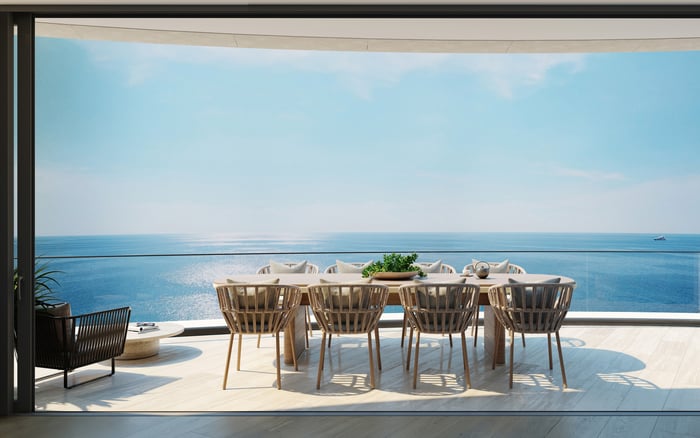
For hosting, the relevant view is often the one from the dining chair. A dramatic standing panorama does not answer every practical question about an evening outdoors.
Waterfront Park hosts community and seasonal programming and merits its own place on the buyer’s location checklist. Assess more than the beachfront venues. Map each relevant event location against the residence, then evaluate sound exposure separately from the route guests will take to the building.
Regional mobility requires a wider lens. Significant congestion in and around Bal Harbour was anticipated for November 14-16, 2025. Oceanman at Haulover Park, an open-water swimming competition, was expected to attract thousands of participants and spectators, with likely delays on Collins Avenue and access roads near the park. This example illustrates how an event outside the village can affect arrival plans; it does not establish a recurring annual schedule or a standard delay.
Miami Art Week and Art Basel have also brought heavier regional traffic as thousands of visitors traveled to Miami Beach. The Miami Grand Prix is centered around Hard Rock Stadium, where road closures and heavy transport demand warrant extra travel time. Neither example establishes direct residential noise in Bal Harbour.
Before committing to a residence, request the condominium rules for terrace use, guest parking, deliveries, and temporary closures. Clarify how to coordinate guest arrivals and catering deliveries on an event day. A terrace’s capacity does not establish that a preferred hosting arrangement is permitted.
For buyers comparing The Surf Club Four Seasons Surfside with a Bal Harbour option, review each property’s written procedures independently. Make the comparison operational rather than reputational: what can be scheduled, which permissions are required, and how an outdoor evening can move inside if needed.
A second home benefits from a repeatable routine. Recheck the calendar before each stay, review relevant traffic advisories before issuing invitations, and keep an indoor dining alternative. These are planning choices, not evidence that terrace use will be compromised.
The clearest review separates four questions: Can guests arrive comfortably? Can conversation continue at the preferred hour? Is beach access understood? Does the terrace retain the view and usability the buyer expects?
Assess each through direct observation and written confirmation where available. Local event programming can be part of the pleasure of ownership, but its fit with private entertaining is personal. Select a residence for how it supports the owner’s actual calendar, not an untested promise of permanent quiet.
Explore a residence-level approach to South Florida ownership with MILLION.
If branded residences are on your mind — as a home or as an allocation — we would be glad to share what we are seeing, privately.
Begin a quiet conversationReview Beach North by the jetty, Beach South, and Waterfront Park. Compare each location with the specific residence rather than assuming uniform exposure across the village.
No. Several programs are designated for Bal Harbour residents and hotel guests, so eligibility should be checked for each event.
It lists the market on October 3–4, a beach concert on October 11, a beach movie on October 17, and a fall festival on October 24. These dates are a snapshot, not a guaranteed annual schedule.
No. The event calendar does not establish continuous village-wide noise, and no verified decibel measurements or building-level nuisance rankings are established here.
Visit the exact residence during a relevant event and assess conversation comfort at the intended seating area. Compare outdoor conditions with indoor conditions with the terrace doors open and closed.
No. It provides access benefits, including key-fob entry to specified locations, but does not establish protected sightlines or a quieter beach experience.
Its entrances have locked gates accessible with the Bal Harbour All Access Card. The card’s access role for the path begins in spring 2026.
Yes. A historical November 2025 advisory identified likely delays on Collins Avenue and access roads near Haulover Park during nearby events, including Oceanman.
Not on the information established here. They support travel planning, but no direct Bal Harbour residential noise impacts or local delay averages are established.
Request rules covering terrace use, guest parking, deliveries, and temporary closures. Confirm the procedures for the specific building before arranging a gathering.