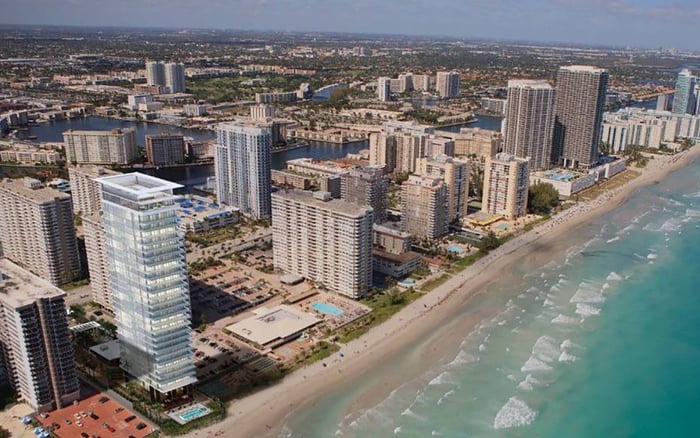
Establishing Florida residency and securing reliable emergency arrangements are separate exercises. Hallandale Beach buyers should verify condominium access rights, management delegation, storm procedures, insurance responsibilities, and the limits of medical assistance before relying on service assurances.

A Hallandale Beach residence can anchor a thoughtfully planned Florida life. But establishing domicile raises two distinct questions: what demonstrates permanent residency, and who can act when something goes wrong at home? A purchase does not answer both. Neither does an assurance that management will take care of everything.
For buyers considering 2000 Ocean Hallandale Beach, the inquiry should go beyond whether services are available. Which entity holds authority? What responsibilities remain with the owner? How does an emergency move from notification to action? These are matters to document, not conclusions to draw from a property's presentation.
The essential distinction is between association authority, delegated management services, and personal authorization. Each warrants a separate review before a residence becomes the center of a household's Florida arrangements.
For homestead-exemption purposes, permanent Florida residency must be established as of January 1 of the relevant tax year. Ownership alone should not be treated as sufficient evidence of eligibility, and the county property appraiser may request supporting documentation.
Residency evidence can include a recorded declaration of domicile, Florida identification, voter and vehicle registration, a tax-return address, bank statements, and utility records. Review the applicable evidence requirements rather than treating any single document as a universal solution.
Keep this file separate from emergency contacts, entry instructions, and management authorizations. Evidence of residency does not establish a manager's authority to arrange repairs, commit owner funds, or make medical decisions. For a household that travels frequently, separate files make unresolved questions easier to identify and address with Florida counsel.
Florida condominium law gives an association an irrevocable right to access units during reasonable hours when necessary to maintain, repair, or replace common elements or portions of a unit assigned to the association. That right also covers entry necessary to prevent damage to common elements or another unit-a critical distinction when water is escaping from an unoccupied residence.
Begin with the declaration's maintenance assignments. Compare them with access rights to establish who is responsible for the leaking component and what work entry permits. Access authority, repair responsibility, and insurance coverage are separate questions.
Do not confuse the general access rule with the separate abandoned-unit provision, which generally requires advance notice but includes an emergency exception. An owner's temporary absence should not blur the distinction between those provisions.
Request written answers about key custody, entry documentation, owner notification, and after-hours escalation. These are due-diligence requests, not assurances that services are in place. Building procedures and management agreements must operate alongside applicable law, not purport to override statutory access rights.
Ask management to walk through a hypothetical active leak while you are away. Who receives the first call? Who determines whether entry is necessary? Who contacts the responsible contractor, and who can authorize spending if the owner cannot be reached?
Then distinguish immediate damage prevention from permanent repair. Ask how responsibility is assigned, how work is documented, and when an owner or insurer must become involved. Permission to enter should not be mistaken for unlimited authority to restore finishes or replace owner-responsibility property.
When evaluating Shell Bay by Auberge Hallandale, apply the same documentary discipline: request the governing arrangements for the residence rather than inferring authority from branding. The condominium framework discussed here should not automatically be extended to a homeowners' association, cooperative, or standalone residential manager.
Storm planning requires clarity about household preparation and building-wide decisions. Under Florida condominium law, and subject to statutory conditions, a board may determine that property is unavailable for entry or occupancy based on advice from emergency-management officials, public-health officials, or licensed professionals.
Ask how those decisions are documented, how absent owners receive notice, and how restrictions are updated. Establish who communicates the conditions for re-entry, including any required inspections. An owner's travel schedule should not be assumed to determine access.
Hallandale Beach's storm-related electrical instruction is conditional: turn off circuit breakers and disconnect electrical appliances and equipment upon advice from the Broward Sheriff's Office or Fire Department. That instruction is not a promise that building personnel will perform those tasks inside a residence.
Obtain a written allocation of responsibility for utility shutoffs, electrical restoration, elevators, generators, shutters, and re-entry inspections. Ask what happens if the designated person is unavailable. Clearly assigned responsibilities are more useful than a broad statement that the building has an emergency plan.
A medical emergency raises a different set of questions. Request the procedures, if any, for responder access, welfare checks, emergency-contact notification, and assistance during outages. Ask specifically what arrangements exist for a resident whose mobility or health needs may complicate evacuation or the loss of elevator service.
Do not treat an emergency-contact form as proof that a manager may consent to treatment or make medical decisions. Responder access, a welfare check, and medical decision-making are separate matters. Review any required personal authorizations with Florida counsel, and establish a household plan that does not depend on unconfirmed building services.
Staff availability, response times, and assistance for medically vulnerable residents all require verification. None should be inferred from a concierge description or the residence's price point.
Association insurance and unit-owner insurance have different coverage responsibilities. Compare the declaration with the actual policies before assuming that building components, contents, or owner-responsibility property are covered. Have an insurance professional examine the division of responsibility alongside counsel's review of authority.
The management agreement deserves equal scrutiny. Read it with the declaration, bylaws, and rules to distinguish powers held by the association from services delegated to a particular manager. Ask where emergency spending limits, vendor engagement, and escalation procedures are documented.
If your search extends to Sunny Isles Beach and Jade Ocean Sunny Isles Beach, bring the same questions to that comparison. Evaluate each property's written arrangements independently; one residence's procedures should never stand in for another's.
Before relying on verbal assurances, ask Florida counsel and an insurance professional to reconcile the governing documents, management arrangements, and coverage. Record unresolved questions about access, repairs, spending, storm restrictions, and personal assistance. Then seek written responses from the appropriate parties.
For a buyer establishing Florida domicile, the objective is straightforward: a well-supported residency position and a separately documented emergency plan. The most reassuring answer is not that everything is handled, but that responsibility and authority are clear.
Explore your next South Florida residence with MILLION.
If branded residences are on your mind — as a home or as an allocation — we would be glad to share what we are seeing, privately.
Begin a quiet conversationOwnership alone should not be treated as sufficient. Permanent Florida residency must be established as of January 1 of the relevant tax year, and supporting documentation may be requested.
Evidence can include a recorded declaration of domicile, Florida identification, voter and vehicle registration, a tax-return address, bank statements, and utility records. Review the applicable evidence requirements rather than relying on one document.
Florida law provides an irrevocable access right during reasonable hours for specified maintenance and repair purposes. It also covers entry necessary to prevent damage to common elements or another unit.
No. Access authority, maintenance responsibility, and insurance coverage require separate review of the governing documents and actual policies.
No. The abandoned-unit provision generally requires advance notice but includes an emergency exception; it should not be confused with the general condominium access rule.
Subject to statutory conditions, a board may determine that property is unavailable for entry or occupancy based on advice from specified officials or licensed professionals. Buyers should verify how restrictions and re-entry conditions are communicated.
No. Buyers should obtain a written allocation of utility responsibilities rather than treating local storm instructions as a building-service commitment.
It should not be treated as proof of that authority. Responder access, welfare checks, and medical decisions are separate matters requiring distinct verification.
Review the declaration, bylaws, rules, management agreement, and insurance documents together. Seek written clarification of spending limits, vendor engagement, notification, and after-hours escalation.
No. They should not automatically be extended to homeowners' associations, cooperatives, or standalone residential managers; Florida counsel should review the applicable framework.