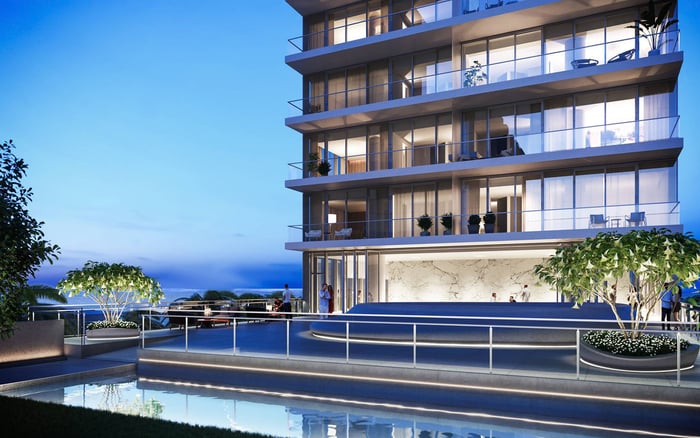
For long-term Hallandale Beach owners, discreet protection begins with clear boundaries between personal security and association-managed access. A considered plan coordinates credentials, staffing, cameras and information sharing without extending surveillance into neighbors’ lives.
For a long-term owner in Hallandale Beach, security should support the ease of living at home, not turn every arrival into a negotiation. Begin with a clear distinction: building access control governs shared entrances and circulation, while private protection addresses the household’s particular needs. This is a recommended operating model, not a universal statutory division of responsibilities.
Whether evaluating 2000 Ocean Hallandale Beach or reviewing an existing residence elsewhere in Broward, start with the association’s actual rules. Ask how credentials are issued, how visitors are admitted and how a personal security professional would be registered. Do not infer these arrangements from a property’s positioning or assume private personnel can bypass established procedures.
A well-designed plan adds personal protection without creating a second authority at the front door.
Before discussing equipment or schedules, define the household’s objectives. These might include coordinated arrivals, accompaniment, communication during an incident and continuity while the owner is away. Keep those tasks separate from admitting visitors to the building, administering common-area credentials or directing association staff.
Agree on a written operating protocol with management and the protection provider. Identify the building contact, the household’s authorized decision-maker and the route for escalating concerns. Specify where private personnel may wait or work, subject to approval. A lobby or elevator landing should not be treated as an available private post.
For sustained coverage, ask the provider to explain shift handovers, relief arrangements and procedures when a credential stops working. The goal is continuity within approved rules, not informal exceptions that depend on a particular concierge recognizing a guard. Staffing and cost decisions should follow the agreed scope, not a presumed formula.
Private protection should coordinate with the building’s existing board-approved credential and camera infrastructure. Avoid independent common-area access arrangements simply because a household funds the service. A separate reader, informal key sharing or a privately managed admission checkpoint could undermine the clarity the plan is meant to create.
Request a credential protocol covering assignment, permitted access and prompt deactivation when personnel change. As a planning preference, seek individually assigned credentials where the association’s system and policies allow them. Private personnel should use the approved visitor process, not establish a parallel guest list that building staff are expected to honor automatically.
For buyers considering Shell Bay by Auberge Hallandale, the same diligence question applies: how would the household’s protection team fit within the property’s rules? Confirm the answer directly before making a particular security arrangement central to the purchase decision. Do not assume project-specific permission.
Florida condominium associations may generally install video cameras in common areas where residents have no reasonable expectation of privacy. That does not extend to bathrooms, locker rooms or other locations where privacy is reasonably expected. Nor does permissible association surveillance give an individual owner equivalent authority over shared spaces.
Owners can generally install cameras inside their units, subject to privacy restrictions and applicable condominium rules. The field of view matters as much as the mounting location. Many associations prohibit owner-installed cameras aimed into shared hallways, stairwells or elevators, even when the device sits inside the residence.
Exterior-door and balcony installations typically require written association approval. Before purchasing hardware, prepare a proposed view showing what the camera would capture, whether it records sound and who would receive alerts. Have the placement reviewed against both the governing documents and applicable privacy requirements. Observing the owner’s interior is different from documenting neighboring residents’ movements.
Video permission is not audio permission. Florida generally requires all-party consent to record oral communications made with a reasonable expectation of privacy. A lawfully positioned camera does not automatically have authorization to record sound.
Review doorbell devices, interior cameras and any proposed body cameras separately for sound recording. Counsel should assess their use before deployment wherever private conversations might be captured. Board permission alone does not establish the participants’ consent, and a common-area setting is not a blanket exemption for recording conversations.
As a privacy-first planning choice, favor video-only operation unless audio has been specifically reviewed and appropriately authorized. Include equipment settings in onboarding and subsequent checks so a replacement device or software change does not quietly alter the household’s recording practices.
An owner willing to fund additional common-area cameras should still treat the work as an association project. Installation may constitute a material alteration under Florida Statutes § 718.113, potentially requiring membership approval depending on the proposal and governing documents. Funding does not replace the applicable approval process.
Clarify footage procedures before an incident: whom to contact, how to request preservation and how any permitted disclosure would be handled. Do not assume ownership, private staffing or financial support for equipment creates unrestricted access to association recordings. A response protocol should identify the request channel without promising a private live feed.
Retention requires careful review. Section 768.0706 provides qualifying multifamily properties with five or more units a presumption against liability for third-party criminal acts when specified security conditions are satisfied. Entry and exit cameras with at least 30 days of retention are among those conditions. This is not a universal condominium retention mandate, and retention alone does not establish qualification. Have association counsel evaluate its applicability.
For owners also considering Sunny Isles Beach, including Turnberry Ocean Club Sunny Isles, apply the same evaluation framework without assuming identical policies. Ask what information management needs to coordinate protection and what should remain within the household. Access coordination need not become routine circulation of personal itineraries or private conversations.
As an operating recommendation, limit household security information to designated contacts and define how it is stored, shared and removed when personnel leave. Review the arrangement when staffing, occupancy, equipment or association rules change. A plan that worked at move-in should not continue simply by habit.
The enduring goal is a residence that feels private rather than monitored: approved access, clear responsibilities and proportionate surveillance. For a long-term owner, these details belong alongside the other fundamentals of purchase diligence, not after the installation appointment.
Explore Hallandale Beach ownership with a more considered approach to privacy and protection at MILLION.
If branded residences are on your mind — as a home or as an allocation — we would be glad to share what we are seeing, privately.
Begin a quiet conversationCoordinate private personnel with the building’s approved credentials and visitor procedures. Define household protection duties separately from shared-space access administration in an agreed operating protocol.
Generally yes, subject to privacy restrictions and applicable condominium rules. Camera placement should be reviewed for what it captures, not merely where the device is mounted.
Many associations prohibit owner-installed cameras aimed into shared hallways, stairwells or elevators. Locating the device inside the unit does not necessarily make that coverage permissible.
Such installations typically require written association approval. Review the proposed placement and field of view before purchasing or installing equipment.
No. Florida generally requires all-party consent to record oral communications made with a reasonable expectation of privacy, so audio needs separate legal review.
Board permission alone does not establish participants’ consent. Counsel should review body-camera and microphone use wherever private conversations might be captured.
An owner-funded proposal should proceed as an association project through the applicable approval process. Installation may constitute a material alteration requiring membership approval depending on the project and governing documents.
No universal mandate is established by the provision discussed here. At least 30 days of entry and exit camera retention is one of multiple security conditions associated with the liability presumption for qualifying properties under § 768.0706.
No. Establish the procedure for preservation requests and any permitted disclosure without assuming ownership or private staffing creates unrestricted access.
It should define approved access, shift handovers, relief arrangements, escalation contacts and discreet information sharing. Revisit the plan when personnel, occupancy, equipment or association rules change.