A porte-cochère is more than a handsome covered drive. In South Florida’s luxury condominium market, association documents can show whether that arrival moment is truly private, consistently staffed, and protected by enforceable rules.
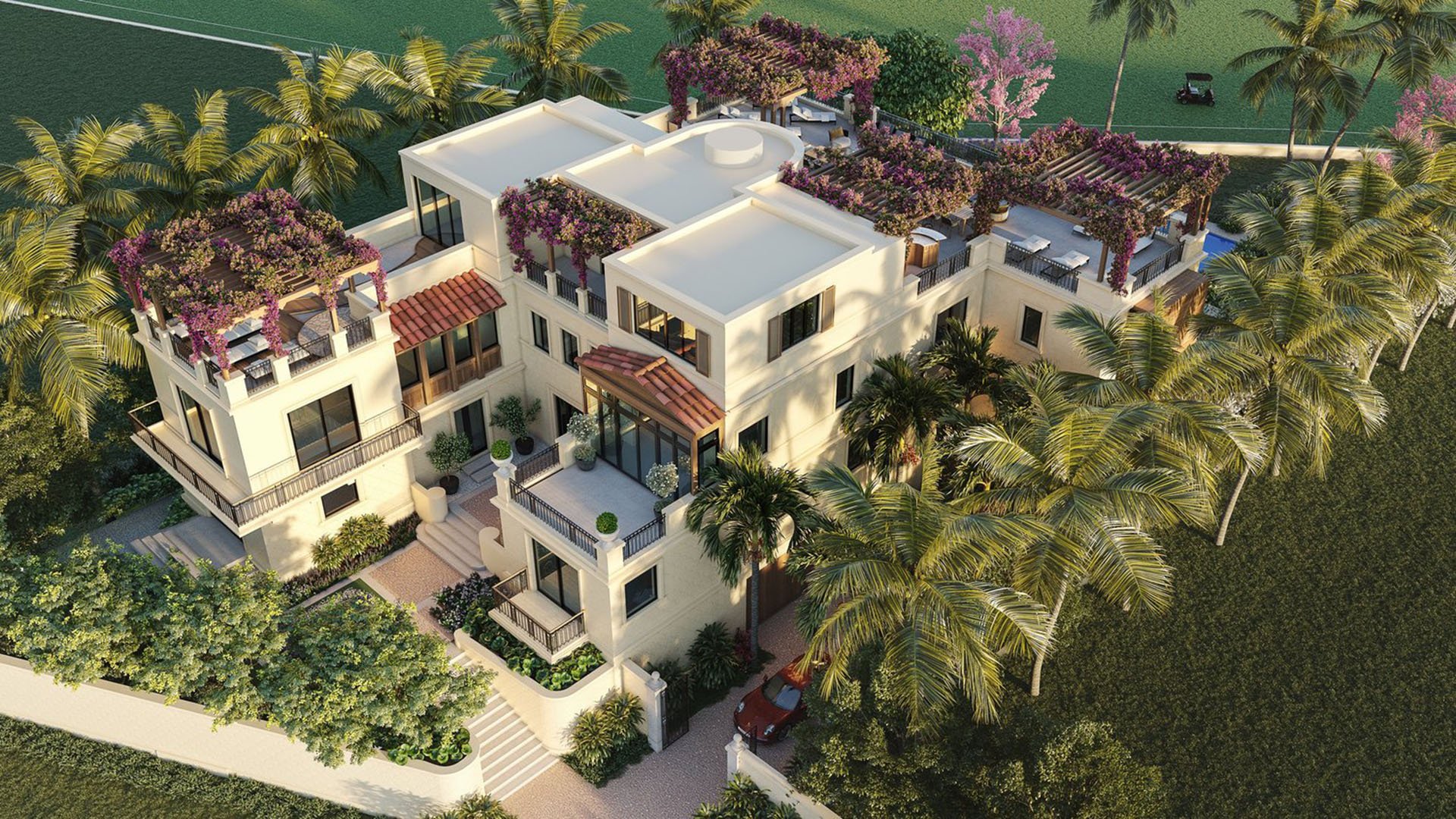
A porte-cochère is often marketed through image: a covered approach, a polished valet stand, a sheltered threshold between the city and the private world upstairs. For a serious buyer, however, the more revealing story is usually not in the rendering. It is in the association documents.
The question is simple: does the building merely appear discreet, or is discretion embedded in the rules, staffing, circulation, and operating culture? In South Florida, where a residence may serve as a primary home, seasonal retreat, family compound, or secure base between travel schedules, the arrival sequence carries unusual weight. It is where residents intersect with guests, vendors, drivers, security personnel, delivery routines, and, at times, public curiosity.
New-construction buyers often study floor plans, ceiling heights, terraces, and amenity decks first. That is natural. But the association documents can clarify whether the porte-cochère will remain elegant under pressure, during peak season, after turnover, and across future boards. For buyers comparing towers in Brickell, Miami Beach, Sunny Isles, Fisher Island, Bay Harbor Islands, or a gated-community setting, this is where privacy becomes operational rather than ornamental.
The declaration, bylaws, rules and regulations, operating budgets, insurance summaries, and meeting minutes each tell a different part of the arrival story. None should be read in isolation. A beautifully written rule may mean little if the budget does not support staffing. A generous covered drive may lose privacy if vendor access is loose or camera placement is indiscriminate.
Rules and regulations are often the first place to look for daily use. They may address valet procedures, guest registration, delivery timing, move-in logistics, rideshare access, commercial vehicles, parking assignments, contractor hours, package handling, and conduct in common areas. Because the porte-cochère is usually a common area or limited-access shared space, the association’s authority over behavior there is central.
Budgets reveal whether the promise of discretion has recurring financial support. Privacy is not only glass, landscaping, and gates. It is personnel, training, maintenance, technology, lighting, and replacement reserves. Meeting minutes can be especially useful because they may show the friction points residents actually raise: congestion, late-night noise, valet delays, unauthorized parking, delivery overflow, or security protocols that need refinement.
A truly private arrival starts before the car stops. The approach, turn radius, sightlines, valet choreography, lobby transition, elevator access, and service circulation all contribute. The association documents cannot replace an architectural walk-through, but they can confirm how the design is intended to be governed.
In dense urban environments, the distinction is critical. At St. Regis® Residences Brickell, for example, a buyer evaluating a branded residential lifestyle should still look past the name and study how arrivals, guests, staff, and service providers are separated in practice. In any tower, the privacy value of the entrance depends on whether policies preserve the dignity of arrival during ordinary days, events, and high-traffic periods.
The best documents tend to distinguish between residents, invited guests, household staff, contractors, deliveries, rideshare drivers, and short-term service needs. A buyer should be alert to whether those groups all converge at the same curb, the same desk, and the same elevator path. Even in an exquisite building, too many overlapping uses can erode the feeling of a private address.
Access control is not just a security matter. It is a privacy matter. Look for language governing who may enter the porte-cochère, who may wait there, how guests are announced, how household employees are credentialed, and whether vendors are directed through a service route. The more precise the document, the less the building relies on ad hoc discretion.
Camera policies deserve careful reading. Many buyers assume more cameras automatically mean more privacy. That is not always true. The issue is placement, monitoring, retention, and access to recordings. A discreet building uses technology to protect residents without turning the arrival court into a spectacle of over-documentation. Documents that define who can review footage and under what circumstances may be more reassuring than vague references to surveillance.
Valet and parking provisions also matter. If the porte-cochère doubles as a waiting area, overflow parking zone, delivery point, and social threshold, privacy can degrade quickly. Ideally, the documents separate temporary stopping from lingering, guest arrival from staff access, and emergency procedures from everyday convenience.
Different South Florida settings create different privacy pressures. In Brickell, the porte-cochère may need to buffer residents from an energetic urban streetscape. On Miami Beach, it may be about managing guests, beach traffic, hospitality energy, and event timing. In Sunny Isles, oceanfront towers often emphasize a more resort-like arrival, where privacy depends on clean circulation and disciplined staffing. On Fisher Island, the broader sense of separation may be part of the lifestyle, but building-level rules still matter.
A buyer studying The Perigon Miami Beach should consider how the arrival experience relates to coastal living, guest flow, and service access. At Bentley Residences Sunny Isles, the conversation may center on vehicle experience, vertical living, and how privacy is maintained between the street, garage, and residence. At The Residences at Six Fisher Island, the buyer may focus on how building rules complement an already secluded island context.
For search shorthand, some buyers group these considerations under Brickell, Miami Beach, Sunny Isles, Fisher Island, gated community, and new construction. The better lens is more precise: how many thresholds exist between public life and the private residence, and who controls each one?
The most concerning language is often vague. Phrases that give broad discretion without standards may work beautifully under a strong management team and poorly under a weaker one. Conversely, overly rigid rules can create inconvenience that residents later push to relax. The best documents balance elegance with enforceability.
Watch for unclear guest procedures, undefined vendor routes, weak contractor rules, limited valet standards, ambiguous camera access, and no meaningful process for handling repeated violations. Also note whether the board has authority to amend rules as building needs evolve. Privacy should not be frozen in the assumptions of a sales period. It should be capable of adapting without becoming arbitrary.
Budgets should be reviewed with the same discipline. A porte-cochère that depends on attendants, access technology, landscaping, lighting, and frequent cleaning requires recurring investment. If the expense structure feels too thin for the promise, the buyer should ask deeper questions before relying on the amenity.
Ask how guest arrivals are handled during peak periods. Ask whether contractors and deliveries have separate procedures. Ask who trains the valet team, how incident reporting works, and whether the association has written standards for confidentiality. Ask whether residents can restrict publication or casual disclosure of their presence in the building. Ask how disputes over common-area conduct are enforced.
For waterfront and boutique properties such as La Maré Bay Harbor Islands, the porte-cochère may feel intimate by design. That intimacy can be an advantage, provided the rules prevent the entrance from becoming informal, crowded, or overly familiar. Smaller scale does not automatically equal greater privacy. It simply changes the mechanics.
The best due diligence pairs documents with observation. Visit at different hours. Watch whether cars stack, whether staff recognize residents discreetly, whether guests are directed without confusion, and whether the lobby transition feels calm. Then confirm whether the documents support what you observed.
In the ultra-premium market, privacy is not a single amenity. It is a chain of decisions. Architecture may create the possibility of discretion, but association documents determine whether that discretion survives everyday life. The porte-cochère is where this becomes visible first.
A serious buyer should treat the entrance sequence as part of the residence itself. If the documents define access clearly, fund staffing realistically, regulate vendors carefully, and protect resident information, the porte-cochère can become one of the quiet luxuries of ownership. If they do not, even a dramatic arrival court may offer more theater than privacy.
Why should a buyer review association documents for porte-cochère privacy? They can reveal how the building governs arrivals, guests, vendors, cameras, valet operations, and common-area conduct.
Which documents are most relevant? Review the declaration, bylaws, rules and regulations, budgets, insurance materials, and board or association meeting minutes.
Can a beautiful porte-cochère still have privacy issues? Yes. Design matters, but unclear rules, weak staffing, poor vendor control, or congested circulation can undermine discretion.
What should buyers look for in valet rules? Look for clear standards on stopping, waiting, guest handling, overnight procedures, keys, incident reporting, and staff conduct.
Do camera systems always improve privacy? Not automatically. Buyers should understand placement, monitoring, retention, and who may access recorded material.
How do vendor rules affect arrival privacy? If vendors, deliveries, contractors, and residents share the same entrance without clear timing or routing, privacy may suffer.
Are meeting minutes useful in due diligence? Yes. They may reveal recurring concerns about congestion, noise, staffing, security, or rule enforcement around shared areas.
Should buyers visit the porte-cochère before purchasing? Yes. Visit at different times to observe traffic, staff behavior, guest handling, and the transition from curb to lobby.
Can association rules change after purchase? Rules may change through the association’s governing process, so buyers should understand amendment rights and board authority.
Is this a legal review or a lifestyle review? It is both. Buyers should pair lifestyle judgment with professional legal review before relying on association documents.
If you'd like a private walkthrough and a curated shortlist, connect with MILLION.
If branded residences are on your mind — as a home or as an allocation — we would be glad to share what we are seeing, privately.
Begin a quiet conversation