A discreet due-diligence shortlist for families balancing fine-art logistics, multigenerational living, freight access, installation controls, and coastal climate resilience across South Florida.
A multigenerational South Florida residence must do more than provide enough bedrooms. For a family living with large-format art, custom furnishings, staff, and several generations under one roof, invisible infrastructure can matter as much as the view. Freight-car geometry, loading routes, move reservations, glazing approvals, moisture control, and backup systems all belong in the acquisition brief.
This is a provisional due-diligence shortlist-not a comparison based on published freight capacities or standardized art-installation scores. Tower-specific loading-dock dimensions, deposits, insurance requirements, service hours, and installer-supervision rules all require written confirmation. Unit-level suitability-including privacy, accessibility, bedroom configuration, staff space, and internal circulation-must be evaluated separately.
For collecting families, the service route is part of the residence.
1. The St. Regis Residences, Miami: South Brickell, Miami
This ultra-luxury candidate leads because it warrants the most exacting version of the exercise: confirming the complete service route, freight-elevator dimensions, applicable permits, delivery windows, management controls, and installer access before commitment. Because elevator oversight varies by local jurisdiction, counsel and the project team should establish which authority governs each relevant conveyance and alteration.
2. 888 Brickell by Dolce & Gabbana: Brickell, Miami
For this Brickell candidate, art-installation planning should begin with the freight car’s actual height, width, depth, door opening, and diagonal clearance. Move schedules and current building-specific rules must come directly from management. A passenger elevator is not a reliable fallback for monumental art or custom furniture.
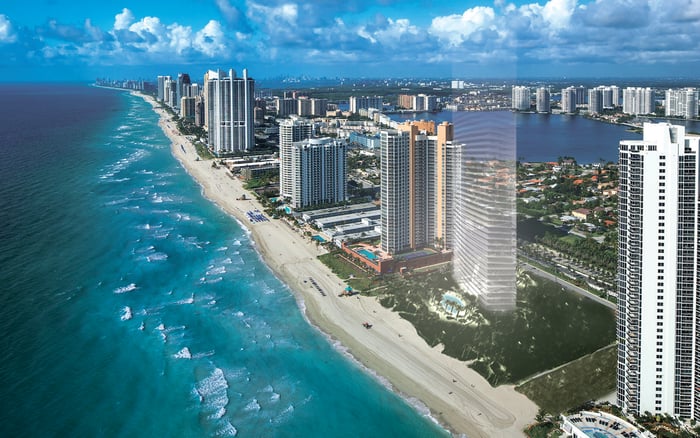
3. The Surf Club Four Seasons Private Residences: Surfside
At this coastal candidate, the principal screens are impact-rated glazing, climate resilience, service access, and written freight rules. Its placement is not based on a publicly disclosed freight-capacity figure. The prudent review connects the art conservator’s environmental requirements with the building’s storm protocols, glazing documentation, receiving procedures, and approved installation route.
4. The Ritz-Carlton Residences, Sunny Isles Beach: Sunny Isles Beach
High-rise hurricane protection, properly approved glazing, permitted upgrades, and freight access are central here. Buyers should verify product-approval documentation for windows and doors, then determine who controls future replacements or modifications. For larger family installations, the route from loading point to residence should be measured, not inferred from elevator capacity.
5. Palm Beach luxury oceanfront condo or estate inventory: Palm Beach
The fifth selection is a market-level option rather than a single building. It allows families to compare condominium convenience with estate-level control while examining impact glazing, backup systems, moisture management, loading access, and property-specific move rules. Every candidate requires an individual assessment because the operational profile can differ materially between a managed tower and a private home.
In Brickell, the relevant comparison is operational, not merely aesthetic. Families considering St. Regis® Residences Brickell alongside 888 Brickell by Dolce & Gabbana should request current move manuals before ordering oversized works or commissioning custom pieces. Design and architecture decisions become more intelligent when the freight path is mapped alongside the interior plan.
Farther north, The Surf Club Four Seasons Surfside frames the Surfside inquiry around coastal exposure, approved glazing, service circulation, and written installation controls. At The Ritz-Carlton Residences® Sunny Isles, the Sunny Isles Beach review should likewise connect hurricane protection with the practical movement of art and furnishings through a high-rise.
In Palm Beach, the choice set is broader. Oceanfront condominium and estate inventory should be compared through the same disciplined lens, with the recognition that responsibility for systems, loading, and storm preparation may shift with ownership structure. This buyer’s-guide perspective favors documented performance over assumptions based on brand, age, or appearance.
Nominal elevator capacity does not establish whether a sculpture, framed canvas, crate, or custom table can turn through the doors. Record the car’s height, width, depth, door opening, and diagonal clearance. Then measure every transition: loading access, corridors, corners, thresholds, vestibules, and the final entry into the residence. Confirm a contingency route before purchase or shipment, particularly if the freight car could be unavailable.
Request the current move manual and loading-route diagram. The file should clarify reservation windows, service hours, deposits, protective padding, vendor insurance, advance approvals, supervision, and restrictions on drilling, wall anchoring, rigging, or noisy work. The association or management team should also explain whether an art handler, contractor, engineer, or other specialist must submit documentation before arrival.
Elevator permits, inspections, installation requirements, and alteration approvals can vary by jurisdiction. Buyers should have counsel, management, and qualified contractors identify the authorities and requirements applicable to each property and conveyance before work begins.
Buyers should request valid approval documentation for windows, doors, and other relevant envelope components rather than rely on visual inspection. The review should also confirm the impact-performance requirements that apply to the specific property.
Window and door replacement in a high-rise may involve licensed contractors, permits, and association approval, so a collector should not assume climate upgrades can be owner-managed. Review governing documents alongside generator coverage, HVAC redundancy, moisture-control provisions, storm protocols, and the residence’s own environmental requirements.
The strongest acquisition is one in which family planning, art stewardship, and building operations align before closing. For discreet guidance across South Florida's most considered residences, connect with MILLION.
If branded residences are on your mind — as a home or as an allocation — we would be glad to share what we are seeing, privately.
Begin a quiet conversationNo. It is a due-diligence shortlist centered on service access, installation controls, glazing, and climate-resilience questions that require property-specific confirmation.
Request the car's height, width, depth, door opening, and diagonal clearance, then measure the entire route to the residence.
Weight capacity does not show whether a crate can clear the door, turn through corridors, or pass the residence entry.
Yes. Confirm the building's current reservation windows, service hours, and delivery rules in writing before arranging shipment.
Request the current move manual, loading-route diagram, vendor insurance requirements, service hours, deposits, supervision rules, and approval procedures.
Yes. Counsel, management, and qualified contractors should identify the permits, inspections, and approvals applicable to the property.
Yes. The responsible authority and applicable requirements can vary by jurisdiction and property.
Seek valid approval documentation for windows, doors, and other relevant envelope components, together with applicable impact-performance information.
Verify impact glazing, moisture control, generator coverage, HVAC redundancy, and written storm protocols against the collection's environmental needs.
Beyond building operations, assess bedroom configuration, privacy, accessibility, staff space, and internal circulation at the unit level.