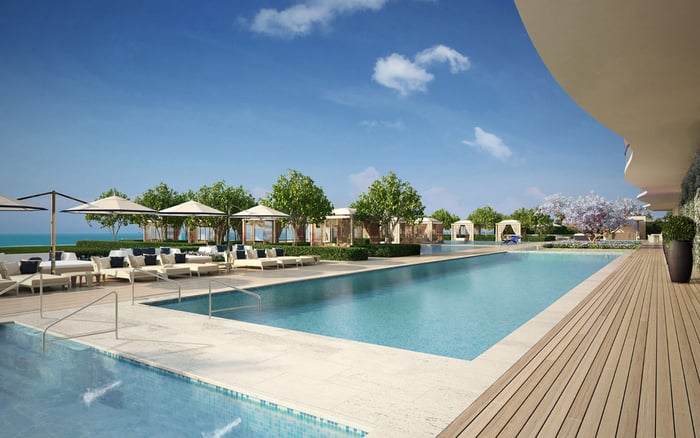
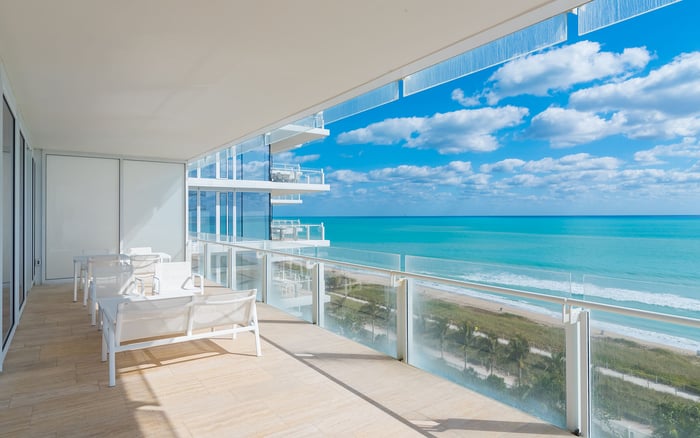
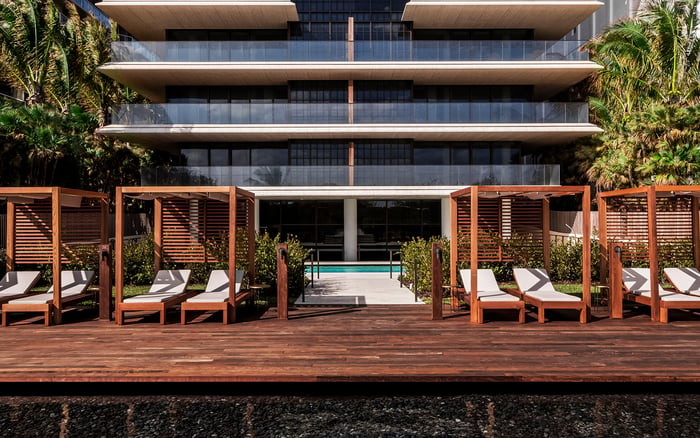
At The Delmore, the quality of a water view depends on more than elevation. Orientation, glare, balcony geometry, privacy, neighboring massing, and sightline durability should all inform a buyer’s assessment.
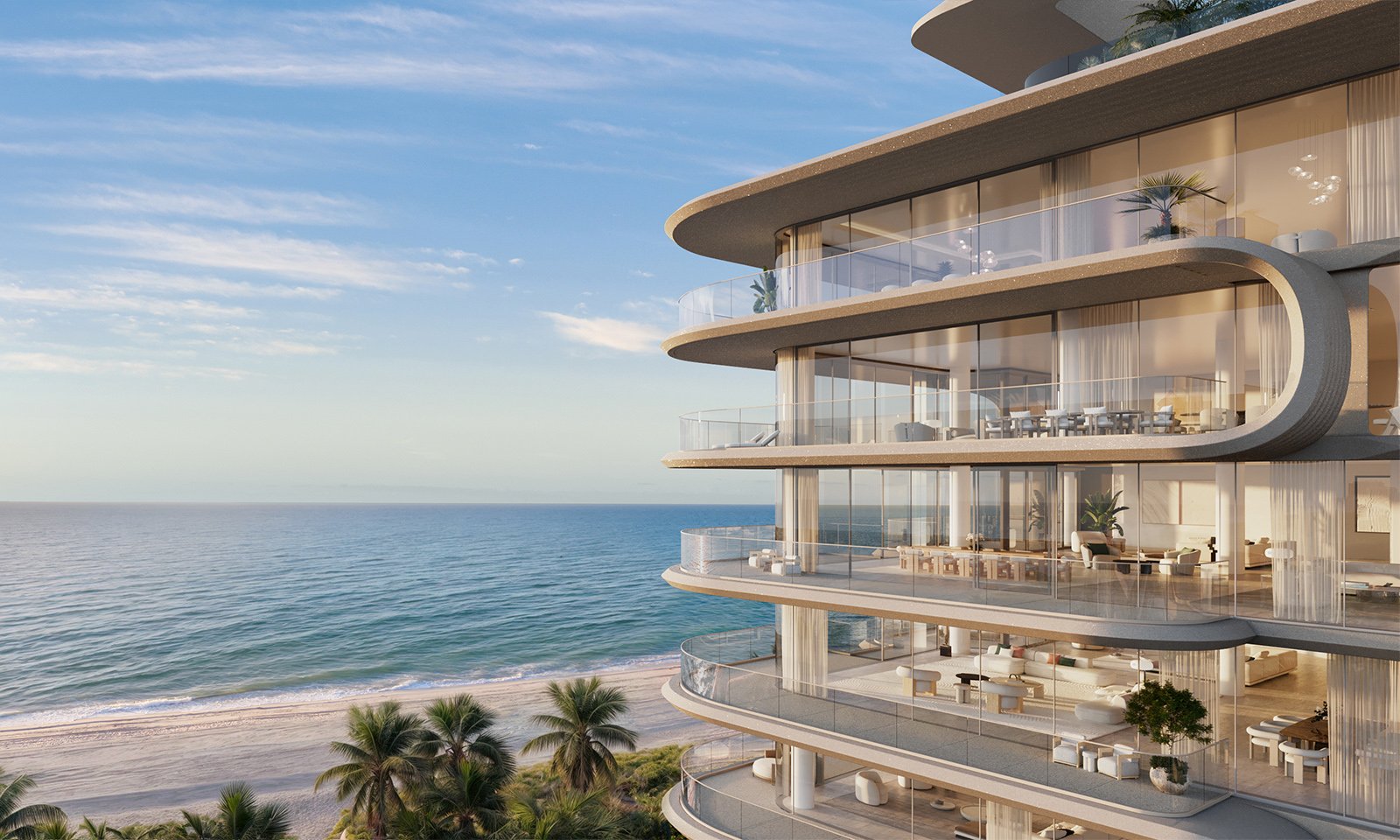
At The Delmore Surfside, water is central to the residential proposition. Yet “ocean view” is only the starting point for a serious comparison. A direct panorama, corner composition, oblique sightline, partial-water outlook, and inland exposure can each create a materially different daily experience.
The distinction is especially important in Surfside, where the relationship among ocean, neighboring buildings, beach activity, and sky shifts by stack and floor. The strongest choice is not automatically the highest residence or the one with the widest field of blue. It is the residence whose view, light, privacy, and outdoor space work in concert during the hours its owner expects to be home.
That principle applies across the oceanfront market. Buyers calibrating their preferences may also examine Arte Surfside, not to assume equivalence, but to sharpen their understanding of how architecture frames water and horizon.
A direct east-facing panorama can deliver a broad horizon and an immediate sense of openness. It can also bring concentrated morning light to the glass line. An oblique view may feel less cinematic at first glance, yet offer a more layered composition and different patterns of sun and privacy.
Corner residences introduce another variable. By combining water and city perspectives, they can broaden the visual field and bring light from more than one direction. The tradeoff is additional solar exposure, with comfort varying by season, hour, glazing, and the depth of exterior overhangs.
This is why water-view quality should be judged from the principal living area, primary suite, kitchen, and terrace seating position. A view that photographs beautifully at the window may feel less present from the center of a furnished room.
East-facing glass warrants close attention in the morning. Broad ocean exposure may create exceptional sunrise conditions, but glare and solar heat can affect breakfast areas, work surfaces, artwork placement, and the comfort of seating near the façade.
Window and façade specifications are therefore integral to the view analysis. Buyers should examine visual clarity, reflections, heat gain, storm exposure, and the interplay of interior and exterior light. Renderings cannot fully convey these conditions, while a single daytime visit may miss the most demanding hour.
The most useful comparison is experiential rather than promotional. Visit in the morning, at midday, in the late afternoon, and after dark when possible. For additional coastal context, Fendi Château Residences Surfside offers another setting in which buyers can consider how glass, exposure, and ocean proximity shape daily living.
Elevation can broaden the horizon, but it does not guarantee seclusion. Privacy depends on the angles among windows, terraces, neighboring towers, the beach, and public areas. A higher floor may reduce some ground-level visibility while remaining exposed to a nearby building or terrace.
Neighboring massing matters even when a residence retains ocean visibility. A slice of water can coexist with a direct residential sightline, creating a different sense of openness than the marketing label suggests. Buyers should study the view laterally as well as straight ahead, including what is visible from seated positions and after the interior lights are switched on.
The same discipline is useful when considering established coastal addresses such as The Surf Club Four Seasons Surfside. The objective is not to generalize across buildings, but to understand how placement, architecture, and surrounding structures shape perceived discretion.
Balcony depth influences more than outdoor square footage. It can shade the interior, accommodate usable seating, create separation from neighboring sightlines, and determine whether the water remains visually connected to the room. A deep terrace may improve comfort and privacy, although its structure can alter daylight and the view from deeper within the interior.
A shallower exterior zone may preserve a more immediate connection to the horizon while providing less shade at the glass line. Neither condition is universally superior. The right balance depends on furnishing plans, preferred hours outdoors, tolerance for direct sun, and the relationship between interior and exterior circulation.
For a buyer at The Delmore Surfside, balcony geometry should be assessed alongside glazing and orientation. Request floor-specific plans and current façade information, then consider where curtains, solar shades, furniture, and art would sit. These practical choices can determine whether an impressive exposure remains comfortable enough for daily enjoyment.
Resale analysis should extend beyond a broad “ocean-view” designation. The more useful questions concern permanence, obstruction risk, glare management, privacy, and usable outdoor space. A view that remains compelling from several rooms and throughout the day may offer more durable appeal than one dependent on a narrow angle or standing position.
Floor level belongs in this analysis, but only in combination with orientation. Greater elevation can extend the horizon while increasing exposure to wind and weather. Lower levels may offer a more immediate relationship with the beach or water, yet require closer scrutiny of public sightlines and neighboring activity.
Before committing, compare the relevant stacks at multiple times of day and request current information on orientation, glazing, terrace dimensions, neighboring development rights, and represented sightlines. The objective is a residence whose visual promise survives real furniture, changing light, and future scrutiny.
Are all ocean views at The Delmore equivalent? No. Direct, corner, oblique, partial-water, and inland outlooks should be assessed separately.
Why does orientation matter? Orientation affects natural light, glare, perceived openness, solar exposure, and the experience of the water.
What should buyers check with east-facing glass? Review morning glare, heat at the glass line, reflections, shading, and visual clarity.
Are corner residences always preferable? Not necessarily. They may broaden the visual field while introducing additional sun exposures and privacy angles.
Does a higher floor guarantee better privacy? No. Privacy also depends on direct sightlines from neighboring towers, terraces, the beach, and public spaces.
How does terrace depth affect the interior? It can influence shade, daylight, privacy, outdoor usability, and how clearly the view reads from inside.
When should a residence be visited? Ideally, review it in the morning, at midday, in the late afternoon, and after dark to identify changing light conditions.
Why examine the view from a seated position? Furniture and terrace walls can alter the visible horizon, making a standing view an incomplete test.
What creates durable buyer appeal? Lasting sightlines, manageable glare, meaningful privacy, and comfortable outdoor space support a stronger ownership experience.
What documents deserve review before purchase? Examine current plans and available details covering orientation, glazing, terrace dimensions, sightlines, and neighboring development rights.
For a discreet conversation and a curated building-by-building shortlist, connect with MILLION.
If branded residences are on your mind — as a home or as an allocation — we would be glad to share what we are seeing, privately.
Begin a quiet conversation