A buyer-focused guide to evaluating penthouse terrace systems, roof assemblies, wind exposure, glazing, drainage, and condominium maintenance obligations at Cora Merrick Park in Coral Gables.
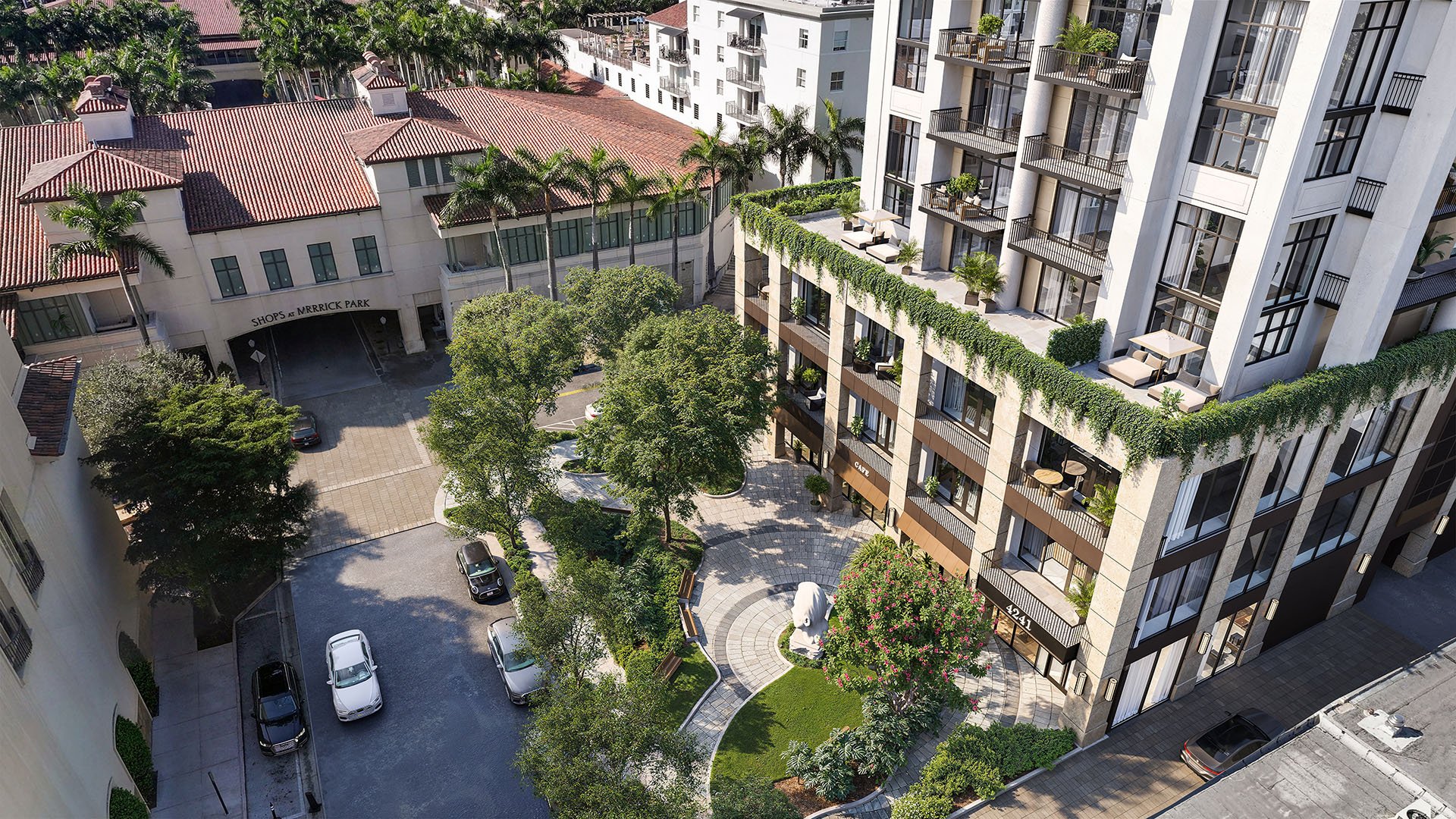
A penthouse purchase is never only a question of view, ceiling height, and privacy. At the top of a condominium, the residence often meets the building’s most consequential systems: terraces, roof assemblies, drains, railings, glazing, waterproofing membranes, and rooftop mechanical areas. That makes diligence at Cora Merrick Park especially important for buyers considering an upper-floor home in the Merrick Park submarket of Coral Gables.
The appeal is clear. A penthouse can offer quiet elevation, generous outdoor space, and a more residential sense of arrival than a standard condominium floor. Yet the same qualities that make the home rare can also raise questions that should be answered before contract finalization, custom build-outs, or terrace improvements. This is one of MILLION’s Buyer's Guides where the most elegant answer is often the most technical one.
A terrace should be evaluated as more than a place for dining, planting, or sunset entertaining. In South Florida, an elevated terrace functions as part of the building envelope. It must manage wind, rain, drainage, waterproofing continuity, movement, and maintenance access over time.
If the terrace includes stone or porcelain pavers over pedestals, the finish may appear simple, but the system beneath it deserves scrutiny. Buyers should ask how water drains, whether slopes are adequate, how the waterproofing membrane can be inspected, and who removes and reinstalls pavers when repairs are required. A private-use terrace may feel like an extension of the living room, but it may still sit above common-element waterproofing or roof structure.
This issue is not unique to Coral Gables. Buyers comparing Ponce Park Coral Gables and The Village at Coral Gables should bring the same discipline to outdoor space, particularly when a residence offers large private terraces or owner-customized exterior areas.
High floors can create spectacular exposure, but they also encounter different wind behavior than lower interior elevations. Upper levels, setbacks, corners, and nearby towers can increase pressure on glazing, sliding doors, railings, pavers, canopies, planters, furniture, and any owner-added exterior element.
For a penthouse buyer, this means requesting design wind pressures and product approvals, not merely admiring the view. Expansive glass and sliding-door systems should be reviewed for impact rating, pressure rating, water-infiltration performance, and compatibility with hurricane-zone requirements. Railings and balcony doors deserve the same scrutiny, because wind-driven rain can expose weaknesses that may not be visible during a dry walk-through.
A Coral Gables penthouse may not face the same direct salt-spray profile as an oceanfront residence, but it still belongs to a South Florida weather environment shaped by hurricanes, heavy rain, and strong seasonal wind. For buyers who also study waterfront or coastal projects such as 57 Ocean Miami Beach, the lesson is consistent: elevation and exposure should be priced with engineering, not romance alone.
The roof above or around a penthouse is not a background condition. Roof assemblies and rooftop structures should be reviewed for code compliance, uplift resistance, drainage, penetrations, waterproofing continuity, and maintenance access. If the penthouse abuts a roof area, sits below rooftop equipment, or includes terrace zones that function like roof surfaces, the diligence should become more exacting.
Buyers should request roof details that explain how water is moved away from occupied spaces, how penetrations are flashed, how membranes transition at walls and thresholds, and how repairs can be performed without destructive disruption. The most beautiful interior finish package cannot compensate for uncertainty in the roof and waterproofing file.
A strong diligence packet for Cora Merrick Park should ideally include project plans, terrace and roof details, drainage diagrams, product approvals, warranty terms, association documents, and rules for owner modifications. Where available, shop drawings and approved assemblies are more valuable than verbal assurances.
Miami-Dade product approval documentation is a practical checkpoint for exterior envelope components. Buyers should ask for approvals or equivalent documentation for balcony doors, glass systems, roof assemblies, railings, shutters where applicable, and other assemblies exposed to wind and wind-driven rain.
The key is to separate finish from performance. A dramatic sliding wall, a frameless-looking glass rail, or a sleek outdoor canopy may be visually persuasive, but the diligence question is whether the component is approved for its intended use, pressure zone, installation condition, and exposure. This is especially relevant when owners plan post-closing additions such as pergolas, planters, outdoor kitchens, lighting systems, furniture anchoring, or hot tubs.
Projects in denser urban environments, including 2200 Brickell, invite similar questions when buyers compare terraces, glass systems, and upper-level outdoor areas. The address changes, but the underlying issue remains: exterior performance is a system, not a specification line.
One of the most important penthouse questions is deceptively simple: who pays when something fails? Buyers should ask whether terraces, roof areas, railings, drains, waterproofing membranes, exterior walls, and rooftop mechanical zones are unit-owner responsibilities, limited common elements, or common elements.
Florida condominium ownership turns this distinction into a financial issue. The declaration, bylaws, rules, budget, insurance policies, reserve schedule, and meeting minutes should be reviewed before assuming that a private terrace is privately maintained or, conversely, that the association handles every exterior condition. The answer may vary by component.
Reserve planning also matters. Roof systems, load-bearing elements, waterproofing, and other major components can influence future assessments and ownership costs. Milestone-inspection timing and any resulting repair findings should be part of a buyer’s long-term ownership analysis, particularly in high-rise condominium buildings.
Penthouse buyers often envision enhancements before closing: planters, pergolas, outdoor kitchens, upgraded lighting, larger furniture groupings, or spa-like exterior features. Each idea should be tested against wind loads, drainage, membrane access, weight, attachment methods, insurance, and association rules.
Ask whether exterior elements may be attached or must remain freestanding. Ask who approves layout changes and whether engineering review is required. Ask whether planters need drainage trays, whether pavers can be lifted for repairs, whether outdoor appliances require special penetrations, and whether furniture must be removed or secured before storms.
The goal is not to diminish the lifestyle value of a penthouse. It is to protect it. A beautifully designed terrace becomes more valuable when the owner understands how it performs, how it is maintained, and how it can be improved without compromising the roof or building envelope.
For Cora Merrick Park, a disciplined buyer should assemble a file that includes architectural plans, terrace details, roof assembly information, drainage diagrams, glass and door approvals, railing documentation, waterproofing details, warranty terms, condominium documents, budgets, insurance materials, reserve information, meeting minutes, and modification rules.
If the seller, developer, association, or professional team cannot provide every item immediately, the buyer should still define what is needed before finalizing decisions. Luxury real estate rewards confidence, but confidence should be built from documents, not assumptions.
A penthouse is often the signature residence of a building. In Coral Gables, where lifestyle, privacy, and design carry real weight, the strongest buyers evaluate beauty and building science together.
Why does a Cora Merrick Park penthouse require special diligence? A penthouse often interfaces with terraces, roof areas, glazing, drainage, and exterior systems that carry greater technical and maintenance implications.
Is a private terrace automatically the owner’s maintenance responsibility? Not necessarily. The condominium documents should clarify whether it is a unit component, limited common element, or common element.
What should buyers review for terrace pavers? Buyers should confirm uplift resistance, drainage slope, waterproofing access, and rules for removing pavers during repairs.
Why are upper-floor wind pressures important? Upper levels, corners, and setbacks can experience higher wind pressures, affecting doors, glass, railings, pavers, and outdoor improvements.
What documentation matters for sliding doors and glass? Buyers should request impact, pressure, water-infiltration, and product-approval documentation suited to the building’s hurricane-zone conditions.
Should roof details be reviewed even if the unit looks perfect? Yes. Roof assemblies, penetrations, drainage, waterproofing continuity, and maintenance access can affect long-term ownership quality.
Can owners add pergolas, kitchens, planters, or hot tubs? Possibly, but these improvements may require association approval, engineering review, and confirmation of weight, wind, drainage, and attachment rules.
What association records should be requested? Review the declaration, bylaws, rules, budget, insurance policies, reserve schedule, meeting minutes, and any applicable inspection information.
Does Coral Gables reduce hurricane-related diligence concerns? No. The location may differ from direct oceanfront exposure, but South Florida wind, hurricane, and heavy-rain risks still matter.
What is the best way to shortlist comparable options for touring? Start with location fit, delivery status, and daily lifestyle priorities, then compare stacks and elevations to validate views and privacy.
For a confidential assessment and a building-by-building shortlist, connect with MILLION.
If branded residences are on your mind — as a home or as an allocation — we would be glad to share what we are seeing, privately.
Begin a quiet conversation