A discreet buyer’s guide to weighing walkable urban convenience against private arrival, access control, and guest flow in South Florida luxury real estate.
For South Florida buyers who entertain often, the debate between walkability and private arrival is less about preference than choreography. A walkable address offers the pleasure of stepping out for dinner, coffee, boutiques, parks, and waterfront paths. A private arrival offers something quieter and more consequential: control over how people approach, wait, unload, and slip from view.
When guests are occasional, walkability can feel decisive. When guests are frequent, especially family, business associates, visiting friends, household staff, drivers, chefs, wellness providers, security teams, and yacht crews, arrival becomes part of the home’s operating system. The residence is no longer simply where people gather. It is where movement must be absorbed gracefully.
That is why the answer often tilts toward private arrival for the highest-end South Florida buyer, while still leaving room for walkability as a powerful lifestyle enhancer. The right choice depends on how the home will actually live.
Walkability matters most when the buyer wants South Florida to feel immediate. In Brickell, Downtown Miami, Edgewater, parts of Miami Beach, Coconut Grove, and select coastal village settings, proximity can compress the day beautifully. A resident can move from a morning fitness appointment to lunch, a gallery visit, a marina, or dinner without making every moment dependent on a car.
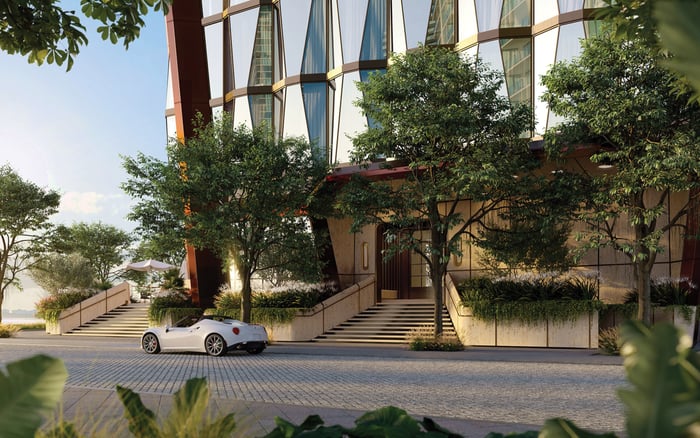
For guests, walkability can also soften the visit. Houseguests staying for several days may appreciate being able to leave the residence independently, meet friends, shop, or take a walk without asking for a ride. In a vertical urban setting, a project such as 2200 Brickell speaks to buyers who value the energy of a connected neighborhood as much as the privacy of the residence itself.
The strongest walkable addresses are not merely close to restaurants. They feel composed at street level, with a natural rhythm between private space and public life. Buyers should ask whether the walking experience feels elegant at different times of day, whether guest parking is intuitive, and whether the building’s lobby sequence remains calm even when the neighborhood is active.
Private arrival becomes essential when a home is expected to receive people repeatedly and discreetly. The more often guests arrive, the more every friction point is magnified: a congested drop-off, a visible waiting area, a slow valet sequence, limited guest parking, or an entry that exposes too much of the household’s routine.
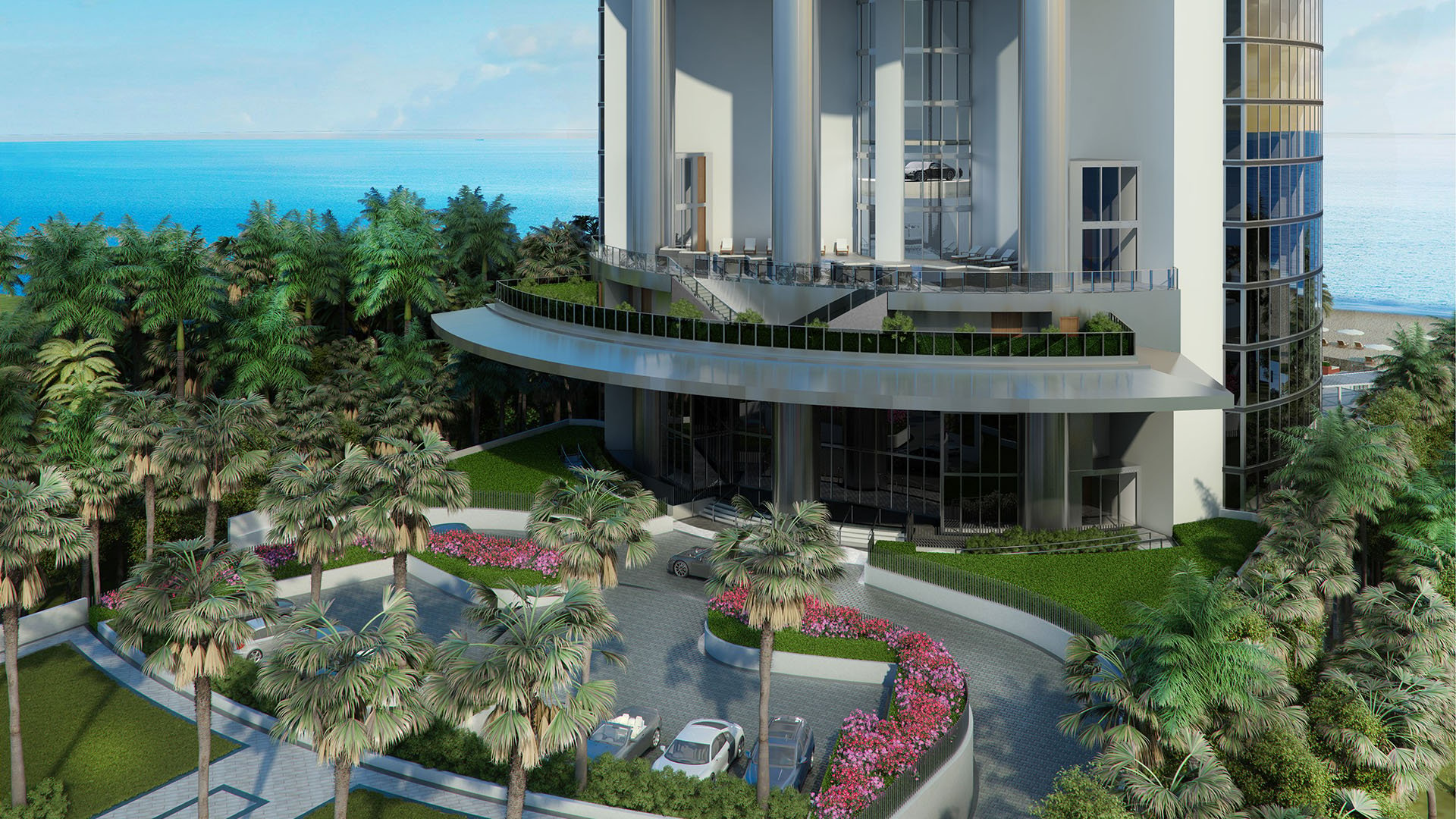
In this context, luxury is not only finish level. It is the absence of awkwardness. A sheltered porte cochere, attentive valet operation, separate service access, secure elevators, clear lobby circulation, and discreet loading capacity can distinguish a beautiful residence from a residence that functions beautifully.
For buyers who host dinners, family holidays, charity gatherings, board-level conversations, or extended seasonal stays, the guest path should be studied as carefully as the primary bedroom. Where does a driver wait? How does catering enter? Can luggage arrive without becoming a lobby event? Can a guest be received without crossing through service movement? These questions may matter more than being five minutes closer to a restaurant.
Waterfront homes and island residences often shift the priority even further toward private arrival. In these settings, buyers are usually trading density for control, views, security, and a more deliberate pace. Walkability may still be pleasant, but it is rarely the core reason to choose the address.
On Fisher Island, the value proposition is inseparable from privacy and controlled access. A residence such as The Residences at Six Fisher Island belongs to a world where arrival itself is part of the experience. The journey tells guests they are entering a distinct environment, not merely another urban building.
Sunny Isles Beach presents a different version of the same idea. The appeal is often tied to oceanfront living, large-scale residential service, and a resort-like sense of retreat. At St. Regis® Residences Sunny Isles, the more relevant buyer question is not whether every errand can be done on foot. It is whether the building can receive residents and guests with the level of polish expected from the address.
For a gated-community search, the hierarchy is even clearer. Buyers are typically seeking separation, not street activation. They may still want quick access to restaurants and schools, but the property’s first duty is to protect the household’s privacy and absorb guest flow without visible strain.
Miami Beach complicates the comparison because it can deliver both. Certain addresses allow a buyer to enjoy beach access, dining, wellness, and culture while still maintaining a private residential cadence. In these cases, the winning formula is not walkability versus private arrival. It is walkability plus arrival discipline.
That hybrid is especially attractive for buyers who entertain socially but do not want the home to feel exposed. Shore Club Private Collections Miami Beach is the type of address that invites this conversation because the neighborhood’s energy and the residence’s privacy must work together. The best buildings in this category give residents the pleasure of place without making the household feel porous.
The same logic applies in quieter enclaves where water, landscape, and convenience intersect. Vita at Grove Isle illustrates why some buyers want a sense of retreat near urban life rather than inside its busiest currents. The frequent host may prefer a calm arrival sequence and a short drive to dinner over a lively sidewalk outside the lobby.
Start with the guest calendar. If guests come monthly, walkability may dominate. If they come weekly, stay for long weekends, or include service teams and drivers, private arrival deserves greater weight. The more complex the household, the more valuable controlled circulation becomes.
Next, separate daytime convenience from evening entertaining. A buyer may personally love walking to coffee in Brickell, but dinner guests may arrive by car, rideshare, or chauffeured vehicle. A building can be highly walkable and still underperform if its drop-off is cramped or confusing.
Then consider resale depth. Walkability broadens appeal in urban markets because many buyers understand it instantly. Private arrival can be more subtle, but for the right luxury buyer it is non-negotiable. The strongest properties do both, or at least excel so clearly in one category that the tradeoff feels intentional.
Finally, tour like a guest. Arrive at the building during an active hour. Watch how vehicles stack, how staff communicates, how visitors are received, and how quickly the public world falls away. A floor plan can impress in minutes. Arrival quality reveals itself over time.
For buyers with frequent guests, private arrival usually carries the greater practical value in South Florida’s luxury tier. It protects discretion, supports staffing, and makes entertaining feel effortless. Walkability remains a major advantage, particularly in Brickell and Miami Beach, but it should not compensate for a weak arrival sequence in a home that will host often.
The most successful purchase is not the address with the longest amenity list. It is the address whose daily movement matches the buyer’s real life. For some, that means stepping directly into a vibrant neighborhood. For others, especially in waterfront, island, and estate settings, it means a guest arrives, is welcomed, and the home never feels disturbed.
Is walkability more important than private arrival in South Florida luxury real estate? It depends on how the residence is used. For buyers with frequent guests, private arrival often becomes the more important feature.
When does walkability matter most for luxury buyers? Walkability matters most when the buyer wants daily access to dining, wellness, retail, parks, or cultural activity without relying on a car.
Why does private arrival matter for frequent hosts? It reduces friction for guests, staff, luggage, drivers, and catering. It also protects the household’s sense of discretion.
Is Brickell better for walkability or privacy? Brickell is often chosen for urban convenience, but buyers should still evaluate valet flow, lobby calm, and guest reception carefully.
Does Miami Beach offer both walkability and private arrival? In select settings, yes. The strongest Miami Beach residences combine neighborhood access with a composed residential arrival.
Are waterfront properties usually less walkable? Many waterfront settings prioritize views, privacy, and controlled access over immediate pedestrian convenience. That tradeoff can be intentional.
Should guest parking influence a luxury purchase? Yes, especially for households that entertain often. Poor guest parking can undermine an otherwise refined residence.
What should buyers observe during a showing? They should study the drop-off, valet rhythm, lobby sequence, service access, and how naturally visitors move through the building.
Is private arrival only relevant for single-family estates? No. It is equally important in condominiums, branded residences, island properties, and buildings with a high level of service.
Which choice is best for resale? Walkability can broaden appeal, while private arrival can be decisive for the luxury buyer who values discretion and hosting ease.
For a discreet conversation and a curated building-by-building shortlist, connect with MILLION.
If branded residences are on your mind — as a home or as an allocation — we would be glad to share what we are seeing, privately.
Begin a quiet conversation