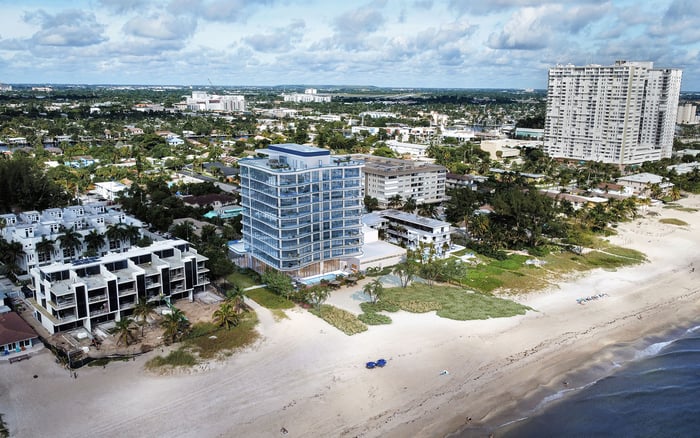
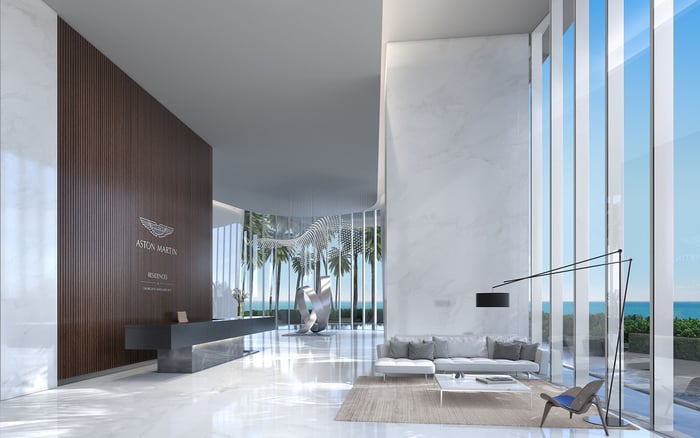
Vita at Grove Isle pairs controlled island arrival with Biscayne Bay living. A discerning purchase depends on residence-specific sightlines, practical access arrangements, and clearly documented amenity rights.
At Vita at Grove Isle, the central proposition is separation without leaving Coconut Grove behind. The seven-story condominium comprises 65 residences on a 20-acre island in Biscayne Bay, connected to the mainland by a private bridge with controlled access. Developed by CMC Group, led by Ugo Colombo, it offers a distinctly bounded residential setting.
For a buyer, three qualities warrant separate examination: privacy at arrival, convenience of access, and the outlook from the residence itself. They are related, but none guarantees the others. A staffed entrance can regulate visitors without preventing overlooking from a neighboring terrace. A waterfront address can offer compelling scenery without giving every room an uninterrupted horizon.
A sound evaluation begins with that distinction. Vita’s island position is a concrete attribute; the experience of an individual home remains a residence-by-residence judgment.
A staffed gatehouse and advertised 24-hour island security, together with the private bridge, establish a controlled arrival sequence that buyers can assess directly. They should not be read as a promise of complete seclusion.
Grove Isle also contains three original condominium towers. Vita therefore belongs to an established residential island, not an enclave occupied exclusively by its own residents. Its horseshoe-shaped building wraps the northern tip between Biscayne Bay and one of those existing towers, making the relationship between buildings particularly relevant.
Private elevators and wraparound terraces are among the advertised residence features. Their privacy value depends on the specific layout: where the elevator opens, which rooms face neighboring homes, and whether outdoor seating areas are visible from adjacent or elevated terraces. During a viewing, inspect those relationships from the places where you would actually sit, dine, and entertain.
Buyers also considering Four Seasons Residences Coconut Grove can apply the same test to both addresses: distinguish controlled arrival from visual privacy rather than treating either as a complete measure of discretion.
A bridge is both a boundary and an everyday route. The useful question is not simply whether entry is controlled, but how that control accommodates the household’s routines.
Ask for written procedures covering guest registration, recurring visitors, deliveries, ride-share entry, and contractor access. Establish who authorizes entry, how arrangements change outside normal hours, and what happens when an expected visitor arrives without prior clearance. These are practical questions, not assumptions about current operations.
Emergency access and bridge-maintenance responsibilities warrant equal attention. Before purchase, understand the applicable procedures and governing obligations, including how maintenance-related access changes would be communicated.
The location’s advertised proximity-minutes from central Coconut Grove-is not a travel-time guarantee. Test the journeys that matter to you at relevant hours. For someone weighing Vita against Park Grove Coconut Grove, the comparison should include the complete arrival and departure experience, not merely distance on a map.
Vita fronts Biscayne Bay, not the Atlantic Ocean. That distinction matters for buyers who specifically prefer ocean frontage to a bay setting. The appeal here should be judged on its own terms, without importing expectations from an oceanfront property.
Within the building, advertised panoramic views do not establish a uniform outlook. Floor level, terrace orientation, neighboring structures, and the building’s curved geometry all warrant inspection. View the precise residence, then assess the outlook from principal rooms as well as from the terrace edge. A photograph taken at one favorable point cannot substitute for that exercise.
Request any written view protections and have counsel explain their scope. Do not assume that water visible today carries a guarantee of permanent openness.
Wraparound terraces can be central to a residence’s appeal, but size alone is not decisive. Walk the outdoor space and consider where furniture would sit, how indoor rooms connect to it, and which portions feel appropriately private. Return at another time of day if light and exposure are important to your intended use.
Vita includes approximately 12 two-story penthouses. One penthouse offering was advertised at nearly 13,000 square feet, with expansive terraces, a 40-foot rooftop pool, and views of Biscayne Bay and downtown Miami. Those details apply to a particular offering, not to every penthouse or residence.
Before using that example as a benchmark, confirm the interior and exterior area breakdown, current availability, and applicable maintenance obligations. A private rooftop pool also warrants questions about responsibility for servicing, repairs, and insurance. The goal is to understand the ownership arrangement, not simply the presentation.
Advertised island amenities include a waterfront boardwalk, tennis, paddleball, pickleball, a marina, and children’s playgrounds. A residents-only poolside bar is also among Vita’s advertised amenities. The distinction between island facilities and building-specific facilities warrants careful attention.
Obtain written confirmation of which amenities are exclusive to Vita, which are shared, and which require separate fees or agreements. A marina’s presence does not confirm that a berth accompanies a residence. Clarify availability, eligibility, and contractual terms separately.
When comparing Vita with The Well Coconut Grove, apply the same discipline: assess the facilities you would actually use and the rights attached to ownership, rather than comparing amenity names alone.
Before committing, request the condominium declaration, operating budget, reserve information, insurance summary, litigation disclosures, and parking terms. Have the appropriate advisers review how building obligations interact with island arrangements, particularly shared facilities and bridge responsibilities.
Current ownership costs and final operating protocols require direct confirmation. Base the purchase decision on written terms, a detailed residence inspection, and an access routine that suits your household. Vita is best suited to a buyer who values controlled island arrival and Biscayne Bay living while remaining precise about what the individual home delivers.
For a discreet assessment of Vita and your Coconut Grove alternatives, connect with MILLION.
If branded residences are on your mind — as a home or as an allocation — we would be glad to share what we are seeing, privately.
Begin a quiet conversationVita comprises 65 residences in a seven-story condominium on the 20-acre Grove Isle island in Biscayne Bay.
The developer is CMC Group, led by Ugo Colombo.
A private bridge with controlled access connects the island to the mainland. Buyers should confirm guest, delivery, contractor, and emergency access procedures.
No. Controlled arrival is distinct from visual privacy, which depends on the residence’s layout, orientation, and relationship to neighboring buildings and terraces.
No. Grove Isle also contains three original condominium towers.
No. Vita’s waterfront setting is Biscayne Bay, not direct Atlantic Ocean frontage.
Marketing descriptions do not establish a unit-by-unit guarantee. Inspect the specific floor, rooms, terrace orientation, and surrounding buildings, and request any written view protections.
Vita includes approximately 12 two-story penthouses. Features described for an individual offering should not be assumed to apply to every penthouse.
The advertised marina does not establish that a berth accompanies a residence. Confirm eligibility, availability, fees, and any separate agreements.
Request the condominium declaration, budget, reserves, insurance summary, litigation disclosures, parking terms, and any written view protections. Also confirm amenity rights and bridge-maintenance responsibilities.