A buyer-focused comparison of Villa Miami and 619 Residences, framed around the tension between hospitality polish and the residential warmth demanded by South Florida’s ultra-premium market.
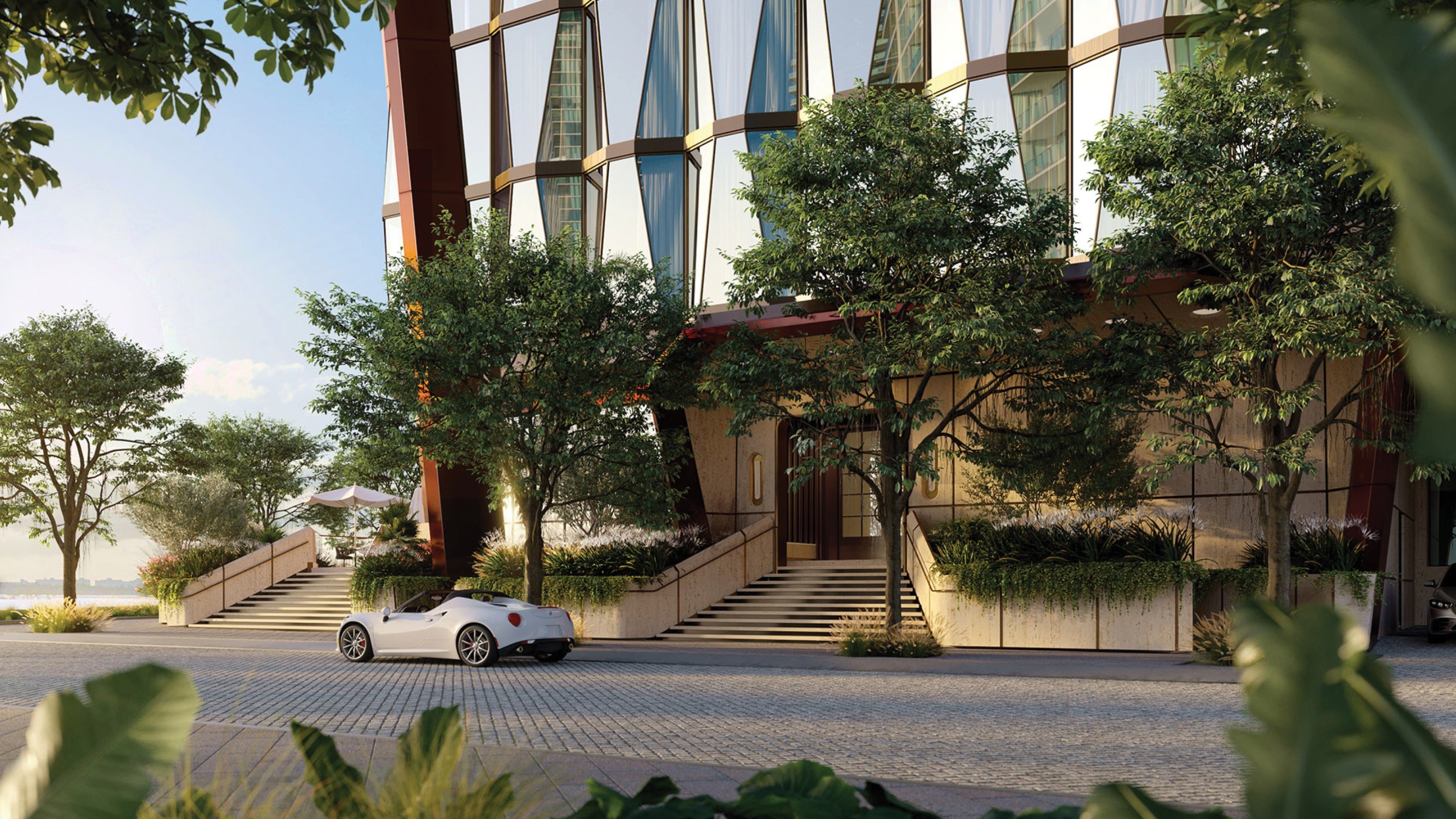
Villa Miami vs 619 Residences by Foster + Partners + Nobu Hospitality is not best understood as a conventional contest of size, price, or amenity count. The more revealing comparison is emotional and architectural: how much hospitality polish does a buyer want before a residence begins to feel too transient, too performed, or too public?
That question has become central to South Florida’s upper tier. Buyers are no longer asking only whether a building looks luxurious. They are asking whether it can support private life with grace. They want the arrival sequence, atmosphere, materials, and service logic of a world-class destination, but they also want rooms capable of holding family routines, long dinners, quiet mornings, and possessions accumulated over time.
In that sense, Villa Miami is the more clearly residential counterpoint in this discussion. It sits within the Edgewater conversation as a luxury residential development whose appeal can be read through spatial generosity, material sophistication, and indoor-outdoor living. The comparison with 619 Residences by Foster + Partners + Nobu Hospitality is therefore less about declaring a winner than identifying a buyer temperament.
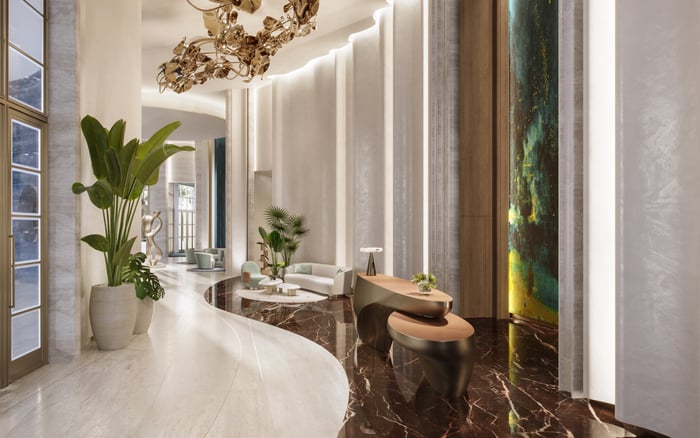
The strongest argument for Villa Miami is not simply that it borrows from hospitality. Many luxury developments now do. Its more interesting position is that it can absorb hospitality cues while remaining grounded in the idea of home. Expansive layouts and high ceilings create refined openness, but the purpose is not spectacle alone. Volume matters because it changes how a residence breathes, how people gather, and how private life feels across a full season rather than a weekend stay.
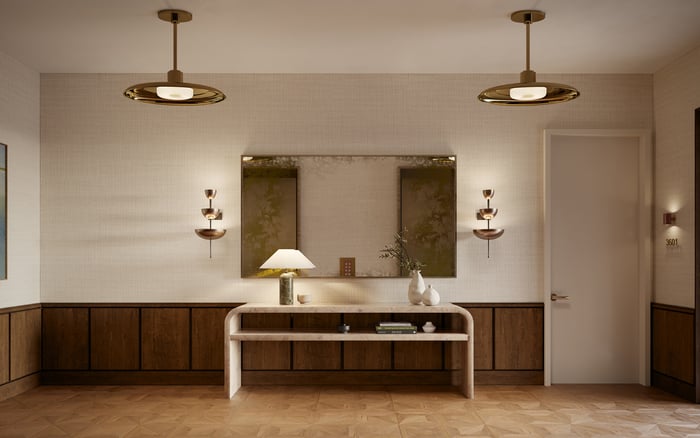
The material language is equally important. Natural stone, wood finishes, and textiles can soften the polish that often defines hotel-inspired design. In a hotel, perfection can be thrilling because it is temporary. In a residence, perfection must be livable. It has to withstand the intimacy of daily use without feeling fragile or impersonal.
Villa Miami’s kitchens are especially relevant to this hospitality-residential crossover. A kitchen in this tier is rarely just a back-of-house utility space. It is a social stage, an entertaining anchor, and often the place where a home reveals whether it was truly designed for living. The same principle applies to bathrooms and wellness spaces. Spa influence is welcome, but the best private wellness language does not feel like checking into treatment. It feels like retreating into one’s own rhythm.
The name 619 Residences by Foster + Partners + Nobu Hospitality carries a different kind of signal. It introduces the language of globally recognized design and hospitality into the buyer’s first impression. For some purchasers, that association is the appeal. It suggests a residence shaped by precision, atmosphere, and an elevated understanding of service culture.
The key is to separate the power of that signal from the daily experience a buyer actually wants. Hospitality can mean ease, polish, discretion, and memorable spaces. It can also, if overextended, create a sense of choreography that feels less personal than private-home buyers prefer. The question is not whether hospitality belongs in luxury residential design. It clearly does. The question is how far it should go.
For buyers already considering Brickell, this distinction matters. A polished urban residence may fit a lock-and-leave lifestyle, a finance or international business routine, or a preference for an address with strong design identity. Nearby, buyers looking across the Brickell spectrum may also encounter names such as The Residences at 1428 Brickell and St. Regis® Residences Brickell, each reinforcing how much the district has become a stage for highly curated residential choices.
Edgewater and Brickell often attract overlapping buyers, but they do not always deliver the same emotional cadence. Edgewater can feel more oriented toward water, openness, and a residential sense of exhale. Brickell, by contrast, often suits buyers who want the energy of the urban core close at hand. This is not a hierarchy. It is a lifestyle filter.
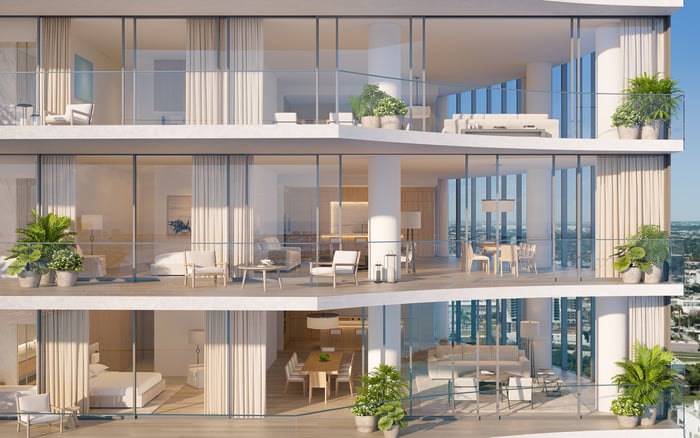
For Villa Miami, the Edgewater setting supports indoor-outdoor living and a more private residential rhythm. The buyer who responds to that may be less interested in a residence that feels like an extension of a hotel lobby and more interested in one that brings hospitality-level detail into a softer, more personal envelope. In the same neighborhood conversation, EDITION Edgewater illustrates how hospitality and residence can coexist as a recurring theme for buyers studying this waterfront corridor.
The Brickell buyer may be more comfortable with an atmosphere that is sharper, more urban, and more explicitly connected to hospitality culture. Still, even in Brickell, warmth matters. The most sophisticated buyers are not asking for less design. They are asking for design that knows when to recede.
A practical buyer should begin with three questions. First, where will the residence be used most intensely: entertaining, seasonal retreat, full-time living, or a hybrid of all three? Second, does the buyer want service to be visible as part of the identity, or discreet enough to disappear into the background? Third, should the home feel like a private villa in the sky, or like a residence attached to a larger hospitality narrative?
Villa Miami’s supported strength is its residential warmth. Privacy, livability, personal space, and a less transient feeling are central to its appeal. That does not make it less sophisticated. It makes its sophistication quieter. The design language can still be generous and polished, but the emotional center remains domestic.
619, By contrast, should be evaluated through the promise implied by its design and hospitality associations. A buyer attracted to that proposition may be seeking a more branded, internationally legible experience. That can be compelling, particularly for those who value arrival, service, and the confidence of a recognizable design-hospitality partnership. The important step is to walk through the decision as a resident, not a guest.
The most successful luxury residences in Miami now occupy a delicate middle ground. They must be cinematic enough to impress, functional enough to serve, and warm enough to keep. Villa Miami’s appeal lies in the way it frames luxury as livable space rather than pure hospitality theater. It speaks to buyers who want beauty, but not at the expense of intimacy.
For 619 Residences by Foster + Partners + Nobu Hospitality, the attraction is the other side of the same equation. It invites the buyer to consider how much of a global hospitality sensibility belongs inside private residential life. For some, that will be exactly the point. For others, the quieter residential clarity of Villa Miami will feel more enduring.
The best choice is not the more famous name or the more dramatic promise. It is the one whose atmosphere will still feel right on an ordinary Tuesday morning.
What is the main difference between Villa Miami and 619 Residences? The strongest supported distinction is design philosophy: Villa Miami reads as more residentially warm, while 619 signals a design-and-hospitality proposition.
Is this comparison based on pricing? No. The better lens is lifestyle and atmosphere, especially the balance between hospitality-level polish and private residential comfort.
Why does Villa Miami appeal to buyers seeking warmth? Its appeal can be framed around privacy, livability, personal space, expansive layouts, high ceilings, and natural materials.
Does hospitality design work in a private residence? Yes, when it improves ease, arrival, wellness, and entertaining without making the home feel transient or overly staged.
Who is the ideal Villa Miami buyer? A buyer who wants sophistication, indoor-outdoor living, and a home-like atmosphere rather than a residence that feels primarily hotel-driven.
Who might prefer 619 Residences? A buyer drawn to a globally legible design and hospitality identity may find the 619 proposition especially compelling.
Is Edgewater different from Brickell for residential living? Edgewater often emphasizes water, openness, and a softer residential rhythm, while Brickell offers a more urban cadence.
Should buyers focus on amenities first? Amenities matter, but the residence’s daily emotional tone may be more important for long-term satisfaction.
Can a spa-like bathroom still feel residential? Yes. The strongest wellness spaces borrow calm and refinement from spas while remaining private and personal.
What is the best way to decide between the two? Buyers should imagine daily life in each setting, including mornings, entertaining, privacy, service, and how the home feels when quiet.
For a confidential assessment and a building-by-building shortlist, connect with MILLION.
If branded residences are on your mind — as a home or as an allocation — we would be glad to share what we are seeing, privately.
Begin a quiet conversation