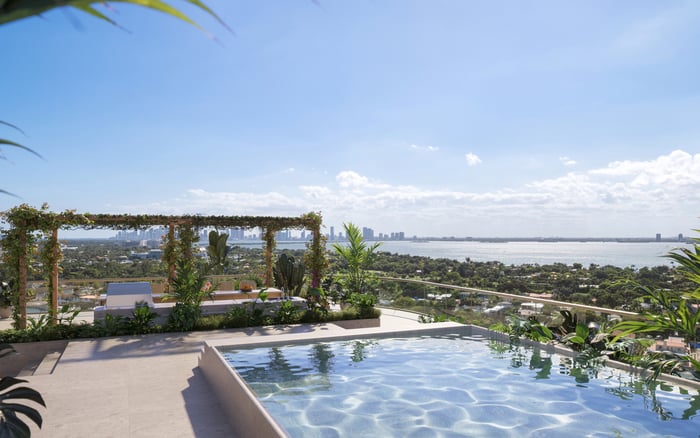
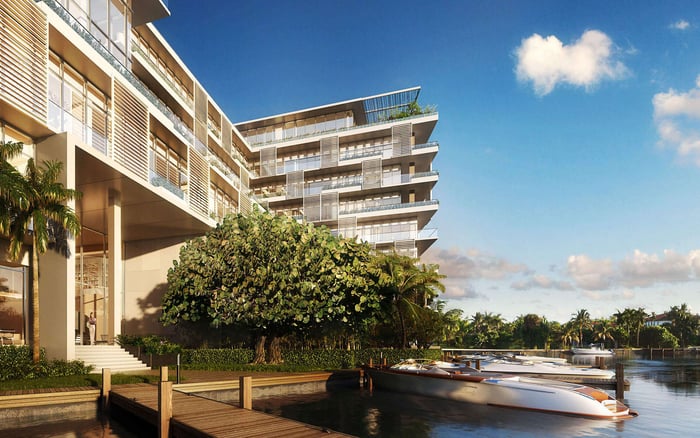
At The Perigon, a residence line shapes far more than its floor plan. Orientation, elevation, terrace position, daylight, privacy, and the openness of the view can create materially different ownership experiences within the same oceanfront building.
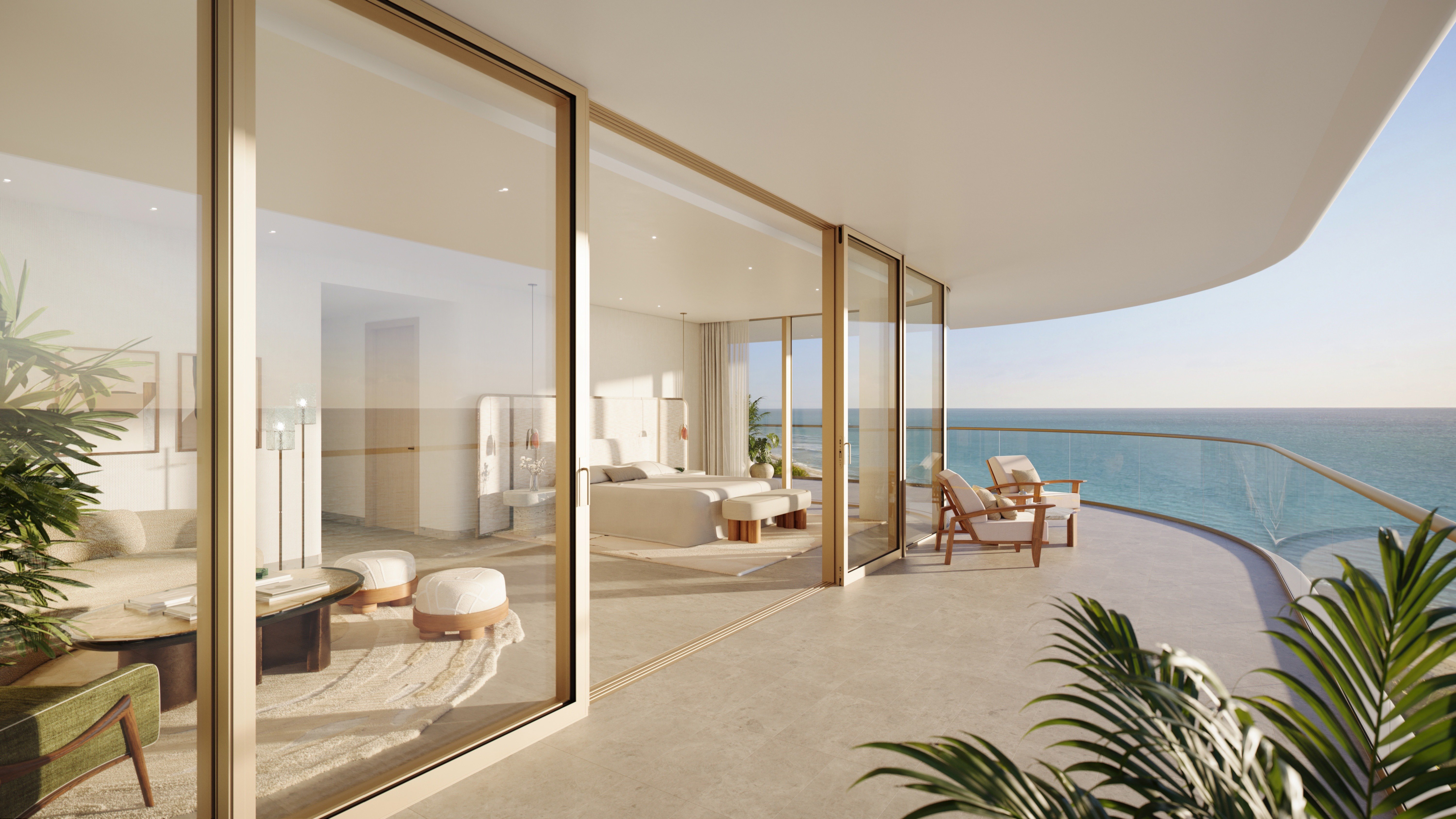
At The Perigon Miami Beach, a “line” is a repeating vertical stack of residences. It determines the floor plan, orientation, position on the façade, and principal outlook. For a discerning buyer, line selection is therefore central to the purchase-not a technical detail to consider after choosing a floor.
Two residences with similar interiors can offer materially different experiences. One may open directly toward the Atlantic and receive clear morning light; another may emphasize western waterways, the city, and the evening sky. Elevation, neighboring sightlines, and terrace geometry create further distinctions.
This is especially important along the Collins Avenue corridor, where the value of oceanfront living cannot be captured by a single directional label. Buyers should compare the specific plan and elevation of each candidate rather than assume every residence in an oceanfront development is equivalent.
East-facing exposure places the Atlantic at the center of the composition, emphasizing sunrise, morning light, and the ocean’s changing color. Buyers who prefer bright mornings and a direct relationship with the water may naturally gravitate toward this orientation.
West-facing exposure creates a different rhythm. Afternoon light, sunsets, western waterways, city views, and nighttime scenery become more prominent. The decision is therefore not simply ocean versus city. It is also about when the residence feels most animated and how its primary rooms will be used throughout the day.
Through-residence configurations can unite both experiences, pairing ocean-facing sunrise views with sunset-facing western outlooks. That duality can be particularly compelling for buyers who do not want to choose a single horizon. Corner positions may also offer broader sightlines and additional natural-light exposure than residences oriented primarily in one direction.
For useful Miami Beach context, buyers may compare how orientation feels at 57 Ocean Miami Beach and Faena House Miami Beach. The objective is not to assume equivalence, but to clarify personal preferences for light, water, city, and sky.
Lower-floor residences can feel closely connected to the beach and landscaping. That immediacy may be highly desirable, though it can also increase visual exposure to neighboring properties or public areas. Privacy should be assessed from the principal rooms and exterior spaces, not inferred from the floor number alone.
Mid-floor residences can balance elevated water views with a more legible connection to the coastline and surrounding neighborhood. For some buyers, this is where the view remains grounded while becoming more open.
Higher floors generally broaden the horizon and create greater separation from street-level activity. Yet height does not automatically resolve every issue. An oblique outlook can still feel less open than a direct water view, while neighboring sightlines may remain relevant depending on the residence’s position on the façade. Waterfront perspective is shaped by both elevation and angle.
Terrace orientation can determine whether outdoor living feels secluded or visually exposed. Buyers should study how the terrace relates to adjacent residences, neighboring buildings, public areas, and the building’s own geometry. Sideward views can be as consequential as the principal outlook.
The review should begin with unit-specific floor plans and elevations, then extend to verified view studies when available. Marketing imagery can establish atmosphere, but it cannot replace an understanding of the precise terrace position and the angle from each important room.
Privacy also changes with daily use. A sightline that seems minor from inside may become more noticeable when dining or relaxing outdoors. Conversely, a lower position with a close connection to landscaping may feel more intimate than a broader but more exposed panorama.
A comparison with Shore Club Private Collections Miami Beach can help buyers define whether they prioritize directness, breadth, height, or enclosure. These criteria are personal, but they should be evaluated consistently.
Compass direction is a useful starting point, not a complete answer. East suggests sunrise and morning illumination; west suggests afternoon light and sunset. The lived result, however, depends on the intended floor, façade position, plan depth, terrace placement, and surrounding context.
Buyers should consider which rooms they use at particular hours. Morning light may matter most in a kitchen or primary suite, while the western sky may be more meaningful from entertaining spaces. A through-residence can distribute these experiences across the home, while a corner residence may introduce light from more than one direction.
A thoughtful review includes visits or visual studies at relevant times of day. It should account for brightness, reflected light, shade, and the transition from daylight to nighttime city scenery. The practical priority is to evaluate the residence as a sequence of daily experiences rather than as a static view.
A compelling current view is only one element of durable appeal. Privacy, daylight quality, openness, neighboring sites, and possible future obstruction can all influence how a line performs over time. Adjacent parcels, zoning allowances, and planned construction warrant separate due diligence before a buyer relies on a particular outlook.
The strongest choice is therefore not necessarily the highest floor or the most obvious directional exposure. It is the line whose plan, orientation, elevation, and terrace relationship best align with the owner’s priorities while delivering a well-considered visual experience.
A broader comparison with The Ritz-Carlton Residences® Miami Beach may help refine those priorities. The relevant question remains specific: Which residence best balances privacy, light, view openness, and the way the buyer intends to live?
Begin by identifying the principal outlook from the living area, primary suite, and terrace. Compare direct water views with oblique views, noting whether the composition includes the Atlantic, western waterway, city, sky, or a combination.
Next, assess privacy from both seated and standing positions. Review neighboring terraces, nearby buildings, public areas, and the effects of elevation. Finally, compare plans and elevations side by side, then investigate adjacent sites before assigning a premium to a view that may change.
What does a residence line mean at The Perigon? It is a repeating vertical stack that determines the floor plan, orientation, façade position, and principal outlook.
Does an east-facing line receive morning light? East-facing exposure emphasizes morning light and sunrise over the Atlantic.
What is the principal appeal of a west-facing exposure? It favors afternoon light, sunset views, western waterways, and nighttime city scenery.
Can one residence offer both sunrise and sunset views? A through-residence configuration can provide ocean-facing sunrise and western sunset outlooks.
Are corner residences always preferable? Not automatically, though corner positions can create broader sightlines and additional natural-light exposure.
How do lower floors affect the experience? They can strengthen the connection to the beach and landscaping while increasing exposure to neighboring or public areas.
What distinguishes a mid-floor residence? It can balance elevated water views with a stronger visual connection to the coastline and neighborhood.
Do higher floors guarantee privacy? No. They generally add separation from street activity, but terrace orientation and neighboring sightlines still matter.
Why can similar interiors have different appeal? Elevation, orientation, daylight, privacy, and view openness can materially change the ownership experience.
What should buyers verify before selecting a line? Compare unit-specific plans, elevations, terrace positions, view studies, neighboring sites, and potential future obstruction.
If you'd like a private walkthrough and a curated shortlist, connect with MILLION.
If branded residences are on your mind — as a home or as an allocation — we would be glad to share what we are seeing, privately.
Begin a quiet conversation