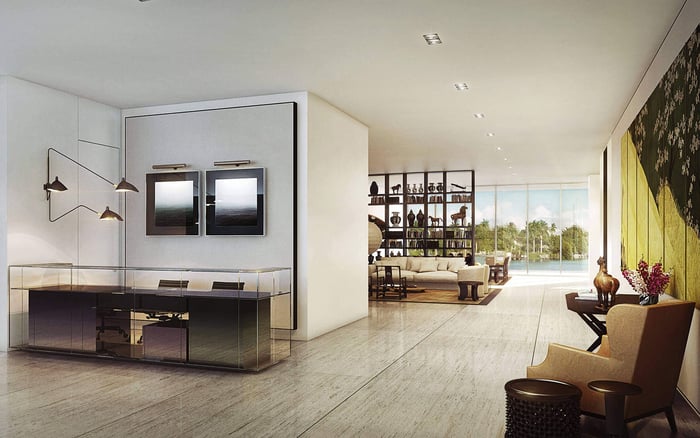
A careful comparison of EDITION Edgewater and Faena House Miami Beach should look beyond wellness marketing to capacity, air quality, water filtration, maintenance, access, and booking documentation.

When comparing EDITION Edgewater and Faena House Miami Beach, buyers should distinguish between a wellness concept and its day-to-day operation. Amenity descriptions do not by themselves establish capacity, environmental performance, maintenance standards, guest privileges, or reservation availability.
The practical question is not simply which residence presents the more appealing wellness narrative. It is whether the available governing documents, technical specifications, service agreements, and operating rules support the routines a buyer expects to maintain.
Capacity should be reviewed at the level of each space or service. Buyers can ask for occupancy limits, equipment counts, treatment-room availability, class sizes, staffing schedules, operating hours, and procedures for periods of high demand.
Reservation access also deserves scrutiny. A written policy should clarify advance-booking windows, cancellation terms, waitlists, guest priority, tenant access, and any limits affecting particular spaces or services. If management uses an app or another reservation platform, request the current user terms rather than relying on a demonstration.
The same access review can be applied when considering Villa Miami or another South Florida residence. The objective is to compare usable access, not amenity labels alone.
A meaningful air-quality review requires technical documentation. Buyers should request information about filtration, outside-air delivery, humidity control, ventilation, filter replacement, monitoring, and responsibility for maintaining equipment in residences and common areas.
Wet and heat-intensive spaces require separate attention because their operating demands may differ from those of a conventional fitness area. Ask how steam rooms, saunas, showers, treatment spaces, and changing rooms are ventilated, cleaned, monitored, and closed for maintenance.
The supplied materials do not establish comparable air-quality performance for EDITION Edgewater and Faena House Miami Beach. Any conclusion should therefore be based on current mechanical records and written operating procedures.
Water questions should be separated by use. Drinking water, bathing water, pools, and equipment serving wellness spaces may involve different treatment systems, testing routines, service providers, and maintenance responsibilities.
Useful records may include plumbing specifications, equipment schedules, testing procedures, maintenance logs, and service agreements. Buyers should also determine which components are maintained by the association and which are an owner's responsibility.
This document-based approach is equally relevant when reviewing The Ritz-Carlton Residences® Miami Beach. A branded wellness story should still be tested against current operating records.
Amenity rights may differ among owners, tenants, household members, and guests. Buyers should request the current condominium rules, amenity handbook, guest policy, fee schedule, and reservation terms for both properties.
Written materials should address whether particular services require separate payments, deposits, minimum commitments, or cancellation charges. Buyers considering a leased residence should also confirm in writing whether and how amenity privileges transfer to tenants.
A sound comparison of EDITION Edgewater and Faena House Miami Beach requires the same categories of evidence from each property. Review capacity, ventilation, humidity management, water treatment, testing, maintenance, staffing, fees, and booking rules side by side.
Before making a decision, obtain current documents from the appropriate project or association representatives and resolve any inconsistencies in writing. This process helps distinguish a compelling presentation from a wellness program that fits a buyer's actual schedule and expectations.
Do amenity descriptions establish everyday access? No. Buyers should review capacity, operating hours, staffing, reservation procedures, and user restrictions.
What capacity information should a buyer request? Ask for occupancy limits, equipment counts, class sizes, treatment-room availability, and staffing schedules.
How should air quality be evaluated? Request current documentation covering filtration, outside-air delivery, ventilation, humidity control, monitoring, and maintenance.
Why do humidity controls matter in wellness spaces? Steam rooms, showers, changing areas, and similar spaces may have different moisture and ventilation demands from standard fitness areas.
Is one water-filtration question enough? No. Drinking, bathing, pool, and equipment water should be reviewed separately because their systems and responsibilities may differ.
Which water-related documents are useful? Plumbing specifications, equipment schedules, testing procedures, maintenance logs, and service agreements can support the review.
What booking terms should be confirmed? Confirm advance windows, cancellation terms, waitlists, guest priority, tenant access, and any periods of restricted use.
Should buyers expect separate wellness fees? Buyers should not assume either way; current fee schedules and reservation terms should provide written confirmation.
Why should tenant access be reviewed separately? Amenity privileges may differ by user category, so any expected transfer of access should be documented in writing.
What is the best way to compare the two properties? Evaluate equivalent documents and operating categories side by side rather than comparing amenity names alone.
If you'd like a private walkthrough and a curated shortlist, connect with MILLION.
If branded residences are on your mind — as a home or as an allocation — we would be glad to share what we are seeing, privately.
Begin a quiet conversation