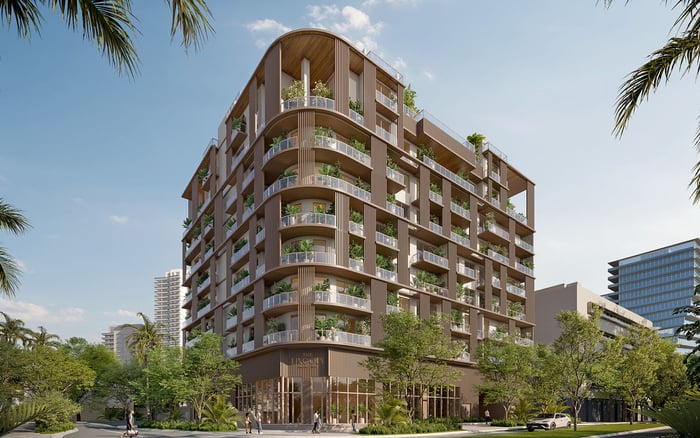
A precise buyer’s framework for evaluating future resale approval, transfer charges, benefit transferability, and market depth at two distinct Coconut Grove luxury developments.

For buyers considering Four Seasons Residences Coconut Grove or The Lincoln Coconut Grove, the quality of the residence is only one element of the acquisition thesis. A sophisticated review also considers how ownership may later be transferred, which approvals or charges could apply, and how many qualified buyers may find the proposition compelling when a resale reaches the market.
For both projects, those questions remain materially open. The available information does not specify whether association approval will be mandatory for a future resale, identify a resale application charge or transfer fee, or explain whether a right of first refusal applies. That absence should not be interpreted as confirmation that no such provisions will exist. The controlling language belongs in the declaration, bylaws, association rules, application materials, and written fee schedule.
Resale value depends not only on demand, but on how easily ownership and its benefits can transfer.
This buyer’s-guide perspective is especially relevant in Coconut Grove, where buyers may compare new offerings with established luxury condominiums and other forms of ownership. Resale is not merely a future pricing event. It is a governed transaction whose friction can influence timing, certainty, and the breadth of the buyer pool.
Four Seasons Residences Coconut Grove presents a branded-residence proposition. Its hospitality identity may resonate with buyers who value an established luxury brand and private-residence positioning. The available information, however, does not establish future liquidity or confirm that associated club or membership privileges are deeded or automatically transferable to a resale purchaser.
The Lincoln Coconut Grove emphasizes boutique living. Limited inventory may create a sense of scarcity, but scarcity alone cannot predict the depth or velocity of a future resale market.
These are distinct narratives. One may draw interest through brand familiarity; the other may appeal through intimacy and limited inventory. Neither replaces an analysis of transfer mechanics. Buyers comparing the broader Grove landscape, including Park Grove Coconut Grove and Opus Coconut Grove, should apply the same documentary standard rather than assume that projects within one neighborhood share equivalent resale rules.
The first diligence question is whether an association, board, or other party has a formal role in approving or processing a post-closing resale. For these two projects, that question remains unanswered. The governing documents should clarify whether the process is administrative, whether deadlines apply, what information a purchaser must submit, and whether any party possesses a right of first refusal.
It is equally important to distinguish a resale after closing from an assignment of a developer contract before completion. These are separate transactions and may be governed by different provisions. Permission to assign a purchase agreement should never be assumed to predict the process for selling a completed, owned residence. Conversely, a restriction on presale assignment does not, by itself, establish the rules for a later association-controlled resale.
Counsel should review the operative documents and all relevant purchase-agreement provisions together. A buyer should also request the current resale application package, if one exists, rather than rely on a general description of association procedures. The objective is to understand not only whether approval is required, but also the transfer’s sequence, documentation, and practical timing.
No specific resale application charge or transfer fee is stated for either project. A prudent acquisition review therefore requires a written schedule identifying every association-controlled amount connected with a future sale. The inquiry should distinguish among application charges, processing amounts, and any other transfer-related costs described in the governing documents.
Clarity matters because even a manageable charge can create uncertainty when discovered late in a transaction. Buyers should determine who is responsible for each amount, when it becomes payable, and whether the schedule can change under the governing framework. The same review should address the treatment of amenity, club, or membership privileges. At Four Seasons, it is not confirmed that associated privileges are deeded or automatically transferable. At The Lincoln, it is likewise unclear whether amenity privileges transfer automatically.
The critical question is not simply whether an original purchaser receives a benefit. It is whether a later purchaser receives that same benefit on the same terms, without a separate approval, charge, or agreement. Written confirmation carries more weight than an assumption drawn from branding or a sales presentation.
A future buyer pool sits at the intersection of desire, financial capacity, and eligibility. Brand recognition may broaden awareness of Four Seasons Residences Coconut Grove, particularly among buyers already comfortable with luxury hospitality. Still, recognition does not guarantee transaction volume, resale velocity, or pricing resilience.
At The Lincoln, a boutique format may reinforce exclusivity and reduce the frequency of competing listings. Yet limited supply can coexist with a narrow audience. Boutique character is most powerful when a future purchaser also accepts the building’s carrying costs, use rules, and ownership structure.
The relevant variables extend beyond approval and transfer charges. Carrying costs, financing eligibility, rental limitations, pet rules, assessments, and the transferability of branded or membership benefits can each widen or narrow demand. A residence may be architecturally exceptional yet remain unsuitable for a buyer who requires financing, rental flexibility, or particular pet permissions.
This is why resale analysis should model several likely purchaser profiles: a primary resident, a second-home buyer, and an investor seeking permitted rental use. The exercise does not forecast who will buy. It reveals which rules may exclude otherwise credible prospects and which features may retain appeal across multiple ownership styles.
A disciplined file should include the current declaration, bylaws, association rules, budget, application package, written fee schedule, and rental policy. Buyers should also request written terms governing the transfer of amenities, club access, memberships, or branded benefits. Any right of first refusal, approval provision, or notice requirement should be read alongside its deadlines and remedies.
The review should yield direct answers: Is approval required? Who conducts it? What must a resale purchaser provide? What amounts are payable? Can a third party match a contract? Do benefits follow the residence, the owner, or a separate agreement? Which use restrictions could reduce the pool of future purchasers?
For both projects, the current takeaway is measured rather than negative. Each has a distinctive luxury position, but the complete resale framework remains undisclosed. Buyers can appreciate brand stature or boutique scarcity while conditioning their conclusions on the documents that will ultimately govern ownership.
For confidential guidance on Coconut Grove acquisitions and resale diligence, connect with MILLION.
If branded residences are on your mind — as a home or as an allocation — we would be glad to share what we are seeing, privately.
Begin a quiet conversationNo. The available information does not state whether association approval will be required for a future resale.
No. The available information does not identify a mandatory association-approval process for future resales.
No specific resale application charge or transfer fee is stated for either project.
The available information does not disclose a right of first refusal for either project.
It is not confirmed that associated club or membership privileges are deeded or automatically transferable to a resale buyer.
The available information does not explain whether amenity privileges automatically transfer to a resale purchaser.
No. Limited inventory may support exclusivity, but it cannot predict future buyer-pool depth or resale velocity.
No. Brand familiarity may support buyer appeal, but it does not establish future liquidity, resale speed, or pricing.
Request the declaration, bylaws, rules, budget, application package, fee schedule, rental policy, and written benefit-transfer terms.
Carrying costs, financing eligibility, rental limits, pet rules, assessments, and transferable benefits can all affect future demand.