A buyer-focused examination of approval authority, transfer-fee limits, closing costs, and the signals that reveal resale-market depth at two rarefied Mid-Beach condominiums.

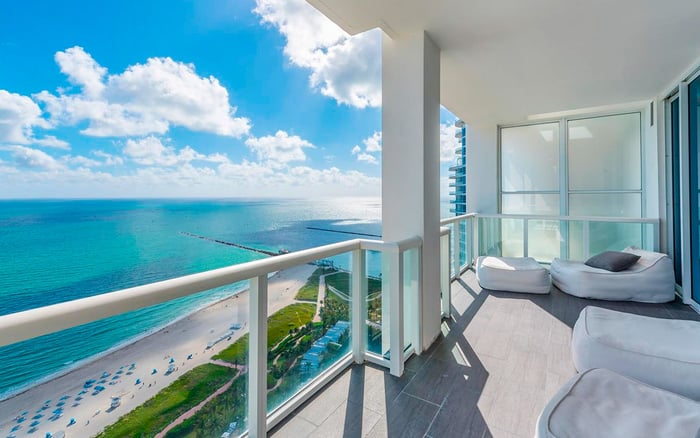
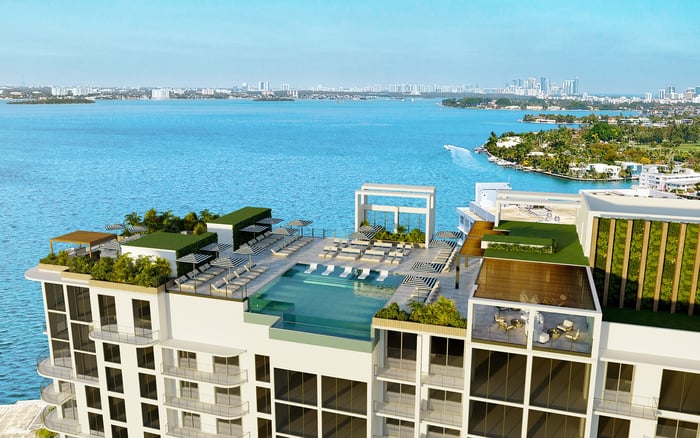
At Miami Beach’s most rarefied condominiums, resale analysis extends well beyond finishes, views, and asking price. Association approval, authorized fees, document delivery, and the likely depth of the next buyer pool can shape both execution and long-term optionality. These considerations are especially relevant at 57 Ocean Miami Beach, at 5775 Collins Avenue, and Faena House Miami Beach, at 3315 Collins Avenue.
Both occupy Miami Beach’s Mid-Beach oceanfront corridor, yet their resale signals demand disciplined interpretation. A celebrated closing may confirm trophy demand without proving liquidity across an entire building. Conversely, a quiet listing period in a tightly held condominium may indicate limited inventory rather than weak demand.
For buyers underwriting an investment, planning a second home, or preserving flexibility for an eventual exit, the decisive question is not simply whether a residence can be acquired. It is how predictably ownership can later be transferred, at what documented cost, and to how broad a qualified audience.
Florida condominium law links transfer fees to association approval, but the two concepts remain distinct. An association may charge a transfer fee only when its approval is required and its declaration, articles, or bylaws authorize the fee. Approval language alone does not automatically create the right to collect one.
The statutory transfer-fee cap is $150 per applicant. Spouses, as well as a parent and dependent child, are treated as one applicant for this purpose. If the governing documents contain no authority for an approval fee, an association cannot impose one merely because a unit is sold or otherwise transferred.
That cap should not be mistaken for a complete closing-cost estimate. It applies to a qualifying association transfer fee, not every amount that might arise during a transaction. Estoppel charges, move-related costs, deposits, expedited processing, and other properly authorized items require separate review. Buyers should request a current written schedule from management rather than rely on a prior closing statement or listing description.
A verified, current project-specific transfer-fee amount has not been established for either building. The operative declaration, bylaws, amendments, approval package, and estoppel information should therefore control the analysis.
57 Ocean is presented as a waterfront luxury condominium, but a building-specific resale approval or transfer-fee schedule has not been established. Buyers should obtain the current package early and confirm whether approval applies to the purchaser, the transfer itself, or both.
The practical questions are precise: Is an interview required? Must the buyer provide financial information? Are deposits collected? Is expedited processing available? What starts the review clock, and what constitutes a complete application? Written answers reduce the risk that an assumed timeline becomes a contractual problem.
Market evidence demands equal care. A penthouse at 57 Ocean sold for $37 million in 2022, confirming that the building has attracted a trophy-level purchaser. That result does not, by itself, establish buyer-pool depth for every floor plan, exposure, condition, or price band. It is a powerful positioning signal, not a universal comparable.
Buyers considering the wider oceanfront market may also examine The Perigon Miami Beach. The useful exercise is not to equate distinct properties, but to understand how competing opportunities may shape a future buyer’s choices when a residence returns to market.
Faena House has fewer than 50 residences, making observable transaction volume inherently intermittent. Months may pass without a resale or rental. That scarcity can reflect tight ownership, limited inventory, or simple timing; the absence of active listings is therefore not conclusive evidence of either strong or weak demand.
For Unit 7D, association approval is required and the estimated approval period is one to two weeks. Those details are specific to that unit’s offering and should not be treated as a standing timetable for every Faena House transaction. Current documents and direct written confirmation from management remain essential.
The building’s sales history can still reveal valuable patterns. Buyers should study several years of closings, unit mix, days on market, price reductions, and the relationship between asking and closed prices. They should also distinguish genuinely arm’s-length transactions from transfers that may not reflect open-market demand.
A narrow market is not necessarily an undesirable one; it simply demands a different liquidity framework. In a property with fewer than 50 residences, a small number of owners choosing not to sell can materially affect visible supply. Likewise, one or two listings can temporarily make inventory appear abundant. Future buyer-pool depth is best judged through transaction cadence and unit-specific evidence, not a snapshot.
For additional Miami Beach context, Setai Residences Miami Beach can help frame the different ownership propositions buyers encounter along the coast. Each association’s documents, however, must be evaluated independently.
Miami-Dade documentary stamp tax on a non-exempt condominium deed is generally $1.05 per $100 of consideration, combining the county rate and surtax. This government transfer cost is separate from association approval fees, estoppel charges, move-related amounts, and other transaction expenses.
Sophisticated underwriting should keep those categories distinct. A modest statutory approval-fee cap does not make the entire transfer inexpensive, just as a larger total closing statement does not mean every line item is an association transfer fee. Counsel and the closing team should identify the legal basis, payee, and timing for each charge.
Pending assessments, reserve levels, insurance matters, litigation, and estoppel balances may influence buyer confidence and transaction timing more than the capped fee itself. These issues can affect financing, negotiations, and a future purchaser’s willingness to proceed.
Buyer-pool depth should be examined at three levels. First is building-level recognition: whether the property has demonstrated an ability to attract qualified purchasers. Second is unit-level comparability: whether recent closings share the residence’s size, elevation, exposure, condition, and pricing context. Third is execution risk: whether approval, documentation, assessments, or association matters could narrow the number of buyers able or willing to close.
For 57 Ocean, the $37 million penthouse sale supports trophy positioning but cannot substitute for broader unit-level evidence. For Faena House, the limited residence count naturally produces a less frequently observable market. Neither fact should be reduced to a simplistic liquidity verdict.
The prudent approach is to request documents before contractual deadlines, model all transfer-related costs separately, and examine multiple years of closed sales. In the ultra-luxury segment, future marketability is less about headline activity than the alignment of rarity, pricing, condition, governance, and a realistic exit horizon.
For discreet guidance on Miami’s most distinguished residences, connect with MILLION.
If branded residences are on your mind — as a home or as an allocation — we would be glad to share what we are seeing, privately.
Begin a quiet conversationNo. Association approval must be required, and the declaration, articles, or bylaws must authorize the fee.
The cap is $150 per applicant, with spouses and a parent and dependent child treated as one applicant.
No. Approval authority and fee authority are related but separate, so the governing documents must authorize the charge.
No verified building-specific amount was established in the reviewed public materials. Buyers should request the current written schedule from management.
No verified project-specific schedule was identified in the reviewed public materials. Current governing documents and the resale package should control.
One Unit 7D disclosure estimated one to two weeks, but that listing-specific estimate should not be applied to every transaction.
The 2022 penthouse closing demonstrates trophy-level demand, but it does not prove broad liquidity across all residences.
No. With fewer than 50 residences, activity is naturally episodic, and limited inventory alone cannot establish demand strength.
No. Miami-Dade documentary stamp tax is a government transfer cost that is separate from association and move-related charges.
Review several years of closed sales, days on market, reductions, unit-specific comparables, and any association issues that could affect execution.