A buyer-focused comparison of the publicly disclosed dining, catering, and private-event frameworks at two distinctive South Florida branded residences.
For buyers who entertain regularly, the residence itself is only one part of the equation. More consequential questions often concern how a private chef enters, where a catering team may stage, whether an amenity can be reserved, and which approvals apply when a dinner becomes a larger occasion.
Armani Casa Residences Pompano Beach and The Ritz-Carlton Residences® West Palm Beach approach this lifestyle from different starting points. Armani Casa presents an ultra-private residential format centered on full-floor homes and gathering-friendly amenities. The Ritz-Carlton development offers a more explicit service proposition, listing in-residence dining and catering for owners.
The essential distinction is between a home designed for entertaining and a residence with catering expressly included among its services.
Neither proposition should be interpreted as an unrestricted license to host. Exact guest limits, amenity reservation terms, quiet hours, vendor insurance standards, fees, deposits, and cancellation rules remain subject to the governing condominium documents and resident manual.
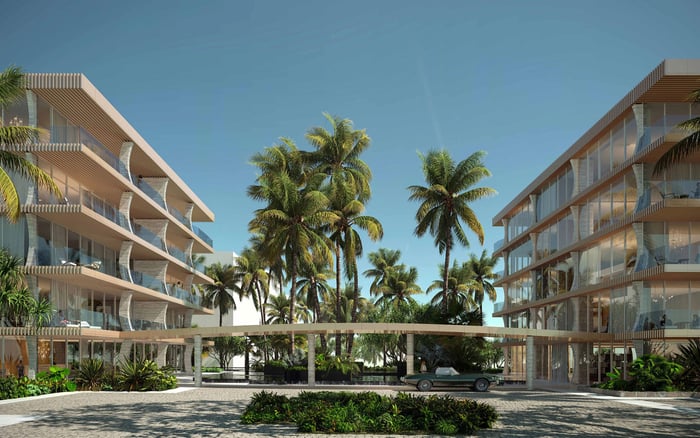
Planned for 1550 N. Ocean Blvd. in Pompano Beach, Armani Casa is conceived as an ultra-low-density development of 28 residences across two towers. Each residence occupies an entire private floor, a configuration that naturally separates owners and their guests from the conventional shared-corridor experience.
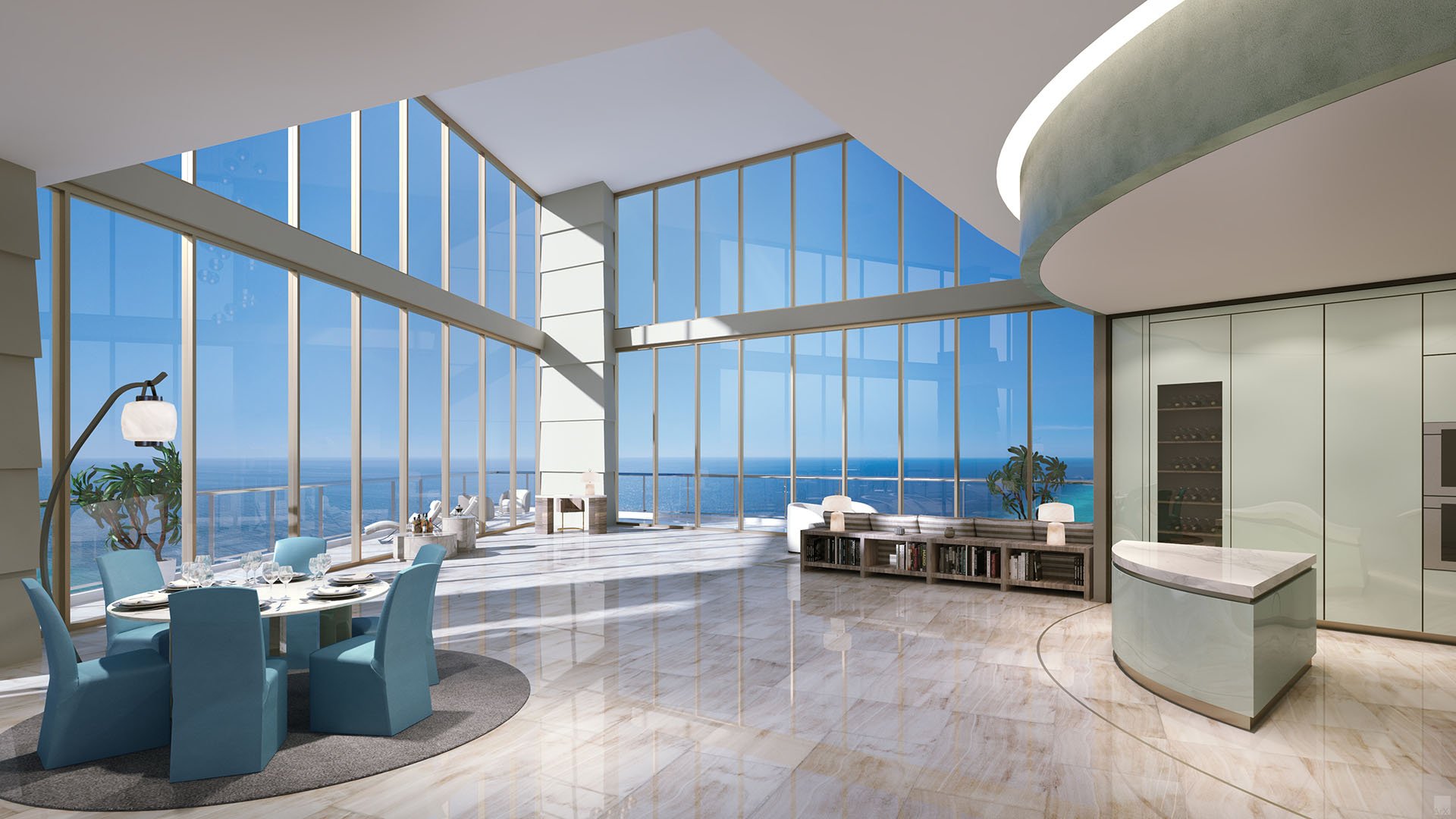
Within the residences, eat-in kitchens pair European quartz and stone countertops with custom Armani/Casa cabinetry. The result supports an elegant at-home dining setting and may suit an owner who prefers to engage a chef or catering team directly. It does not, however, constitute a catering program or establish that all outside culinary vendors will be admitted without prior approval.
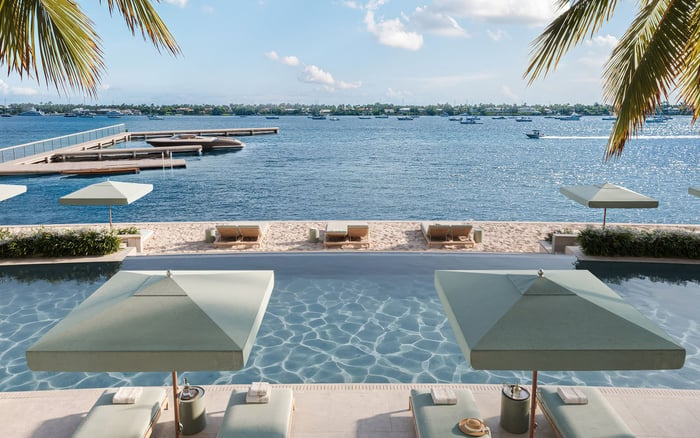
The shared amenity program includes several settings relevant to social life: a resort-style pool with cabanas and sundeck, a 45-foot oceanfront lap pool, and an outdoor summer kitchen with a bar. A business lounge with meeting space and a media room with golf simulation and virtual gaming provide additional potential gathering environments. Fitness, spa, and children’s facilities complete the lifestyle proposition.
These spaces should not automatically be interpreted as private-event venues. A summer kitchen can support casual resident use while still carrying restrictions on exclusivity, amplified sound, outside staff, glassware, decorations, or guest volume. The applicable operating rules are not specified. Beach House Pompano Restaurant is part of the surrounding lifestyle offering, not a documented in-building dining outlet.
Buyers surveying the broader Pompano Beach market may also consider the hospitality positioning of W Pompano Beach Hotel & Residences, but service terms must always be evaluated property by property.
The Ritz-Carlton Residences® West Palm Beach expressly lists “in-residence dining & catering” among its owner services. That language gives buyers a firmer basis for expecting culinary support within the home than is presently established for Armani Casa.
À La carte services may also be supplied by third parties. This is important for owners accustomed to hotel-caliber coordination: a service may be part of the residential offering while its actual fulfillment involves an approved outside provider. Certain services are also subject to change and Marriott Bonvoy status, so availability, scope, pricing, and eligibility should be confirmed rather than assumed.
“In-residence” is the key phrase. It confirms a dining and catering pathway for the private home, but it does not define access to every lounge, pool deck, or shared room for a catered event. Nor does it establish maximum attendance, lead times, staffing minimums, menu deadlines, security procedures, or cleanup charges.
Within West Palm Beach, a buyer comparing different branded-residence models might also examine Mandarin Oriental Residences, West Palm Beach. The essential discipline is not to infer one building’s rules from another brand’s service language.
Buyers should distinguish between a meal held entirely inside a residence and an event that extends into a common area. They should ask whether culinary providers must come from an approved roster and who is responsible for submitting guest names, accepting deliveries, protecting elevators, coordinating parking, and supervising breakdown.
Those answers determine whether a gathering fits within ordinary residential use or requires additional coordination. A named catering service does not by itself establish access to shared amenity spaces, just as a gathering-friendly amenity does not necessarily carry exclusive reservation rights.
Before planning substantial entertaining at either property, buyers should request the current declaration, bylaws, rules and regulations, resident manual, amenity reservation policy, and service schedule. At a pre-construction property, they should ask which documents are final and which operating procedures may be adopted closer to opening.
The review should address six practical areas. First, establish occupancy or guest caps for both the residence and each amenity. Second, identify quiet hours and restrictions involving music, entertainment, décor, candles, or alcohol. Third, confirm whether outside chefs, servers, bartenders, florists, rental companies, and musicians require approval, insurance, or licensing.
Fourth, clarify loading access, delivery windows, freight-elevator protection, valet coordination, and vendor parking. Fifth, determine reservation fees, deposits, staffing charges, cleaning costs, damage responsibility, and cancellation terms. Sixth, ask whether a resident may secure exclusive use of a shared space or whether normal resident access must continue throughout the gathering.
These points matter to both a six-person tasting menu and a milestone celebration, although the administrative burden may differ. Privacy within a full-floor home does not override building rules, just as a named catering service does not guarantee unrestricted event access.
Armani Casa will likely appeal to owners who value architectural privacy, spacious in-home hosting, and an intimate residential population. Its kitchens and outdoor summer kitchen create a setting for entertaining, while the offering stops short of promising a formal catering channel.
The Ritz-Carlton proposition is more explicit on service: in-residence dining and catering are named, and third-party fulfillment may be part of the model. The remaining question is operational depth, particularly when a private meal expands into an event using common facilities.
For both, the prudent luxury is certainty. Buyers should secure written answers for the type and scale of entertaining they envision, then ensure those answers align with the controlling documents in effect at closing and occupancy.
For discreet guidance on South Florida luxury residences and their service models, connect with MILLION.
If branded residences are on your mind — as a home or as an allocation — we would be glad to share what we are seeing, privately.
Begin a quiet conversationThe available project materials describe equipped kitchens and social amenities, but they do not establish a formal catering package.
Yes. Its disclosed owner services expressly include in-residence dining and catering.
Yes. The service disclosures allow certain à la carte services to be supplied by third parties.
The residences are designed with substantial eat-in kitchens, but outside-vendor approval and access procedures should be confirmed in the governing rules.
An outdoor summer kitchen with a bar is planned, but published materials do not define exclusive reservation rights or event terms.
Not necessarily. Buyers should confirm whether catered events may use lounges, pool decks, or other common areas.
Exact guest caps are not specified in the provided public details and should be verified through each property’s governing documents.
Confirm approval procedures, insurance, licensing, loading access, delivery windows, elevator protection, parking, and cleanup obligations.
Yes. Certain services are described as subject to change and Marriott Bonvoy status, so current scope and eligibility require confirmation.
Request the declaration, bylaws, rules and regulations, resident manual, amenity reservation policy, and current service schedule.