A discreet planning guide to Florida homestead portability, nonhomestead assessment growth, acquisition timing, renovation triggers, and resale tax resets for family offices moving from San Francisco to Miami Beach.
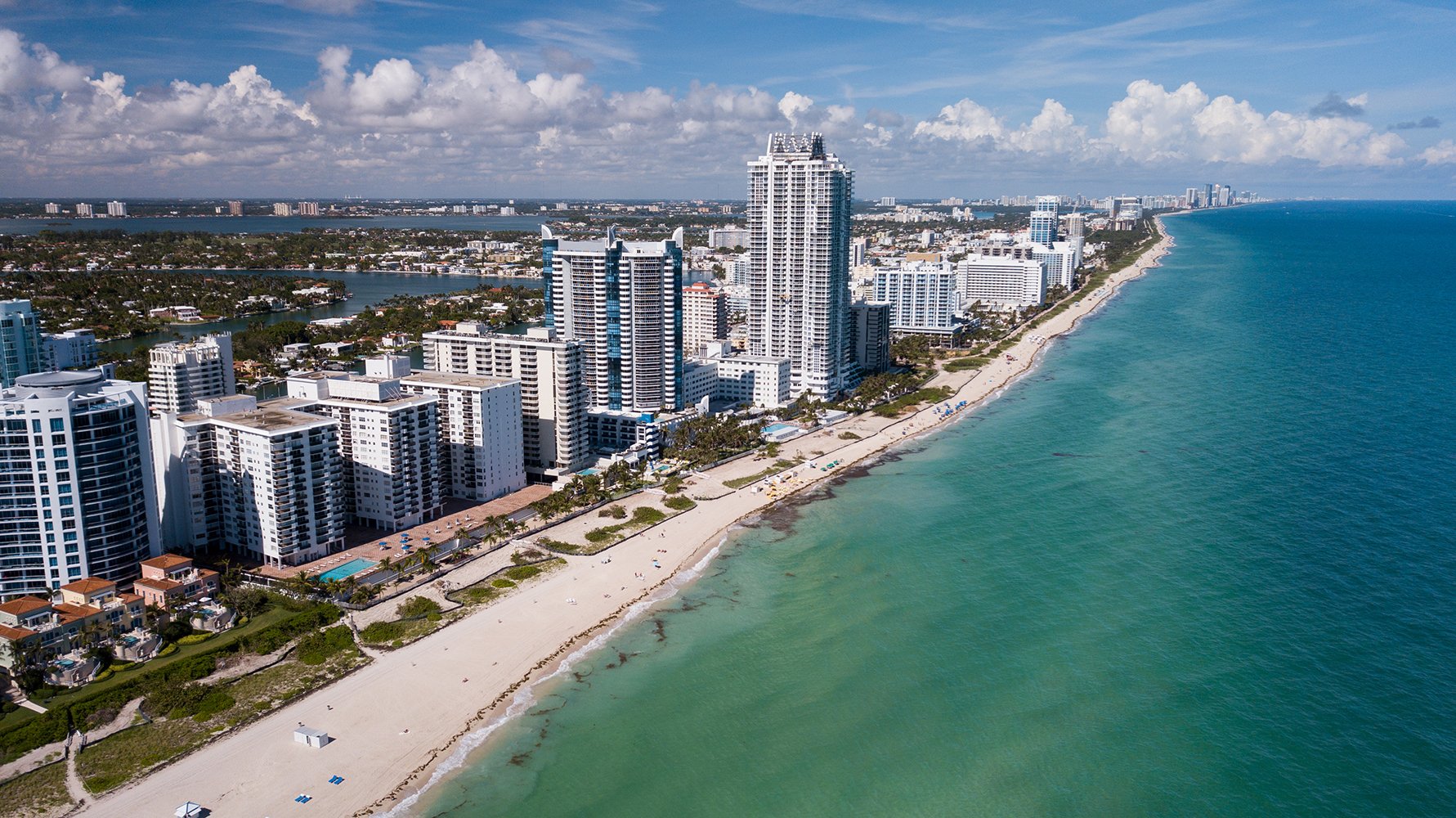
For a family office moving its center of gravity from San Francisco to Miami Beach, the residence is only one element of the real estate plan. The principal may acquire a primary home, guest residence, income property, and office space through different ownership structures. Florida does not necessarily assess these assets under the same framework.
The first discipline is to classify each acquisition before underwriting its carrying costs. A qualifying principal residence may receive homestead treatment. A second home, seasonal residence, rental property, or most commercial real estate generally falls into the nonhomestead category. Florida legal and tax advisers should review entity ownership and the property’s actual use rather than infer either from the buyer’s broader relocation.
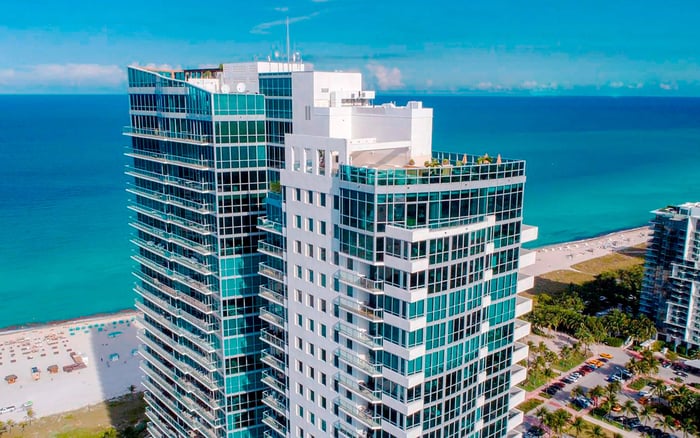
This distinction matters across Miami Beach inventory. A principal considering The Perigon Miami Beach as a primary residence could face a different assessment path from that of a separate condominium held for guests or leasing. In either case, the seller’s current bill is a historical document-not a reliable forecast of the buyer’s stabilized obligation.
The correct tax model begins with intended use, ownership and the next January 1.
California property-tax benefits do not transfer to a new Florida homestead. Florida’s Save Our Homes portability operates only between qualifying Florida homesteads. A family arriving directly from San Francisco should therefore model its Miami Beach purchase without assuming that an assessment advantage accumulated in California will follow the owner east.
The position can be different for someone who already owns a qualifying Florida homestead. An eligible owner may transfer up to $500,000 of Save Our Homes assessment differential-the gap between the former homestead’s just value and assessed value-to a new qualifying Florida homestead. Both the former and new properties must satisfy Florida homestead requirements. Portability does not apply to second homes, seasonal residences, or investment properties.
Timing and filing are integral to the benefit. The new Florida homestead generally must be established within the applicable three-tax-year portability window, with homestead and portability applications filed by March 1. Once established, Save Our Homes limits annual assessment growth for a qualifying homestead to the lower of 3% or the applicable Consumer Price Index change.
For a buyer comparing Shore Club Private Collections Miami Beach with an existing residence, the decisive tax questions are personal and structural: Will the property be the principal residence? When will occupancy begin? Is there an eligible prior Florida homestead?
Nonhomestead real property generally receives an automatic 10% annual assessment-growth limitation for levies other than school-district taxes. No separate application is ordinarily required for qualifying property. The limitation begins in the year after the property is placed on the tax roll, so it should not be treated as protection against the acquisition-year assessment.
The word “cap” can be misleading. It limits annual growth in assessed value-not market value, millage rates, or the total tax bill. School-district levies are excluded, meaning the school-tax portion may be calculated using a higher assessment than the capped non-school portion. A credible projection should therefore separate these two assessment layers rather than apply one simplified growth rate to the entire bill.
There is another counterintuitive feature. Through nonhomestead recapture, assessed value can rise by as much as 10% toward just value even when market value is flat or declining. A conservative model should account for that possibility rather than assume softer market pricing will automatically freeze the assessment.
This framework is relevant when a family office acquires an additional residence near The Ritz-Carlton Residences® Miami Beach or evaluates a rental asset elsewhere in the city. It also applies across asset categories, including condominiums, estates, and single-family properties that do not qualify for homestead exemption.
Florida assessments are determined as of January 1. If a transaction closes after that date, the seller’s assessment may remain reflected for the current tax year, while reassessment generally follows on the next January 1. This can create a deceptively favorable first-year presentation, particularly when the seller has owned the property for many years and accumulated a substantial gap between assessed and market values.
A change of ownership generally resets nonhomestead property to just value on the following January 1. The 10% limitation then begins again from the new baseline. Changes in ownership or control may trigger reassessment even when the transaction is structured through an entity rather than a conventional deed transfer to an individual.
Renovation and parcel strategy also belong on the tax calendar. Splitting or combining parcels can remove an existing nonhomestead limitation and establish a new baseline. Major qualifying improvements that increase just value by at least 25% can likewise trigger reassessment treatment. Buyers contemplating substantial work should coordinate acquisition, design, ownership, and construction advice before committing to a schedule.
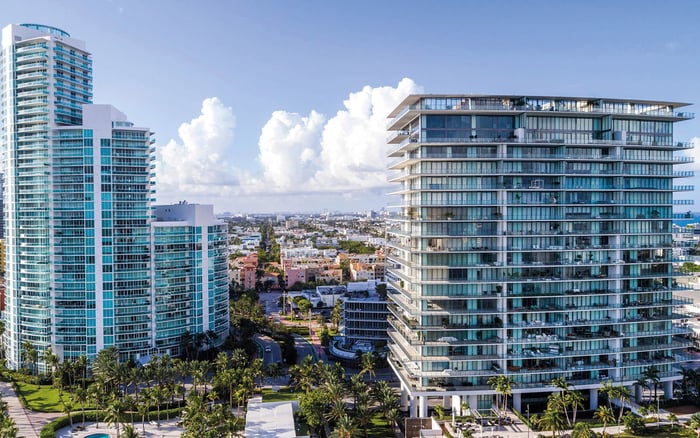
A residence such as Five Park Miami Beach may be evaluated for lifestyle and long-term utility, but tax underwriting should remain independent of presentation. Request an estimated post-sale bill and model the first reassessment rather than capitalizing the seller’s existing expense.
Years of capped growth can produce a meaningful difference between assessed and market values. That benefit generally remains with the current ownership and does not transfer to a purchaser. For a future resale, the family office should expect sophisticated buyers to focus on the post-transfer tax burden-not merely the seller’s latest annual bill.
A well-prepared resale package should distinguish current taxes from the estimated post-reset obligation. This avoids an artificially low carrying-cost narrative and helps prospective purchasers compare properties on a consistent basis. The same analysis can inform timing: a post-January closing may preserve the seller’s assessment for the current tax year, but the buyer should anticipate the next January 1 reset.
The most useful family office decision file is concise but complete. It should identify intended use, title and control, expected closing date, the next January 1 assessment, March 1 filing obligations, any eligible Florida portability amount, and planned improvements or parcel changes. Where applicable, the forecast should separately show homestead, capped non-school, and uncapped school components.
This is not a substitute for advice from Florida counsel, a tax professional, or the relevant property appraiser. It is a way to make those conversations decision-ready. The objective is to compare residences using the buyer’s future economics, preserve any benefit for which the principal genuinely qualifies, and present a transparent tax story when the asset eventually returns to market.
For discreet guidance on aligning a Miami Beach acquisition with your family office’s ownership and timing priorities, connect with MILLION.
If branded residences are on your mind — as a home or as an allocation — we would be glad to share what we are seeing, privately.
Begin a quiet conversationNo. Florida Save Our Homes portability applies only between qualifying Florida homesteads.
A qualifying owner may transfer up to $500,000 of Save Our Homes assessment differential to a new qualifying Florida homestead.
No. Portability requires qualifying former and new Florida homesteads and does not apply to second homes, seasonal residences or investment properties.
Applicants generally must file for homestead and portability by March 1 and satisfy the applicable three-tax-year window.
For a qualifying homestead, annual assessment growth is limited to the lower of 3% or the applicable Consumer Price Index change.
Nonhomestead property is generally subject to a 10% annual assessment-growth limit for levies other than school-district taxes.
No. It limits assessed-value growth for applicable levies, not market value, millage rates or the entire bill.
A change of ownership generally causes reassessment at just value on the following January 1, after which the cap restarts from the new baseline.
Yes. Nonhomestead recapture can raise assessed value by as much as 10% toward just value even in a flat or declining market.
Generally, no. Buyers should obtain a post-sale estimate because the property is typically reset to just value after the ownership change.