Mr. C Tigertail and The Well both promise managed arrivals, but their public materials emphasize different layers of hospitality and access. For buyers, the decisive questions concern credentials, elevators, household staff, deliveries and the boundary between residential and shared amenity spaces.
In luxury multifamily living, privacy is not simply a matter of square footage or a discreet foyer. It is an operating system. The relevant questions begin at the curb: who receives a vehicle, who acknowledges a guest, where a delivery pauses, how household personnel enter, and which users can proceed from a shared amenity to a residential floor.
Those questions are particularly important when comparing Mr. C Tigertail Coconut Grove and The Well Coconut Grove. Both describe managed arrivals and continuous security coverage, yet they emphasize different priorities. Mr. C articulates a detailed hospitality sequence. The Well combines homes with a private wellness-club experience, creating a broader mix of residents, members, guests and personnel.
For MILLION Buyer's Guides, the distinction is practical rather than cosmetic. Branded residences can deliver polished service at the front door while leaving essential back-of-house protocols to management rules and condominium documents. The lifestyle experience ultimately depends on how elegantly those written promises function during an ordinary week.
True residential privacy depends on the choreography of people, vehicles and permissions.
Mr. C Tigertail Residences is located at 2678 Tigertail Avenue. Buyers should not confuse it with the related Mr. C Residences property at 2655 South Bayshore Drive.
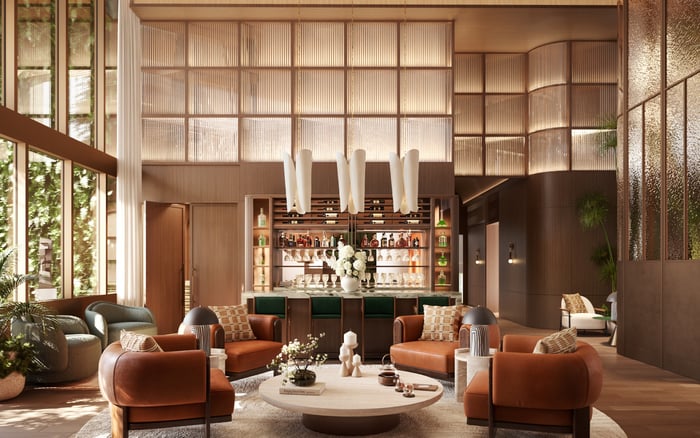
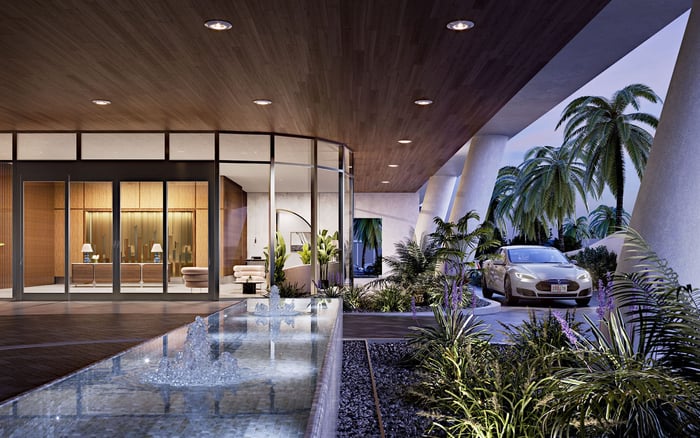
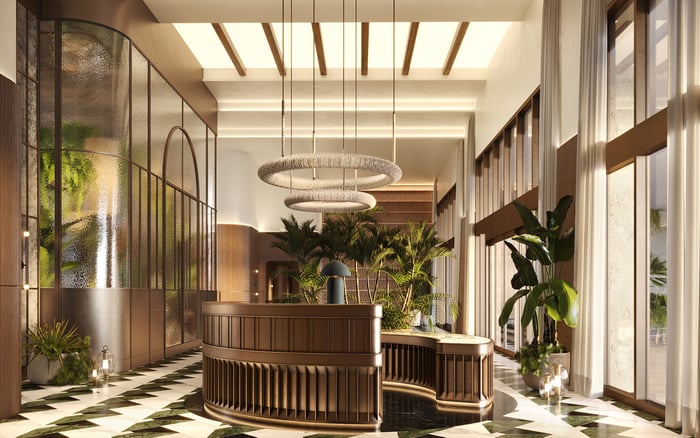
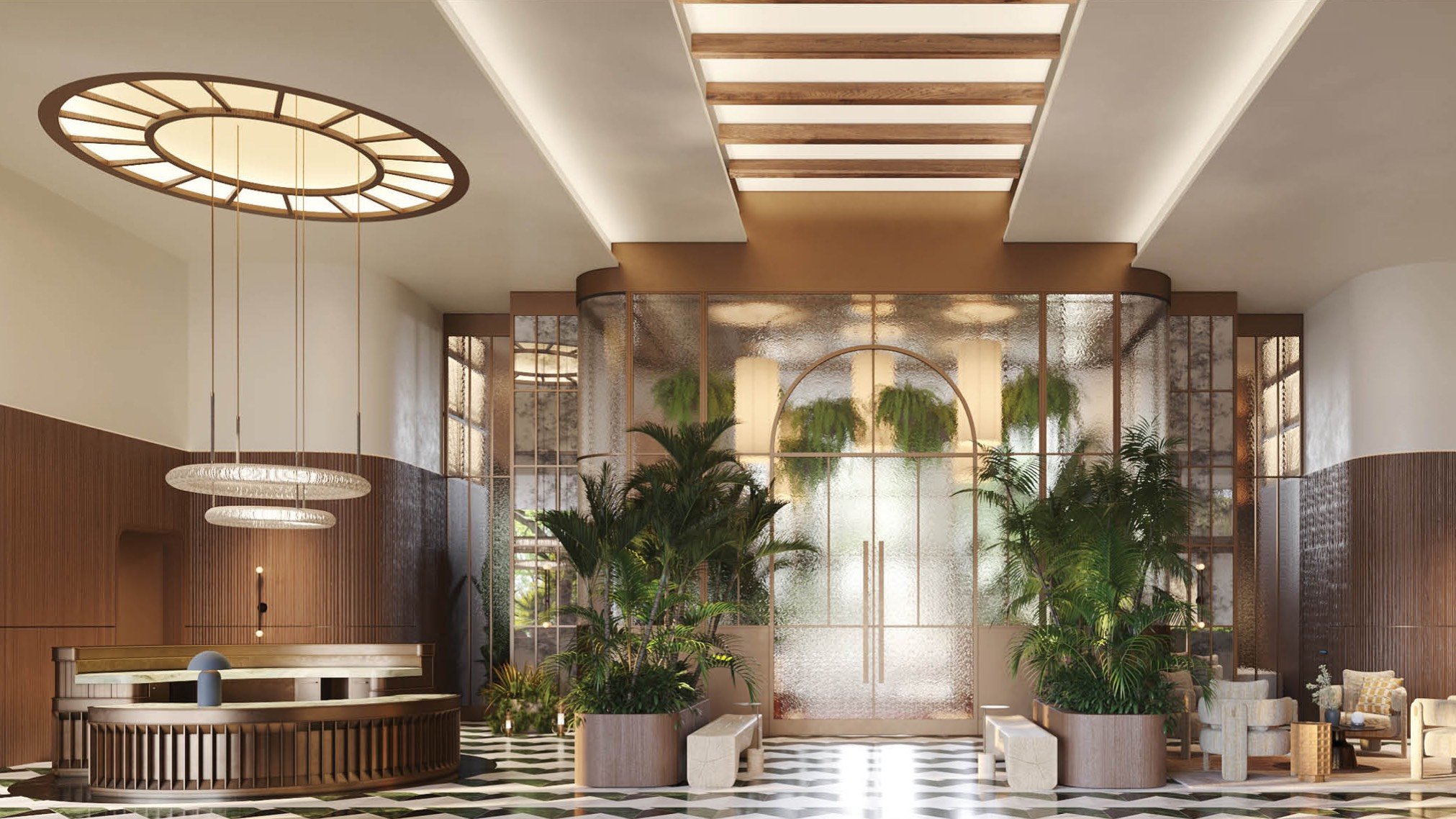
The front-of-house sequence at Tigertail is unusually legible. It begins with a covered valet drop-off and continues through a reception and concierge desk, lobby lounge, curated art, landscaping, and dedicated mail and package rooms. A 24-hour doorman and security presence, together with 24-hour valet service, creates a centralized point where residents and visitors can be recognized and assisted.
Concierge reception, butler service, lifestyle and nautical concierge assistance, available housekeeping, and an in-house property-management team support this hospitality model. Assigned or attached garage parking is also described alongside valet service, reinforcing the idea that vehicle movement is actively managed rather than left entirely to self-navigation.
The package rooms matter as much as the valet court. By consolidating mail and deliveries at lobby level, the building can reduce the need for couriers to move through residential areas. Residents can also receive guests in common hospitality and leisure settings-including lounges, a restaurant, pools, gym and spa facilities-which may keep some social activity outside the private home.
Still, buyers should distinguish a refined reception experience from confirmed residential compartmentalization. Elevator access and an entrance foyer are identified in at least one residence, but private elevators, floor-specific credentials, separate staff corridors and dedicated service-elevator routes are not established.
The Well Coconut Grove pairs private residences with an on-site wellness-club concept. Its arrival and security framework includes valet parking and 24-hour security. Unlike Mr. C, however, 24-hour security is confirmed while valet is not explicitly defined as a 24-hour service.
Owners are offered founding membership in The Club at THE WELL Coconut Grove, an approximately 11,000-square-foot private members wellness club. The club introduces another access category beyond residents, residential guests, household employees and delivery personnel. Members and club guests may have legitimate reasons to enter shared portions of the property without having residential access.
This does not inherently diminish privacy. It does make zoning, credentials and reception protocols more consequential. The resident-exclusive herb garden in the lobby garden demonstrates that at least one ground-floor amenity is expressly limited by user type. Secure package reception likewise suggests that deliveries can be intercepted before couriers circulate more deeply into the building.
What remains undisclosed is equally important. Loading docks, staff entrances, dedicated back-of-house corridors and service elevators are not identified. Nor is it clear whether club and residential arrivals are received separately, whether guests require advance registration, or how elevator permissions may differ among residents, members and staff.
A highly serviced residence can generate regular movement by housekeepers, assistants, caregivers, chefs, drivers and vendors. At Mr. C, the presence of butlers, housekeepers, valets and property-management personnel makes this circulation an operational issue, even though the specific routes are not defined. At The Well, the combination of residences, wellness operations and club users makes the same inquiry essential.
Prospective owners should ask whether recurring household staff receive individual credentials, whether permissions can be limited by time or destination, and how access is revoked. They should also determine where personnel wait, enter and change elevators, and whether large deliveries follow a different path from groceries, flowers or luggage.
These questions should be tested against actual floor plans and current rules, not inferred from renderings. Neither project confirms household-staff credentials, escort policies, loading access, dedicated service circulation or floor-restricted elevator controls.
The strongest visitor protocol is both secure and socially effortless. A guest should know where to arrive, while staff should know whom to contact and what access to grant. Mr. C’s covered drop-off, staffed reception and lobby lounge provide a clearly defined setting for that exchange. The Well’s valet and continuous security establish management at the entrance, but the presence of club members and club guests calls for closer examination of how residential visitors are distinguished from other authorized users.
Buyers should request a demonstration rather than a verbal overview. Follow the proposed journey of a dinner guest, an overnight guest, a private trainer and a last-minute delivery. Ask who approves each arrival, whether an escort is required, which amenities a visitor may use, and whether credentials expire automatically.
For a broader Coconut Grove comparison, appointments at Four Seasons Residences Coconut Grove and Park Grove Coconut Grove can help buyers refine which questions matter most to their own household. The objective is not to assume identical systems, but to compare how clearly each property explains arrival, authorization and circulation.
Before contract or closing, request the current access-control policy, residential and service-entry plans, elevator diagrams, delivery procedures, household-staff rules and guest-registration process. Confirm whether the controlling documents distinguish residents, family members, household personnel, vendors, club members and club guests.
Ask management to clarify valet hours, garage self-access, package handling, oversized deliveries, move-in procedures and after-hours vendor entry. At The Well, examine the boundary between club and residential zones. At Mr. C, verify how the visible hospitality sequence connects to less visible service movement.
The service proposition may be clear, but live building rules govern daily privacy and may change after turnover. The better purchase decision comes from understanding not only who welcomes you, but also who can move beyond that welcome point, by which route and under whose authorization.
For discreet guidance on Coconut Grove residences and access-control due diligence, connect with MILLION.
If branded residences are on your mind — as a home or as an allocation — we would be glad to share what we are seeing, privately.
Begin a quiet conversationYes. Its published sequence includes a covered valet drop-off, staffed reception and concierge, a lobby lounge, and 24-hour doorman, security and valet services.
The property confirms valet parking and 24-hour security, but its published language does not explicitly describe valet as a 24-hour service.
No. Elevator access and an entrance foyer are identified, but private elevators and floor-specific credential controls are not publicly confirmed.
No. The available public materials do not confirm dedicated service elevators or specify service-elevator routes at either property.
Mail and package rooms are incorporated into the lobby-level arrival experience, allowing deliveries to be consolidated in a controlled common area.
Yes. Secure package reception is included in its amenity program, helping limit the need for delivery personnel to enter residential areas.
The club adds members and club guests to the property’s user mix, making zoning, credentials and the separation of residential access especially important.
No. Neither property’s cited public materials confirms procedures for issuing or managing household-staff credentials.
Buyers should request current access policies, guest-registration procedures, elevator diagrams, service-entry plans, delivery protocols and household-staff rules.
Mr. C publishes the more explicit sequence, naming its covered valet drop-off, reception and concierge desk, lobby lounge, and package rooms.