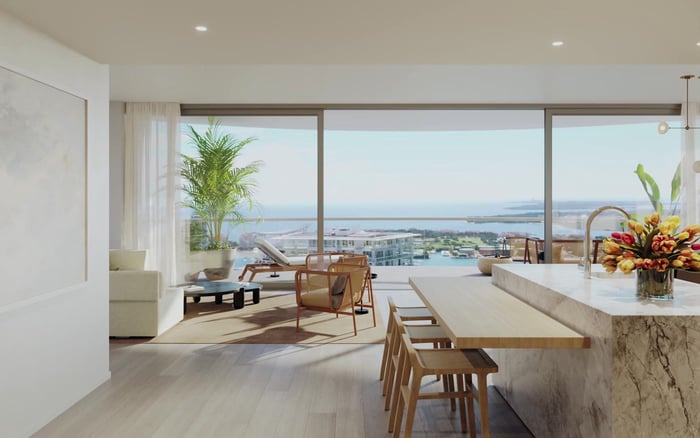
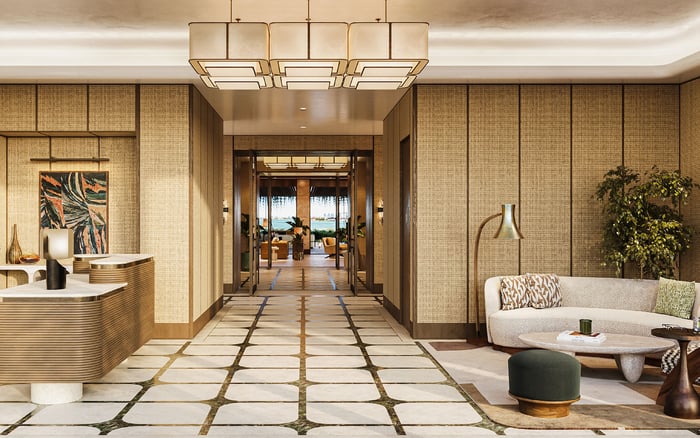
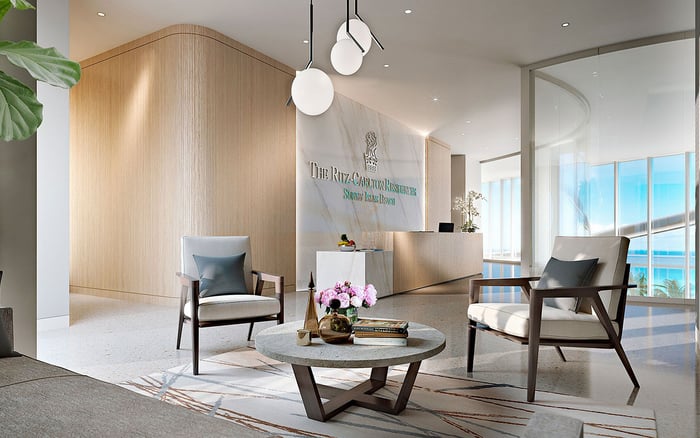
Hotel-style service is not the same as hotel occupancy. A buyer-focused examination of residential guests, shared amenities and the access rules that shape privacy at these two Ritz-Carlton addresses.
For a residence owner, privacy is more than a quiet lobby. It is confidence about who may enter, where visitors may go and how service reaches the home. At these two Ritz-Carlton addresses, the first distinction is fundamental: hotel-style service does not establish an operating hotel or publicly accessible amenities.
Sunny Isles is described as a completely private residential building with no hotel on the premises and no transient use. Palm Beach Gardens is presented as a private residential enclave organized around estate residences and a private marina, rather than a hotel-centered development. Treating either as a conventional hotel-and-residences circulation problem would start with the wrong premise.
The more useful question is how owners, invited guests, staff and service providers interact within a residential setting. A guest suite accommodates a different category of visitor from a hotel booking; a shared residential lounge is not automatically a public lounge.
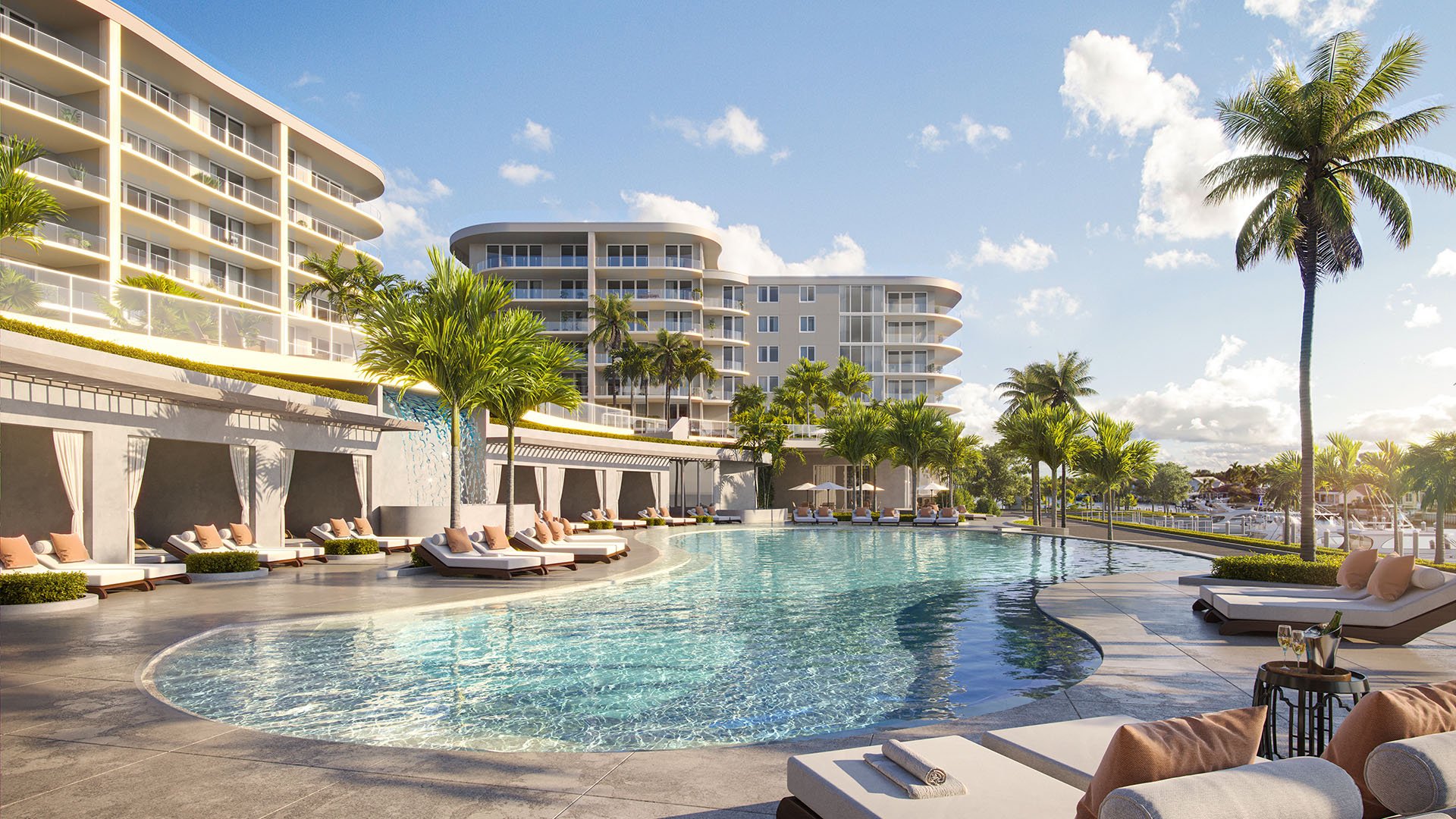
At The Ritz-Carlton Residences® Palm Beach Gardens, the setting comprises 14 acres of Intracoastal waterfront, with 106 residences planned across three waterfront buildings. The project site is 2200 PGA Boulevard, distinct from the sales office. Buyers arranging a visit should distinguish the two.
The private waterfront clubhouse includes a yacht club lounge, event kitchen, coffee bar and game room. Guest suites and two private dining areas provide space for resident-hosted stays and entertaining. The broader amenity program includes a marina, waterfront pavilion, dog park, pickleball courts, children’s club and wellness center.
These amenities create several settings for residential activity, but they do not establish how visitors move between them. Neither guest accommodations nor private dining proves the existence of a dedicated guest entrance, separate service elevator or restricted route between buildings.
For buyers who entertain frequently, the practical question is whether an invited guest may arrive independently, access the clubhouse or visit the marina without the owner accompanying them. The answers require management confirmation and document review; they cannot be inferred from the site’s scale or amenity names.
At 15701 Collins Avenue, The Ritz-Carlton Residences® Sunny Isles offers private elevator lobby access within its residential program. That is a meaningful feature to examine, but it does not specify credentialing, visitor authorization or floor-access permissions.
A private elevator lobby describes the arrival setting. It does not, on its own, establish who can authorize an elevator journey, whether permissions expire or how deliveries reach the residence. Ask management to walk through a typical guest arrival from valet to front door, including what happens when the owner is away.
The residence count announced in April 2020 was 209 after unit combinations, compared with 212 in the original offering. That historical distinction helps explain differing counts, but neither figure is a proxy for crowding or privacy. Access rules, staffing practices and the timing of amenity use warrant direct examination.
The phrase “no transient use” also requires precision. It should not be read as a blanket prohibition on residential leasing without a review of current condominium documents.
Sunny Isles has 250 feet of beachfront, with cabanas, chaise lounges and umbrellas among its private beach amenities. Its beach restaurant is described as providing pool and beach service, as well as in-residence delivery. The amenity program also includes two pool decks, a private club level, private suites for residents’ guests, a kids club and spa and wellness facilities.
For buyers, the distinction is between an amenity’s purpose and its admission policy. Private beach amenities do not, by themselves, establish exclusive legal access to the shoreline. Restaurant service likewise proves neither unrestricted public dining nor a complete exclusion of outside visitors.
Ask who may enter each space: owners, authorized residents, accompanied visitors, registered overnight guests or approved event attendees. The answers may differ by amenity. At Palm Beach Gardens, apply the same questions to the clubhouse, dining areas and marina. A shared residential space can remain private while accommodating substantial resident-hosted activity.
Sunny Isles’ amenity program includes 24-hour valet and security. Historically, arrival staffing has also included round-the-clock entry-lobby door attendants and valets. Staffing matters to arrival management, but buyers should confirm current procedures rather than assume staff presence alone determines visitor access.
Historically, private residence events have required a guest list 48 hours in advance, and some amenity spaces have been available to reserve for private functions. The 48-hour provision concerns those events, not every visitor. Ask current management whether the requirement remains in effect, which gatherings qualify and what approvals an amenity reservation requires.
Historically, pool-deck rules have also distinguished between access 24 hours daily and swimming only from sunrise to sunset. The distinction illustrates why access to a space and permitted activity are separate questions; current hours still require confirmation.
At both properties, guest-suite availability warrants a separate discussion about reservations, stay limits, charges, occupancy and amenity privileges. The existence of a suite answers none of those questions and does not imply a hotel operation.
Before purchase, request current condominium documents, applicable house rules and written clarification of operational policies. Then test them against the way you intend to live:
Visitor arrival: Confirm registration, owner authorization, guest parking and procedures for an unaccompanied arrival.
Elevator access: Establish which destinations a visitor may reach and how permission is granted or withdrawn.
Amenity privileges: Clarify whether overnight guests or daytime visitors may use facilities without an owner present.
Service movement: Ask how deliveries, contractors and household staff reach the residence, without assuming separate routes exist.
Entertaining: Review guest-list deadlines, approval requirements, reservations and any effect on other owners’ access.
If your search also includes The Ritz-Carlton Residences® Miami Beach, carry the same questions into that evaluation rather than transferring policies from one branded address to another. A shared name is no substitute for property-specific rules.
Palm Beach Gardens presents a waterfront enclave with three planned residential buildings and a private clubhouse. Sunny Isles presents an oceanfront residential building with private elevator lobby access and no on-site hotel. Neither description alone proves complete separation among owners, invited guests and service activity.
The strongest purchase decision rests on how design and operating rules work together: a gracious arrival, clear permissions and hosting arrangements that suit the household without compromising neighboring owners’ enjoyment.
For a discreet discussion of South Florida residences and the privacy questions that matter to your purchase, connect with MILLION.
If branded residences are on your mind — as a home or as an allocation — we would be glad to share what we are seeing, privately.
Begin a quiet conversationIt is described as a completely private residential building with no hotel on the premises and no transient use.
It is presented as a private residential enclave with estate residences and a private marina, rather than a hotel-centered development.
It occupies 14 acres of Intracoastal waterfront, with 106 residences planned across three waterfront buildings.
No. Guest suites provide accommodations for residents’ guests, but do not establish a hotel operation or separate guest entrances and routes.
The feature does not specify credentialing or floor-access rules. Buyers should confirm visitor authorization and elevator permissions with management.
The historical 48-hour guest-list requirement concerns private residence events, not every visitor. Management should confirm the current rule and its scope.
No. Private cabanas, chaise lounges and umbrellas do not by themselves establish exclusive legal access to the shoreline.
Its described services include pool and beach service and in-residence delivery. Those features do not establish its outside-visitor admission policy, which requires confirmation.
That phrase should not be interpreted as a blanket ban on residential leasing. Current condominium documents should be reviewed for applicable restrictions.
Confirm visitor registration, elevator permissions, guest parking, unaccompanied amenity access, delivery and service routes, and event approvals. Guest-suite rules and current operating hours also merit review.