A collector-focused ranking of five South Florida trophy residences, with emphasis on crated-art access, installation governance, climate control, storage and storm planning.
For a serious collector, a beautiful wall is only the final stage in a much longer chain. Monumental paintings, sculpture and fragile mixed-media works must move from the truck to the loading area, through controlled service access, into an elevator and around every corridor turn. The decisive dimensions are those of the artwork in its shipping crate-not merely the unframed piece.
Luxury-condominium installations also require paperwork, vendor insurance, elevator scheduling and building supervision. Once transport dates are fixed, the freight- or service-elevator window should be reserved promptly. A residence can offer exceptional volume yet remain unsuitable if a crated work cannot navigate the loading route or installation policies restrict the necessary anchoring.
Within Miami Beach, The Ritz-Carlton Residences® Miami Beach offers the clearest art-specific amenity among the finalists. Farther north, The Ritz-Carlton Residences® Sunny Isles remains a collector candidate whose operational details should be secured in writing. The same discipline applies when considering Five Park Miami Beach or the culturally immersed Faena House Miami Beach.
For collectors, the true measure of a residence begins at the loading route, not the gallery wall.
1. The Ritz-Carlton Residences Miami Beach: Mid-Beach and Surprise Lake
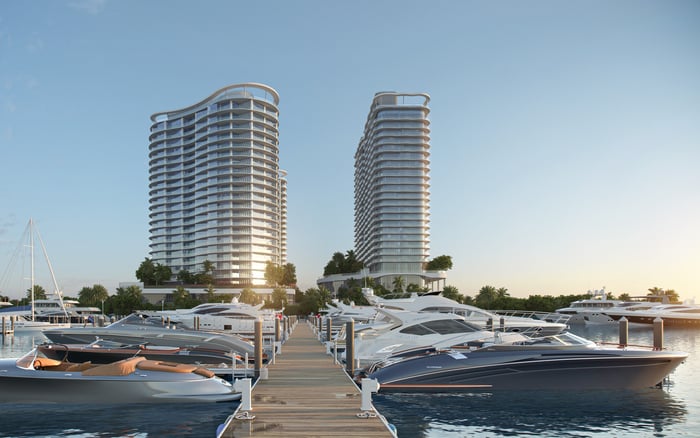
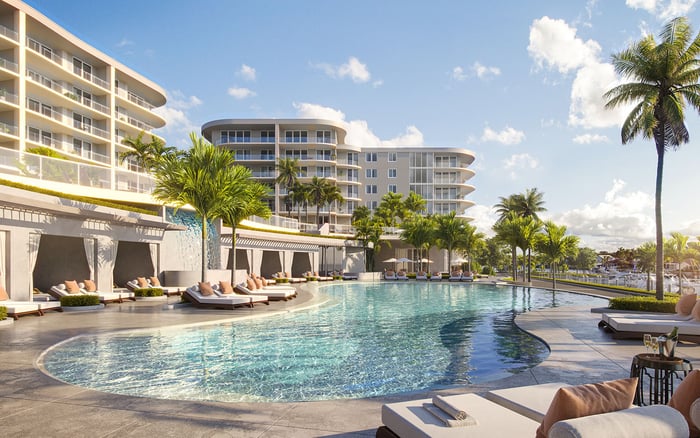
This approximately seven-acre development ranks first for pairing a low-density residential setting with a dedicated, 24-hour private art studio. Equipped with easels and sculpting surfaces, the studio was conceived by Piero Lissoni for classes, talks and exhibitions of residents’ work. The development comprises approximately 111 condominium residences and 15 villas, with amenities including a private theater, swimming pool and 36 private boat dockages.
The studio signals meaningful engagement with creative practice, but it should not be mistaken for conservation-grade storage. Before closing, a buyer should still obtain freight dimensions, installation protocols, allowable HVAC modifications and documented storage conditions.
2. The Ritz-Carlton Residences Sunny Isles Beach: branded oceanfront candidate
The Ritz-Carlton Residences® Sunny Isles ranks second as an oceanfront option warranting collector-level diligence. Its position does not mean that freight-elevator measurements, delivery windows, vendor insurance requirements, conditioned storage or backup climate systems have been verified.
Management should provide current written documentation covering the complete service route and installation process. The buyer’s art adviser, conservator and installer can then determine whether a specific residence-and the building’s operating rules-suits the collection.
3. Five Park Miami Beach: newer South Beach tower candidate
Five Park Miami Beach takes third place as a newer luxury-tower option where unit-specific planning is particularly important. Buyers should commission an engineering review of HVAC zoning and supplemental dehumidification, both of which may be possible in Miami condominiums, subject to engineering and association approval.
Before purchase, verify freight access, loading circulation, structural-anchoring rules and hurricane procedures. The objective is not simply to maintain comfort, but to establish whether the residence can sustain the collection’s required operating range and support its installation plan.
4. Faena House and Faena District: Mid-Beach cultural setting
Faena House Miami Beach ranks fourth for its proximity to an unusually active culture of ambitious, site-specific art. The district commissioned three international artists for beachfront projects between 32nd and 36th Streets, while Es Devlin’s “Library of Us” was conceived as an installation incorporating 2,500 books. Such projects reflect familiarity with artists, fabricators and complex public-art logistics.
That cultural fluency does not establish resident access rights. Faena House freight rules must be confirmed independently, and buyers should not assume that loading infrastructure serving the hotel or cultural buildings is available for private residential installations.
5. Icon-branded oceanfront tower: Palm Beach and Fort Lauderdale corridor
The planned Icon-branded project by Related Group and BH Group is a pre-construction candidate comprising approximately 70 condominiums in a 10-story tower. Residences are planned from approximately 2,800 to 6,400 square feet, creating potential flexibility for gallery walls, circulation clearances or a conditioned art room. The development has also secured a $360 million construction loan.
Its collector appeal remains specification-dependent. Final freight access, HVAC capacity, glazing performance, generator coverage and operating rules should be reviewed before a buyer commits to a collection-driven layout.
A proper access study begins with the crate’s height, width, depth and turning radius. Those measurements should be tested against the loading entrance, elevator door, cab interior, ceiling clearances, thresholds, corridor widths and every change of direction leading to the residence. Protective packaging, rigging equipment and installation hardware also require clearance.
Ask management for dimensioned service-route information and, whenever possible, conduct a physical walk-through with the installer. Written rules should identify booking procedures, permitted delivery hours, deposits, certificates of insurance, elevator protection and supervision requirements. If an exterior lift, crane or temporary street control may be necessary, do not assume the association will permit it.
Art placement should be reconciled with structural and association rules before interior construction begins. Heavy sculpture, suspended work and oversized wall pieces may require engineering, approved anchoring methods or restrictions on slab and exterior-wall penetrations. Even a seemingly simple installation can affect waterproofing, electrical systems or common building components.
The strongest purchase file pairs the proposed collection plan with written approvals. It should also clarify contractor access, noise limits, work hours, floor and elevator protection, and the process for future rotations. For buyers who lend works or change displays seasonally, repeatable access may matter more than a single successful move-in.
Residential comfort settings do not automatically meet conservation needs. A collector should define acceptable temperature and relative-humidity ranges with a qualified conservator, then have mechanical engineers assess whether the unit can maintain them across rooms and seasons. Zoned HVAC and supplemental dehumidification may be feasible, though association and engineering approval can govern alterations.
The review should extend to glazing, solar exposure, air distribution, sensor placement, condensate management and the areas covered by emergency power. Conditioned storage warrants the same scrutiny as display space. Storm procedures should explain how climate, water-intrusion risk and access are managed before, during and after a severe-weather event.
Before closing, request current condominium documents, freight-elevator and loading-route dimensions, delivery schedules, vendor insurance requirements and structural-anchoring policies. Add written HVAC operating information, alteration procedures, glazing specifications, generator coverage, storage conditions and hurricane protocols. For new development, trace these points through final specifications rather than inferring them from conceptual plans.
The ideal trophy residence does more than frame a collection elegantly. It gives the owner a credible, repeatable path for receiving, installing, preserving and, when necessary, evacuating important works. For discreet guidance on South Florida residences aligned with a collection-led brief, connect with MILLION.
If branded residences are on your mind — as a home or as an allocation — we would be glad to share what we are seeing, privately.
Begin a quiet conversationMeasure the work in its shipping crate against elevator doors, cab dimensions, thresholds, corridor widths, ceiling clearances and every turn on the service route.
Luxury-condominium moves commonly require scheduled service access. Reserve the freight or service-elevator window as soon as the installation date is confirmed.
No. The private studio at The Ritz-Carlton Residences Miami Beach is an art amenity, not documented conservation-grade storage.
It may be possible in many units, but installation remains subject to engineering review and association approval.
The Ritz-Carlton Residences Miami Beach ranks first for its 24-hour private art studio, approximately seven-acre setting and comparatively low-density plan.
The district has a demonstrated culture of site-specific commissions and complex public-art production. Residential freight access at Faena House still requires separate confirmation.
Its approximately 2,800-to-6,400-square-foot residences may provide flexibility for gallery layouts or conditioned art rooms, subject to final specifications.
Request written policies for anchoring, penetrations, contractor access, work hours, insurance, elevator protection and supervision.
Review HVAC zoning, dehumidification, glazing, solar exposure, conditioned storage, emergency-power coverage and storm procedures.
The available details do not establish current freight dimensions or complete loading diagrams. Buyers should obtain written information directly from management or the developer.