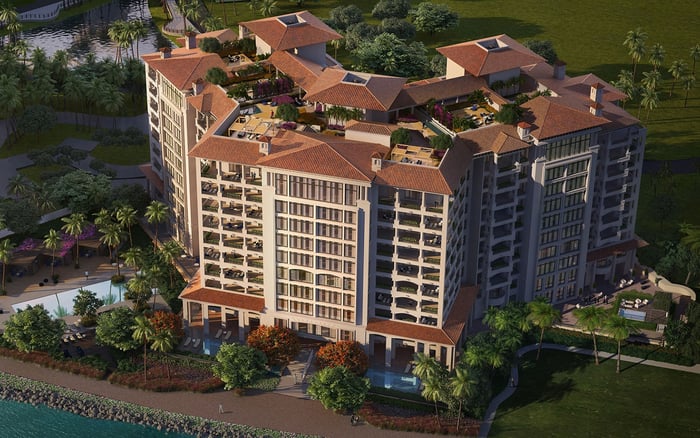
For buyers considering Fisher Island after Oslo, a carefully designed transport plan belongs alongside residential due diligence. Separate event-specific traffic arrangements, airport arrival requirements and driver coordination to make the ownership experience more predictable.
For a buyer considering Fisher Island after leaving Oslo, the practical question is not whether every journey can be effortless. It is whether the household has a clear plan when an event, a flight and a tightly scheduled day compete for time. The residence deserves careful attention, but so does the journey from its front door to an agreed pickup point and the airport terminal.
Transport planning belongs in residential due diligence. A buyer evaluating The Residences at Six Fisher Island should ask how proposed travel arrangements would work on both an ordinary departure day and a major-event day. Resolve that question with the relevant property and transport teams rather than assuming services are included with the residence.
Oslo is the starting point for this buyer's story, not a basis for comparing traffic systems or predicting travel habits. In South Florida, the useful discipline is to plan each journey around its date, destination and access requirements.
The Miami Grand Prix brings higher-than-normal traffic around Hard Rock Stadium in Miami Gardens. That matters directly to a household attending the race, but it does not establish a fixed delay for every Fisher Island transfer to Miami International Airport. The destination and the day's restrictions must shape the plan.
The 2026 F1 arrangements included closures of Florida's Turnpike Exit 2X ramps in both directions during the race-weekend period. Restrictions also affected NW 199th Street between NW 14th Court and NW 27th Avenue, with additional race-day restrictions on northbound NW 27th Avenue. These details illustrate the complexity of stadium access; they are not standing instructions for another year.
Before a future race visit, ask the driver to review the current road-closure notice and confirm the intended arrival and collection locations. A familiar route is no substitute for that check. Assess an airport transfer on its own route rather than adding an arbitrary allowance for race-weekend traffic.
For 2026, event shuttles were free for ticketholders, and designated shuttle lots permitted passenger pickup and drop-off without parking a vehicle. This offered a potential handoff point between chauffeur and shuttle. For a later edition, confirm eligibility, operating arrangements and the precise meeting point before building the day around a shuttle.
Plan boat-show travel separately from race-weekend travel. There is no basis here for treating the two events as simultaneous or assuming their traffic patterns are interchangeable.
February 2024 traffic arrangements addressed the combined pressure of boat shows, art shows and concerts. Parking locations for event shuttles included College Station garage at 190 NE Third Street and Knight Center garage. Municipal-garage shuttles also served the Miami Beach Convention Center. These details illustrate how event access can depend on designated parking and transfer locations rather than a simple curbside arrival.
For a future visit, confirm the exact venue first, then its current passenger drop-off and collection arrangements. Do not give a driver an old garage address and assume the same service still operates. A useful brief distinguishes the intended entrance, the permitted meeting point and a fallback location agreed in advance.
If property viewings are part of the same day, keep them flexible rather than scheduling a fixed appointment immediately after an uncertain event departure. The objective is a composed itinerary, not the greatest possible number of stops.
For departures from Miami International Airport, plan to arrive at least two hours before a domestic flight and at least three hours before an international flight. These are airport-arrival recommendations-not instructions to leave Fisher Island two or three hours before departure.
Build the schedule backward in separate stages: the required airport-arrival margin, the anticipated road journey, the confirmed island-access sequence and additional contingency time. Keep each stage explicit. Discuss household-specific needs, including luggage handling or a slower boarding process, when setting the departure time.
For buyers assessing Palazzo del Sol Fisher Island, a useful due-diligence exercise is to rehearse a representative flight departure. Ask the relevant teams to explain the proposed sequence and identify which elements require confirmation. Treat the exercise as planning, not proof of a guaranteed transfer duration.
Check live airport-access traffic and construction information near departure. Separately, check current air-traffic delays, remembering that a live status reading is a snapshot, not a forecast for a later transfer. A flight delay is not a reliable reason to compress the ground-travel plan.
Reserve the driver in advance and make the booking specific enough to execute without repeated calls. These are recommended planning practices, not an official Fisher Island chauffeur policy.
The written brief should cover the passenger count, luggage requirements, flight or event details, primary contact and exact agreed pickup point. It should also establish waiting terms, how schedule changes will be communicated and what happens if the original collection location becomes inaccessible.
For an event journey, distinguish drop-off from pickup. Agree when the passenger should contact the driver after leaving the venue and whether an alternative meeting point is permitted under the current arrangements. For an airport journey, confirm the relevant airline and terminal; a general airport destination is not a complete instruction.
Resolve island access directly with the relevant island or property team and the transport provider. Confirm applicable schedules, vehicle arrangements, guest access and driver authorization before relying on them. Do not assume a particular vehicle can complete every stage or that two separate cars are necessarily required.
When considering The Links Estates at Fisher Island, extend the conversation beyond a single successful viewing trip. Ask how the proposed arrangements would accommodate visiting guests, an early flight, an event evening and a changed return time. These are scenarios to test, not claims about the property's transport provisions.
Keep one current itinerary accessible to the household and driver, with clear responsibility for reconfirming access and checking conditions. Review it when the flight, venue or event arrangements change. The most useful plan need not be elaborate; it should make the next step and the responsible contact unmistakable.
A Fisher Island purchase should support the way its owner intends to live. Clear logistics cannot eliminate traffic, but they can replace avoidable uncertainty with deliberate choices about departure times, commitments and flexibility.
Explore Fisher Island residences with a considered approach to ownership and travel through MILLION.
If branded residences are on your mind — as a home or as an allocation — we would be glad to share what we are seeing, privately.
Begin a quiet conversationAllow arrival at least two hours before a domestic flight and at least three hours before an international flight. Add the transfer from Fisher Island separately.
No fixed delay is established for every journey. Assess the actual airport route and current conditions separately from stadium-area restrictions.
The arrangements included Turnpike Exit 2X ramp closures in both directions, restrictions on NW 199th Street between NW 14th Court and NW 27th Avenue, and additional race-day restrictions on northbound NW 27th Avenue.
They provide context, not a future closure schedule. Confirm the current event arrangements before selecting a route or meeting point.
The 2026 arrangements permitted pickup and drop-off at designated shuttle lots without parking, with free shuttles for ticketholders. Confirm the applicable rules for any later event.
No. The 2024 arrangements covered boat shows, art shows and concerts, so future venue access and shuttle locations require fresh confirmation.
No. Plan them separately; the available facts do not establish that the events overlap.
Include passenger and luggage requirements, flight or event details, contact information and agreed pickup points. Establish waiting terms, change procedures and a contingency collection plan.
Do not assume that two cars are required or that one vehicle can complete every stage. Confirm access, vehicle arrangements and driver authorization with the relevant teams.
No. Live air-traffic status is time-specific, and airport road-access conditions should be checked separately.