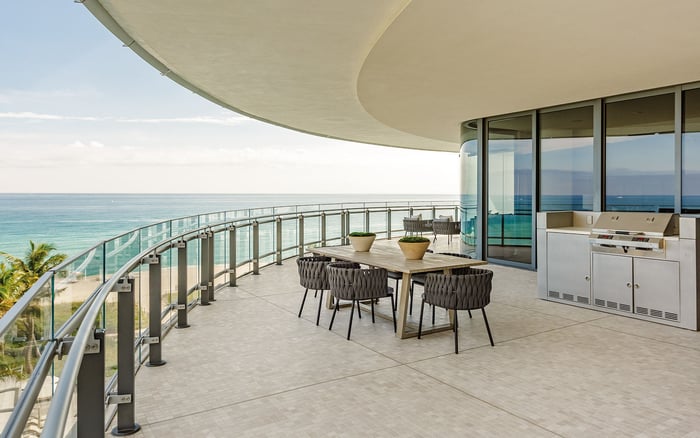
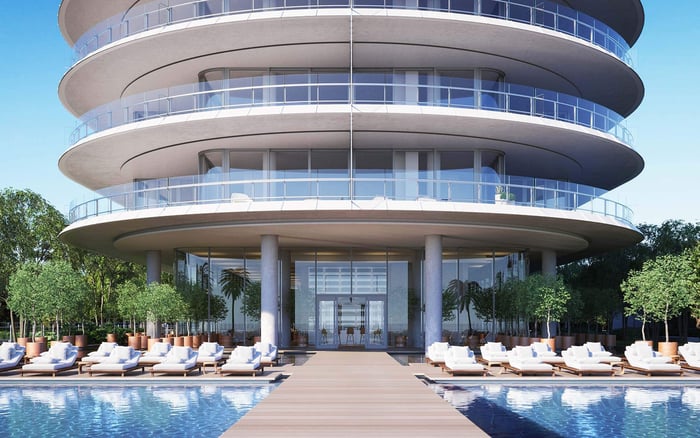
A buyer-focused examination of two distinct branded-residence operating models in Surfside, with emphasis on management continuity, monthly charges, document review and the practical limits of owner recourse.

In Surfside, two celebrated oceanfront addresses can offer equally rarefied lifestyles while resting on materially different operating foundations. Fendi Château Residences Surfside at 9349 Collins Avenue is presented as a residential-only condominium, not a condo-hotel with an on-site rental program. The Surf Club Four Seasons Surfside at 9111 Collins Avenue combines private residences, a Four Seasons hotel and club facilities.
That distinction affects more than atmosphere. It shapes how buyers should assess service delivery, cost allocation, management continuity and the recourse available when expectations are not met. Among South Florida branded residences, the name above the door is only one layer of the ownership proposition. The controlling documents determine what is promised, who must perform and which rights belong to an individual owner.
Fendi Château is presented as a conventional condominium, with one primary association overseeing operating expenses, reserves and building rules. This relatively direct structure can make the initial diligence map easier to visualize: identify the association’s obligations, review its finances and determine how branded standards are embedded in binding agreements.
The Surf Club has a more layered framework, with residential, hotel and club components coexisting. A buyer should identify which entity provides each service, which facilities are shared and how expenses move among the components. The presence of an internationally recognized hotel operator should not invite assumptions about an owner’s direct contractual relationship with that operator.
These differences also distinguish both properties from nearby boutique options such as Arte Surfside and architectural landmarks such as Eighty Seven Park Surfside. Comparisons should extend beyond amenity counts to governance, operating dependencies and the durability of the service model.
Disclosed charges illustrate the scale of ownership costs, but they remain unit-specific snapshots. At Fendi Château, the average association fee is approximately $2.88 per square foot per month, while historical market guidance has ranged from roughly $1.20 to $2.16. That spread is precisely why a current budget, assessment history and unit estoppel should take precedence over generalized figures.
Specific Fendi Château examples sharpen the picture. Unit 1004, measuring 3,334 square feet, showed monthly maintenance and common charges of $9,757. Charges were listed at $9,757 for three-bedroom residences, $12,778 for four-bedroom residences and $18,750 for five-bedroom residences. Unit 1101 showed $18,750 monthly, including security, pool service, trash removal, amenities, cable, sewer and water. Unit 305 showed $10,378, with all amenities identified among the inclusions.
At The Surf Club, Unit N-717 showed an $11,389 monthly association fee, with security, exterior and common-area upkeep, pool service, trash removal, air-conditioning maintenance, amenities, elevator, manager, parking, sewer and water among the listed inclusions. Unit S-207 showed $14,795 monthly for the building exterior, common areas and amenities. Unit N-515 showed $11,341, including security, insurance, exterior maintenance, pool service, trash, air-conditioning maintenance, amenities, cable, elevator, parking, sewer and water.
These figures should not be treated as direct value comparisons without accounting for residence size, allocation methodology, covered services and reporting date. A rigorous review separates recurring assessments, reserve contributions, individually billed services, shared-facility costs and any current or pending special assessments.
Brand continuity is not established by reputation alone. Buyers should request the declaration, bylaws, current budget, recent financial statements, meeting minutes, assessment notices and applicable brand, management, service or shared-facility agreements. The objective is to identify agreement terms, renewal mechanics, termination provisions, performance standards and decision-making authority.
The documents should clarify whether branding and management are inseparable or governed by different contracts. They should also reveal whether the association, another property entity or individual owners hold notice, cure, voting or enforcement rights. None of those rights should be presumed from marketing language.
Continuity analysis should include a practical scenario: if a brand or manager changed, which services would continue, who would select a successor and what costs could follow? The answer may influence both lifestyle expectations and resale positioning.
Owner recourse depends on the governing documents and the party responsible for the disputed obligation. A complaint about an association-funded service may follow a different route from a dispute involving hotel operations, club access, shared facilities or a separately retained unit manager.
Third-party firms market owner-level services for Fendi Château residences, including tenant placement, rent collection, repairs, payments and financial reporting. Those private arrangements should not be confused with association management or services funded through condominium assessments. Their remedies arise from separate contracts.
Before purchase, counsel should map who owes each material obligation and whether an owner can act directly or must proceed through the association. Review notice requirements, cure periods, dispute procedures, voting thresholds and any limits on remedies. The available facts do not establish specific enforcement rights against Fendi, Four Seasons, an operator or either association without that contract review.
The strongest principle is simple: evaluate the operating platform with the same care as the residence. Request current figures for the exact unit, reconcile every quoted inclusion against the governing records and ask about known budget changes or assessments.
For each property, prepare a service matrix naming the provider, payer, governing agreement and available remedy. Compare that matrix with personal priorities such as security, parking, pool service, building maintenance and hospitality access. This approach gives buyers a clearer basis for evaluating Surfside ownership than a headline monthly figure alone.
Is Fendi Château a condo-hotel? It is presented as residential-only, without an on-site rental program.
How is Fendi Château governed operationally? It is presented as a conventional condominium with one primary association overseeing expenses, reserves and rules.
Why is The Surf Club operationally different? It combines private residences with a Four Seasons hotel and club facilities, creating a more layered service structure.
What is a representative Fendi Château monthly charge? Unit 1004 showed $9,757 monthly, but the current estoppel and budget for the chosen residence should control.
What charges have appeared at The Surf Club? The cited unit snapshots range from $11,341 to $14,795 monthly, with inclusions varying by residence.
Do listing figures establish current ownership costs? No. They are snapshots that may vary with unit size, allocation and reporting date.
Does a famous brand guarantee permanent management? No. Renewal, termination and replacement mechanics depend on the applicable agreements.
Can an owner enforce obligations directly against the brand? That cannot be assumed; counsel must identify contractual parties, enforcement rights and required procedures.
Is private unit management included in association fees? Not necessarily. Separately retained leasing, repair and financial services arise from an owner-level contract.
Which records deserve priority before closing? Review the declaration, bylaws, budget, financials, minutes, assessments, estoppel and all relevant operating agreements.
For a discreet conversation and a curated building-by-building shortlist, connect with MILLION.
If branded residences are on your mind — as a home or as an allocation — we would be glad to share what we are seeing, privately.
Begin a quiet conversation