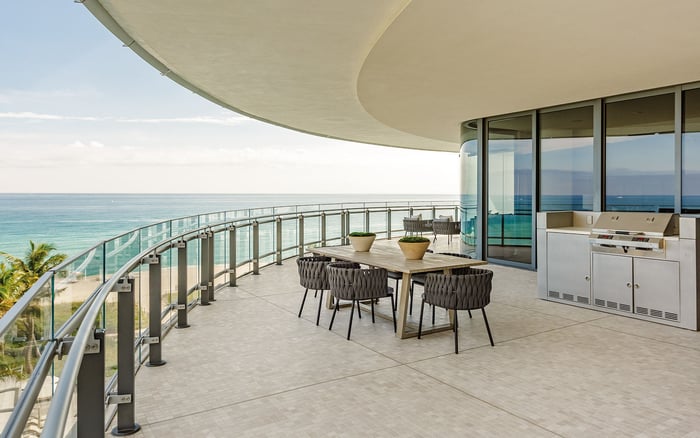
A disciplined framework for examining shoreline planning, association obligations, insurance, reserves, and resale risk before purchasing at Arte Surfside.

For a buyer considering Arte Surfside, beach-erosion planning is a material due-diligence concern, not a peripheral environmental question. The inquiry extends beyond whether the beach appears generous during a showing. It asks whether the condominium’s documents, budgets, insurance arrangements, and decision-making structure give owners a clear view of shoreline-related responsibilities over time.
This is especially important for an oceanfront purchase whose appeal may be closely tied to unobstructed coastal enjoyment. Long-term value does not turn on a single shoreline variable, and no document can resolve the issue alone. A sophisticated review connects physical exposure, public planning, association governance, funding capacity, insurability, and the expectations of a future buyer.
Begin by identifying which shoreline matters belong to the condominium, which may rest with public authorities, and which could involve neighboring parcels or multiple parties. Buyers should ask counsel to review the declaration, surveys, easements, maintenance provisions, and any agreements affecting the ocean side of the property.
The questions should be exacting. Who may authorize work? Who must pay? Is access through condominium property required? Could temporary work affect privacy, views, amenity use, or beach access? Are there notice, voting, or approval requirements that could delay a response?
For Arte Surfside, the answers should come from current governing and transaction documents-not assumptions based on the shoreline’s appearance. The same discipline applies when comparing Fendi Château Residences Surfside or another waterfront condominium nearby. Similar geography does not imply identical obligations.
A conventional financial review asks whether routine operations are adequately funded. Coastal diligence adds another layer: whether the association has considered expenses that may arise from protective features, access areas, landscaping, exterior systems, professional studies, permitting, or participation in a broader shoreline initiative.
Request the current budget, recent financial statements, reserve information, insurance summaries, board minutes, pending contracts, and notices of proposed expenditures. Ask whether each shoreline-related item is classified as operating maintenance, a reserve component, a special project, or an expense beyond the association’s responsibility. That classification matters because it can determine both timing and how owners may be asked to contribute.
Do not infer preparedness from a large reserve balance alone. The more useful question is whether available funds correspond to identified obligations and realistic decision paths. Likewise, the absence of a dedicated line item should prompt clarification, not an automatic conclusion.
Insurance and shoreline maintenance should be reviewed together, but they are not interchangeable. A buyer should ask an experienced insurance adviser to explain the association’s policies, material deductibles, exclusions, limits, renewal considerations, and the relationship between master coverage and the owner’s individual policy.
Counsel and insurance professionals can also clarify whether particular losses, preventive measures, or assessments fall within coverage. Obtain answers in writing where possible. Marketing language, informal explanations, and general coastal assumptions are no substitute for policy terms or condominium documents.
This distinction applies across the Surfside market. A comparison with The Surf Club Four Seasons Surfside should center on each property’s documents and financial structure, not merely its neighborhood proximity or branding.
A present-day site visit remains worthwhile, but it should be only one part of the review. If the transaction schedule permits, visit under different conditions. Pay attention to access routes, transitions between private and public areas, visible protective elements, and the relationship between residential amenities and the shoreline.
Then request the documents behind what is visible. Relevant materials may include engineering evaluations, maintenance histories, permits, correspondence, board discussions, scopes of work, bids, contracts, and notices concerning the ocean side of the property. The objective is not to predict the coastline with false precision. It is to determine whether responsibilities have been identified, decisions documented, and potential costs given a credible governance path.
When considering Eighty Seven Park Surfside as a comparison, apply the same checklist. A consistent method makes differences in governance, funding, and disclosure easier to identify.
For investment analysis, translate shoreline diligence into practical questions. Could an identified obligation result in higher recurring charges or a special assessment? Might work temporarily affect access or enjoyment? Would unresolved responsibility create uncertainty at resale? Could insurance terms alter carrying-cost expectations?
None of these questions yields a guaranteed valuation adjustment. They do, however, help distinguish a documented risk from an undefined one. In an ultra-premium transaction, clarity itself can hold value because the next purchaser may scrutinize the same records.
A prudent offer strategy can reflect the quality of disclosure, the buyer’s intended holding period, tolerance for variable costs, and whether unresolved items can be addressed before closing. Any contractual protection should be designed by the buyer’s attorney. This buyer’s-guide approach favors evidence, comparability, and professional interpretation over broad assurances.
Before committing, buyers should assemble a coordinated review team capable of addressing legal, engineering, insurance, financial, and valuation questions within the transaction timeline. Request current materials from the association or seller, then confirm before closing whether anything material has changed.
The most useful checklist is concise: ownership and maintenance boundaries; shoreline-related agreements; recent board discussions; active or contemplated work; reserve treatment; possible assessments; policy terms; permits and approvals; construction-access implications; and unresolved claims or disputes. For Arte Surfside, every answer should be considered in the context of the specific residence, purchase terms, and anticipated ownership horizon.
Does a wide beach during a showing resolve erosion concerns? No. Buyers should pair visual observations with reviews of documents, governance, funding, and relevant professional guidance.
What should an Arte Surfside buyer request first? Begin with governing documents, budgets, financial statements, reserve information, insurance summaries, board minutes, surveys, and relevant agreements.
Who determines shoreline-maintenance responsibility? Responsibility should be established through applicable property documents, agreements, and legal review-not assumption.
Can reserves answer the entire cost question? No. Buyers should determine which obligations have been identified, how they are classified, and what funding mechanisms may apply.
Is association insurance enough for an owner? Buyers should have an insurance adviser compare the master policy’s terms with the coverage required for the individual residence.
Should a buyer commission an engineering review? That decision should reflect the available records, unresolved physical questions, transaction terms, and guidance from qualified professionals.
How can shoreline work affect the ownership experience? Buyers should investigate whether contemplated work could affect access, privacy, amenity use, views, noise, or scheduling.
How should comparable Surfside properties be used? Apply the same diligence checklist to each property while recognizing that documents, obligations, and finances may differ.
Does shoreline uncertainty automatically reduce value? Not necessarily. Its significance depends on the defined obligation, potential cost, timing, funding, and likely relevance to future buyers.
What should be reconfirmed before closing? Reconfirm current financials, insurance, board actions, contracts, assessments, notices, and any material change affecting the purchase.
For a discreet conversation and a curated building-by-building shortlist, connect with MILLION.
If branded residences are on your mind — as a home or as an allocation — we would be glad to share what we are seeing, privately.
Begin a quiet conversation