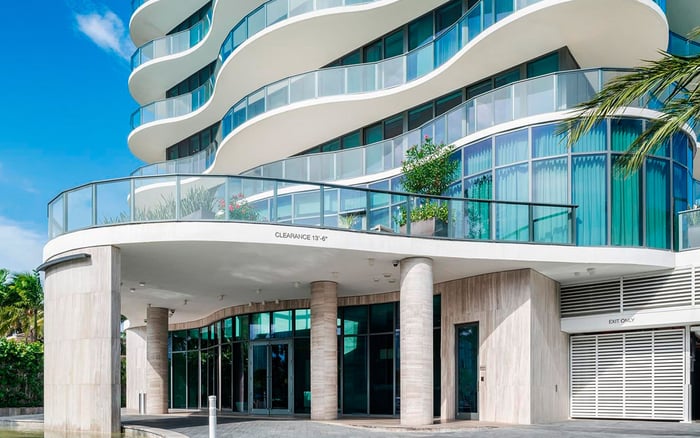
Turnberry Ocean Club in Sunny Isles Beach offers a focused lens on why closet ventilation belongs in the luxury due diligence conversation. In oceanfront South Florida living, wardrobe storage is not a secondary detail; it is part of how a residence supports daily routines, protects materials, and preserves long-term livability.

Turnberry Ocean Club Sunny Isles is the kind of address where the obvious luxuries tend to be noticed first: oceanfront presence, polished interiors, privacy, and the feeling of a refined South Florida lifestyle. Yet the more experienced buyer looks beyond the first impression. In a residence of this caliber, the questions become quieter and more exacting. How does the home live after the showing? How are garments, luggage, linens, handbags, and seasonal pieces protected? How does the private realm perform when no one is looking?
That is where closet ventilation enters the conversation. It is not a showpiece amenity, and it is rarely the line item that sells a residence. But for owners of couture, resort wear, leather goods, evening pieces, and tailored wardrobes, a closet is closer to a private gallery than a storage room. Air movement, material selection, lighting discipline, and mechanical planning become part of the invisible architecture of ownership.
In Sunny Isles Beach, the closet conversation is not about glamour alone. It is about protecting the everyday systems that make a residence feel effortless. Oceanfront living can be highly sensual and visually dramatic, but the private spaces still need to support order, comfort, and care.
In South Florida luxury condominiums, buyers often respond first to the public vocabulary of a residence: light, views, lobby design, terraces, service, and the quality of arrival. Those elements matter, but they do not replace the need to study the spaces where daily life is organized. Closets, dressing areas, laundry adjacencies, and service zones must work as intelligently as the entertaining rooms.
A graceful arrival sequence sets expectations for the rest of the home. When the transition from elevator, foyer, and living space feels controlled, the primary suite should carry the same sense of resolution. A poorly considered closet can interrupt that calm. A well-ventilated dressing area, by contrast, supports the rituals of arrival, dressing, packing, and returning from travel.
This is especially relevant for buyers who split time between residences or maintain wardrobes suited to beach days, private dinners, business travel, and formal events. A closet is not simply a place to put things away. It is a daily operating system.
In luxury real estate, the visible language is easy to discuss: stone, glass, millwork, ceiling height, terraces, and water views. The next level of discernment is more technical. It asks whether the residence has been planned for the way affluent owners actually live. That includes the care of garments and accessories, especially in oceanfront homes where wardrobes often mix fine fabrics, resort pieces, eveningwear, and travel collections.
Closet ventilation is part of that discipline. It can help a dressing room feel fresher, more usable, and more connected to the home’s broader comfort strategy. The goal is not to turn a closet into a mechanical showcase. The best solutions are nearly invisible. They support air movement without noise, protect the visual calm of custom millwork, and allow lighting and cabinetry to remain the aesthetic focus.
This is the essence of quiet luxury. It is not a louder finish or a more recognizable label. It is the confidence that the home has been considered beyond the brochure image. The more complete the lifestyle promise, the more buyers should expect the private interiors to be equally resolved.
A serious closet review begins with scale and circulation. In a large residence, the primary dressing room should not feel like leftover space. It should allow comfortable movement, clear zones for hanging and folded items, and thoughtful access to luggage, shoes, and accessories. In a modern residence, modern should not mean cold or impractical. It should mean precise, edited, and technically competent.
Ventilation should be assessed as part of that competence. Buyers should ask how air enters and exits the closet, whether doors and cabinetry restrict movement, and whether any mechanical elements create noise or visible disruption. A beautiful closet that traps stale air is not truly finished. A discreetly ventilated closet that preserves both materials and mood is a stronger expression of design maturity.
Lighting matters as well. Wardrobe spaces should provide clear visibility without excessive heat or glare. Millwork should be evaluated not only for finish quality, but also for how it interacts with airflow. Solid doors, enclosed shoe walls, and dense accessory cabinets can be elegant, but they need to be planned with the same care as the main rooms.
For buyers comparing luxury residences in Sunny Isles Beach, the vocabulary might include oceanfront immediacy, privacy, high-floor living, and refined service. Those labels are useful, but they do not replace physical diligence. The best residence is the one whose smallest spaces feel as resolved as its largest views.
Luxury buyers often treat wardrobes as assets with both financial and personal value. A primary closet may contain bespoke suiting, limited-production handbags, evening gowns, watches, shoes, archive pieces, and travel wardrobes for multiple residences. Even when the market conversation focuses on views and finishes, a buyer’s lived experience often depends on whether those pieces are stored in a space that feels calm, organized, and properly supported.
This is particularly true in oceanfront South Florida living, where a resident may move between beach, pool, private dining, travel, and formal evenings within the same week. The closet becomes the operational center of that rhythm. It is where the residence either simplifies life or adds friction.
The strongest dressing rooms are not necessarily the largest. They are the most intelligently planned. They account for how a couple shares space, how household staff may access certain zones, how luggage is staged before travel, and how delicate items are separated from daily pieces. Ventilation is one component of that larger choreography.
Closet ventilation may not appear in the first paragraph of a listing description, but it can influence how a residence feels during a private showing. Buyers notice when a primary suite has a calm, finished quality. They notice when millwork opens cleanly, when lighting flatters fabrics, when there is no sense of heaviness in enclosed rooms, and when the dressing area feels like part of the architecture rather than an afterthought.
In a luxury building, differentiation can become subtle. Two residences may both offer strong views, generous plans, and a polished arrival. The better-executed home is often the one where invisible details have been handled with restraint. For a buyer with a serious wardrobe, a ventilated closet is not indulgence. It is stewardship.
This is why the quiet luxury case for closet ventilation is so persuasive at Turnberry Ocean Club Sunny Isles. The residence may be evaluated through the familiar language of oceanfront presence, privacy, service, and design, but the next question is whether the private spaces meet the same standard. In the best homes, they do.
Why does closet ventilation matter at Turnberry Ocean Club Sunny Isles? It matters because a luxury residence should support both visible design and private daily routines. A well-planned closet can make wardrobe care feel calmer and more intentional.
Is closet ventilation a visible luxury feature? Usually no. Its value is quiet, practical, and best appreciated through daily use rather than a first-glance photograph.
What should buyers inspect in a primary closet? Buyers should evaluate air movement, lighting, cabinetry depth, circulation, luggage storage, and the relationship between the closet and the primary suite.
How does oceanfront living affect closet planning? Oceanfront living often places a premium on comfort, organization, and material care. Buyers should make sure private storage spaces feel as considered as public rooms.
Can millwork affect closet ventilation? Yes. Enclosed cabinetry, solid doors, and dense storage zones can influence how air moves through a dressing area.
Why is lighting important in a luxury closet? Lighting should make garments easy to see without creating glare or unnecessary heat. It should support function while preserving the mood of the room.
Is the largest closet always the best closet? Not necessarily. The best closet is the one that balances scale, circulation, storage logic, lighting, and ventilation.
Should buyers ask about mechanical details during a showing? Yes. Quiet mechanical details can shape the comfort and usefulness of private spaces, especially in a high-end residence.
How can closet design affect resale impressions? A finished, well-organized dressing area can strengthen a buyer’s perception of overall quality. It signals that the residence has been considered beyond the main view corridors.
What is the best way to shortlist comparable options for touring? Start with location fit, delivery status, and daily lifestyle priorities, then compare stacks and elevations to validate views and privacy.
To compare the best-fit options with clarity, connect with MILLION.
If branded residences are on your mind — as a home or as an allocation — we would be glad to share what we are seeing, privately.
Begin a quiet conversation