A buyer-focused comparison of Turnberry Ocean Club and Jade Signature in Sunny Isles Beach, centered on private dining, entertaining flow, and the quiet separation that shapes daily ownership.
For ultra-luxury buyers in Sunny Isles Beach, the choice between Turnberry Ocean Club Residences and Jade Signature is not simply a question of which tower has the more impressive amenity menu. At this level, the more revealing measure is how each property supports the private rituals of ownership: dining with guests, receiving family, moving between indoor and outdoor spaces, and preserving quiet when the home is full.
Turnberry Ocean Club Sunny Isles and Jade Signature Sunny Isles Beach should be read as two distinct ownership philosophies. Turnberry Ocean Club leans toward a hospitality-led model, shaped by a club-oriented sensibility and the idea that service, entertaining, and food-and-beverage programming can extend the home beyond the private residence. Jade Signature, by contrast, is best understood through a design-led lens, where architectural planning, social flow, and the relationship between public and private zones become central to daily comfort.
Both speak to Sunny Isles Beach owners who expect discretion. Yet the more meaningful distinction may reveal itself during a dinner for twelve, a multigenerational weekend, or a quiet morning after guests have left.
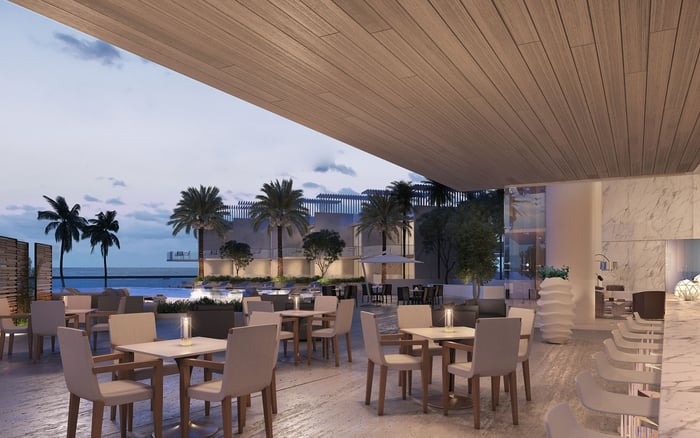
Private dining is one of the clearest ways to separate these two experiences. For a Turnberry Ocean Club buyer, the appeal lies in the building’s hospitality-style operating concept. The ownership proposition is not only that one can entertain inside the residence, but that the broader building environment may support entertaining as an extension of private life. The practical questions become highly specific: How intuitive is access to private dining? How easily can chef or catering logistics be coordinated? Can service movement remain discreet enough that a formal evening feels seamless rather than managed?
This matters because affluent owners often host in layers. A birthday dinner may begin in the residence, move to a terrace, continue in a club-style setting, then return to the privacy of the home. In that pattern, food service is not merely an amenity category. It is part of the choreography of ownership.
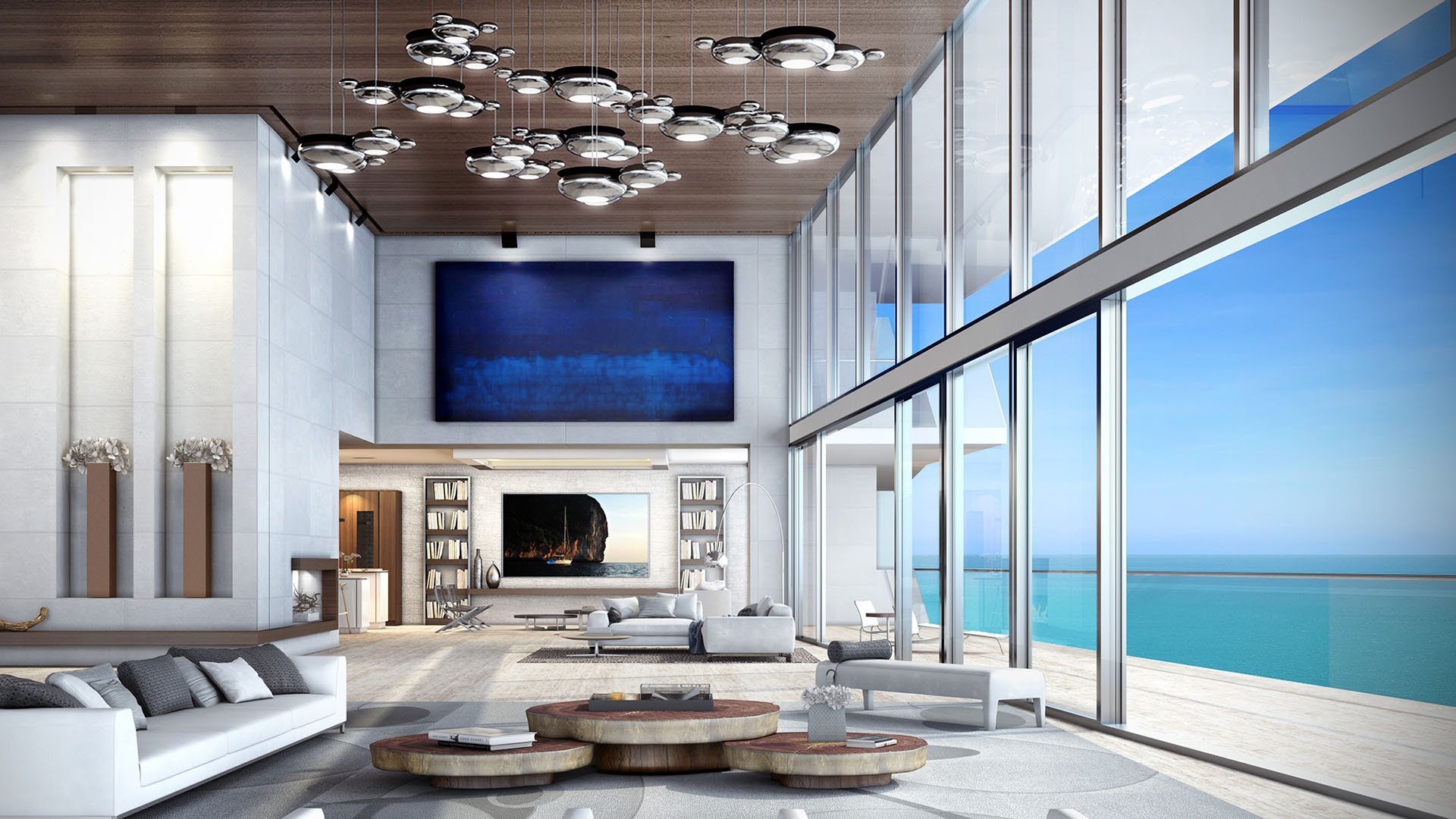
Jade Signature approaches the same question differently. Its strength is less about a hospitality overlay and more about how architecture supports the host. The buyer should study whether kitchens, living areas, terraces, and guest circulation create a natural sequence. The ideal design-led residence allows guests to move gracefully through social spaces while bedroom areas remain protected. For owners who prefer to keep entertaining mostly within the private home, that planning discipline can be as valuable as external service support.
The best way to evaluate entertaining flow is to imagine an actual evening. Guests arrive. Some gather near the view. Others move to the dining area. Children or extended family may drift toward quieter rooms. Staff or caterers may need to move without crossing the social center of the home too visibly. The owner should feel composed, not operational.
Turnberry Ocean Club’s hospitality-led positioning gives it a strong argument for owners who want the building to absorb some of that complexity. When entertaining extends beyond the private residence, amenity programming and service infrastructure can become part of the event itself. The owner is not only buying square footage in the sky, but a supporting environment for hosting.
At Jade Signature, the question is whether the residence itself can do more of the work. A design-led tower asks buyers to pay attention to the transition between living rooms, dining areas, terraces, and bedrooms. Does the plan allow a party to feel open without making the private quarters feel exposed? Does the terrace function as a true extension of the social area? Are quiet spaces easy to preserve without making guests feel restricted?
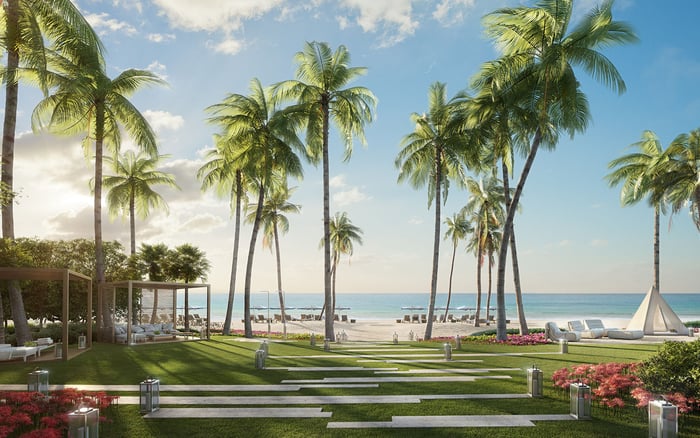
For buyers who prioritize terrace living and flow-through units, this is where the comparison becomes personal. A residence that opens elegantly to the outside can feel relaxed during the day and cinematic at night. But flow only works when openness is balanced by separation.
Acoustic privacy is often under-discussed in luxury condo searches, yet it can shape satisfaction more than visible finishes. In a home used by multiple generations, or by owners who host frequently, sound is a daily ownership issue. The question is not only whether the building feels quiet. It is whether the residence supports simultaneous uses without friction.
In practical terms, buyers should think about acoustic separation in three zones. First is the separation between entertaining spaces and bedroom areas. Second is the relationship between the residence and shared building areas. Third is the sound behavior of service routes, elevator arrivals, guest movement, and terrace use.
Turnberry Ocean Club’s model should be evaluated for how discreetly hospitality can function. A service-oriented building can be a major advantage, but the experience depends on how invisible the support feels. The best version allows dinners, deliveries, staffing, and guest movement to happen without intruding on the calm of the home.
At Jade Signature, acoustic comfort is tied to spatial planning. If the design creates a graceful hierarchy between social and private rooms, owners may find it easier to host without surrendering quiet. For buyers with children, visiting parents, overnight guests, or different daily schedules, that separation can matter more than a dramatic first impression.
Turnberry Ocean Club is likely to resonate with owners who value a club-like, hospitality-forward ownership rhythm. These buyers may entertain often, appreciate food-and-beverage programming, and want the building to support the logistics of hosting. For them, luxury is service that anticipates the evening before it begins.
Jade Signature is likely to appeal to buyers who place architecture and interior experience at the center of ownership. These owners may want the residence itself to feel resolved, with a natural progression from arrival to social space to terrace to quiet private zones. For them, luxury is the absence of awkward transitions.
Neither approach is universally superior. The stronger choice depends on how the owner lives. A buyer who hosts formal dinners may weigh private dining access and service movement heavily. A buyer who values calm family weekends may focus on bedroom separation, terrace adjacency, and sound control. The most sophisticated Sunny Isles Beach decision is not about choosing the louder amenity story. It is about selecting the building whose operating logic matches the owner’s private life.
In the ultra-premium Sunny Isles Beach market, differentiation is increasingly found in livability details. Turnberry Ocean Club emphasizes a hospitality-led ecosystem, where the building can help stage the ownership experience. Jade Signature emphasizes a design-led residential experience, where flow, architecture, and spatial hierarchy shape how the home functions.
The most revealing walkthrough is not a quick tour of amenities. It is a mental rehearsal of real life: a catered dinner, a family weekend, a late arrival, a quiet bedroom while guests remain outside, a terrace gathering that does not overrun the entire home. For the right buyer, those details define value.
Is Turnberry Ocean Club more hospitality-oriented than Jade Signature? Yes. Turnberry Ocean Club is best framed as a hospitality-led model with emphasis on service infrastructure, amenity programming, and entertaining beyond the residence.
Is Jade Signature more design-led in its ownership experience? Yes. Jade Signature is best evaluated through architectural planning, interior flow, and the balance between social and private spaces.
Which building is better for private dining? Turnberry Ocean Club may appeal more to buyers who want building-supported entertaining, while Jade Signature may suit owners who prefer hosting within a highly planned residence.
Why does entertaining flow matter in a luxury condo? Flow determines how guests move, how terraces are used, and whether private rooms remain protected during social events.
Should acoustic separation affect a purchase decision? Yes. Quiet separation can materially influence daily comfort, especially for multigenerational households and frequent hosts.
What should buyers ask at Turnberry Ocean Club? Buyers should ask how private dining, catering logistics, guest movement, and service access function during real entertaining scenarios.
What should buyers ask at Jade Signature? Buyers should study how the plan connects living areas, terraces, dining spaces, and bedroom zones without compromising privacy.
Are amenities the main difference between the two towers? Not entirely. At this level, the more important distinction is how amenities, design, and service shape day-to-day ownership.
Which property is better for multigenerational use? The answer depends on layout and lifestyle. Buyers should prioritize quiet bedroom zones, discreet circulation, and flexible social areas.
How should a buyer compare these residences in person? Walk through each home as if hosting a dinner, receiving family, and preserving quiet all at once.
If you'd like a private walkthrough and a curated shortlist, connect with MILLION.
If branded residences are on your mind — as a home or as an allocation — we would be glad to share what we are seeing, privately.
Begin a quiet conversation