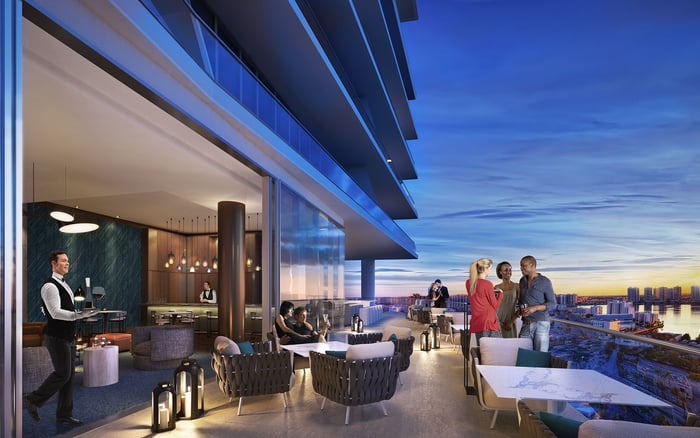
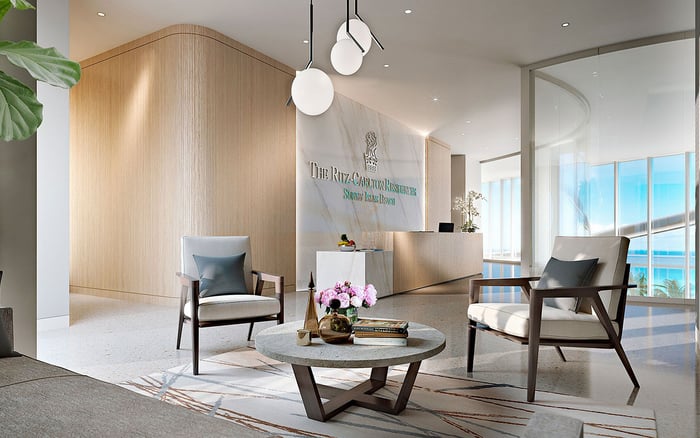
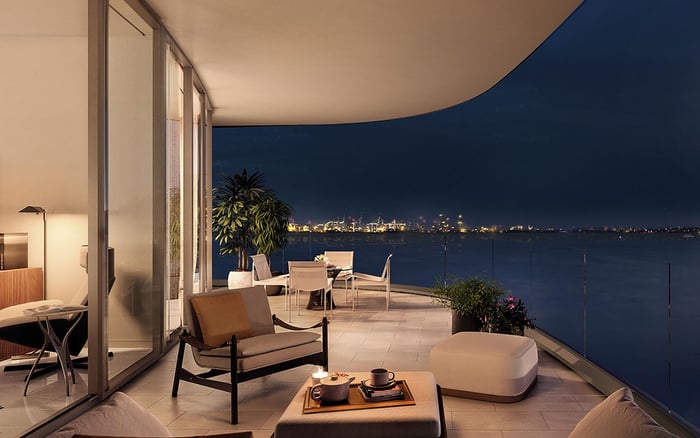
A new class of South Florida residences is redefining luxury condominium life by importing the intimacy, service standards, and social programming of private clubs into full-time high-rise living. From museum-linked access in Miami to hospitality-led service in Miami Beach and fashion-backed branding in Sunny Isles, these five residences stand out for turning daily ownership into a curated lifestyle.
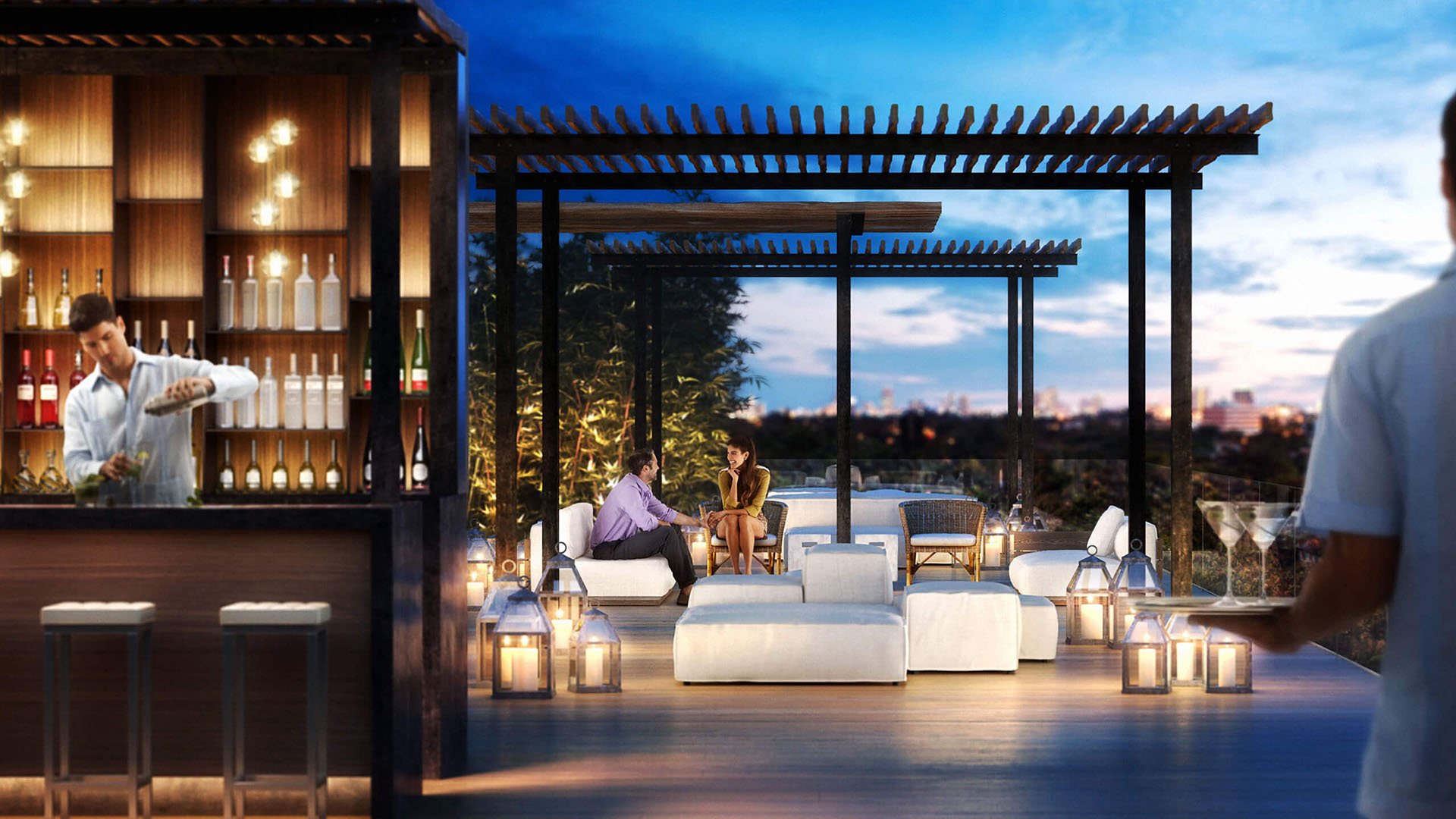
The most compelling luxury residences in South Florida no longer compete on finishes alone. The sharper distinction is experiential: resident lounges that feel truly member-driven, concierge teams that operate more like private club directors, and wellness programming that functions as part of daily life rather than as a decorative amenity package.
For discerning buyers, that shift matters because it changes what ownership feels like on an ordinary Tuesday, not just on arrival day. In this tier of the market, exclusivity is increasingly expressed through controlled access, curated service, private dining, entertainment spaces, and resident programming that creates a social ecosystem within the building itself.
Across Miami, Bal Harbour, Sunny Isles, Wynwood, and Miami Beach, this model has become one of the clearest indicators of premium positioning. Buyers comparing established icons with newer entrants such as Rivage Bal Harbour or hospitality-driven concepts like The Ritz-Carlton Residences® Sunny Isles are often evaluating the same central question: which buildings deliver the most seamless blend of privacy, service, and everyday livability?
1. Pérez Art Museum Miami Residences (PAMM Residences) - Wynwood, Miami
PAMM Residences takes the top position because its identity is not built solely around branded interiors or hotel-adjacent service. Instead, it stands apart through a museum-linked living model that pairs residential ownership with access to Pérez Art Museum Miami programming and membership benefits, giving the project a cultural dimension that is unusually difficult to replicate.
That matters in a competitive field because cultural access introduces a more intellectual form of exclusivity. Rather than relying only on lounge space and hospitality rituals, PAMM Residences ties daily life to events, programming, and a broader sense of participation in Miami’s cultural fabric. In Wynwood, that makes the proposition feel especially aligned with buyers who value both privacy and relevance.
2. Arte by Antonio Citterio - Miami
Arte by Antonio Citterio ranks second for translating architectural prestige into a highly choreographed residential experience. It is positioned as a luxury high-rise with concierge-driven services and private-club-style amenities, underscoring how deeply service has become part of the architecture of luxury itself.
Its appeal is grounded in restraint. Buyers drawn to this category often want a building that feels composed and tightly managed rather than overtly theatrical. Arte’s profile speaks to that sensibility: a residence where concierge culture, discretion, and amenity design work together to create a distinctly club-like cadence.
3. Residences by Armani/Casa - Sunny Isles Beach, Miami
Residences by Armani/Casa places third by showing how fashion-backed branding can extend beyond aesthetics into lifestyle identity. The project is centered on Armani/Casa interiors and hospitality-oriented services, creating a residential environment where visual cohesion and service culture reinforce one another.
In Sunny Isles Beach, where buyers have no shortage of branded luxury options, that consistency matters. A fashion house can confer recognition, but the greater value lies in the sense of complete world-building. For buyers comparing the area’s upper tier, including nearby Armani Casa Sunny Isles Beach and Bentley Residences Sunny Isles, the question is often which brand most convincingly turns identity into daily living.
4. ONE Bal Harbour - Bal Harbour, Miami Beach
ONE Bal Harbour earns the fourth position through its oceanfront setting and amenity mix, which includes wellness, entertainment, and social spaces. It reflects one of the strongest patterns in the ultra-luxury market: residences using private dining, wine storage, and entertainment rooms to recreate the social infrastructure of a standalone club within a condominium setting.
Bal Harbour remains one of the region’s most powerful expressions of discreet prestige, and waterfront positioning continues to amplify that appeal. For buyers who prioritize resort-like daily rhythms without sacrificing privacy, the neighborhood’s current and upcoming profile, including Oceana Bal Harbour, reinforces why this enclave remains central to the conversation.
5. Ritz-Carlton Residences, Miami Beach - Miami Beach
Ritz-Carlton Residences, Miami Beach rounds out the list because hotel-style service remains one of the most enduring formulas for club-quality living. The residence is built around concierge-led hospitality and wellness amenities, extending service standards associated with luxury hospitality into private ownership.
That model continues to resonate with buyers who want highly responsive service without sacrificing the autonomy of a private home. In Miami Beach, where expectations around staffing, ease, and presentation are especially high, the hospitality-led approach remains a compelling benchmark alongside projects such as The Ritz-Carlton Residences® Miami Beach.
Not every luxury high-rise with a spa and lounge qualifies as true club-style living. The difference is operational. In the strongest buildings, concierge teams manage reservations, lifestyle requests, and resident experiences with the consistency of a private members' organization. The amenity floor is not simply decorative; it is programmed, serviced, and integrated into everyday use.
Wellness is equally central. Treatment rooms, spas, and fitness spaces now function as core membership-style amenities rather than secondary perks. Buyers in Brickell, Miami Beach, and other top-tier districts increasingly expect health, recovery, and convenience to be embedded into the residential environment. That expectation helps explain the market interest surrounding service-forward developments such as St. Regis® Residences Brickell.
The best examples also understand social architecture. Private dining rooms, entertainment lounges, and curated events foster familiarity among residents while preserving discretion. Done well, the building feels less like vertical housing and more like a finely managed private domain.
Club-style residences tend to command attention because they bundle several forms of value into one address: controlled access, resident-only programming, hospitality-grade service, and a high level of convenience. For primary residents, that can translate into a more seamless weekly routine. For second-home buyers, it can mean immediate immersion in a lifestyle that is already staffed and organized.
There is also a signaling effect. In this category, exclusivity comes not only from architecture or views, but from who can access the space, how the experience is managed, and whether ownership conveys participation in a defined world. Cultural partnerships, fashion-backed branding, and hotel affiliations each offer a different route to that result.
For South Florida, the geography is especially favorable. Waterfront and oceanfront settings reinforce the sense of retreat, while neighborhoods such as Wynwood, Bal Harbour, Sunny Isles, and Miami Beach provide distinct versions of prestige. Buyers are not simply choosing a home; they are choosing the style of exclusivity they want to inhabit every day.
What does private-club-style living mean in a residential tower? It refers to residences that blend service, lounges, wellness areas, dining spaces, and resident programming into daily condominium life.
Why is PAMM Residences ranked first? Its museum-linked model adds cultural programming and membership benefits, giving ownership a distinctive dimension beyond standard amenities.
Are hotel-branded residences different from other luxury condos? Yes. They typically extend hospitality-led service standards into private homes, often through concierge and wellness offerings.
Why does wellness matter so much in this category? Buyers increasingly expect spas, treatment rooms, and fitness spaces to function as essential lifestyle infrastructure, not optional extras.
What makes Bal Harbour attractive for this kind of residence? Its waterfront setting, privacy, and amenity-rich luxury profile make it one of South Florida’s clearest expressions of discreet exclusivity.
How does branding influence buyer appeal? Strong brands can create recognition and cohesion, especially when design language and service culture feel fully integrated.
Is Sunny Isles still competitive for branded residences? Very much so. It remains one of the most active environments for ultra-luxury, amenity-heavy, brand-backed towers.
Do these residences appeal more to primary or second-home buyers? Both. Primary owners value operational ease, while second-home buyers often prioritize service, security, and ready-made lifestyle.
What role does concierge service play? In the best buildings, concierge teams act like club operators, coordinating reservations, experiences, and everyday resident needs.
Which South Florida areas dominate this niche? Miami, Wynwood, Miami Beach, Bal Harbour, and Sunny Isles remain among the most important submarkets for this style of luxury living.
For a discreet conversation and a curated building-by-building shortlist, connect with MILLION Luxury.
If branded residences are on your mind — as a home or as an allocation — we would be glad to share what we are seeing, privately.
Begin a quiet conversation