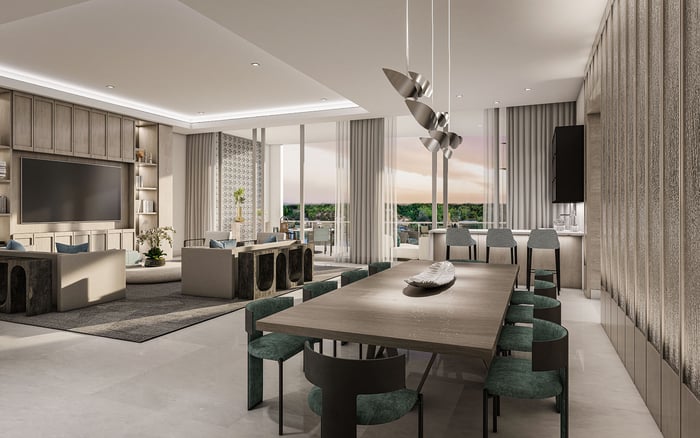
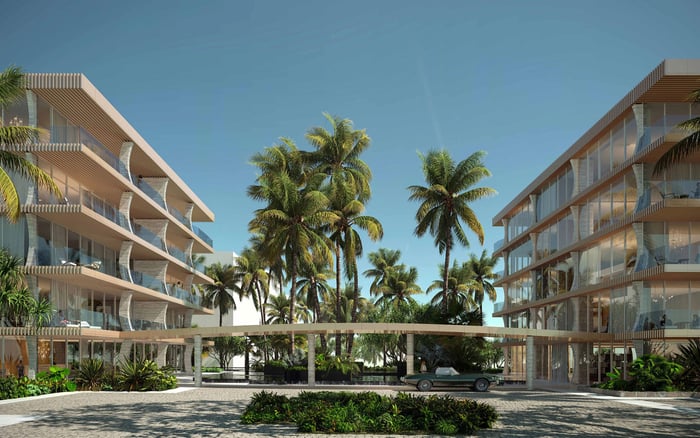
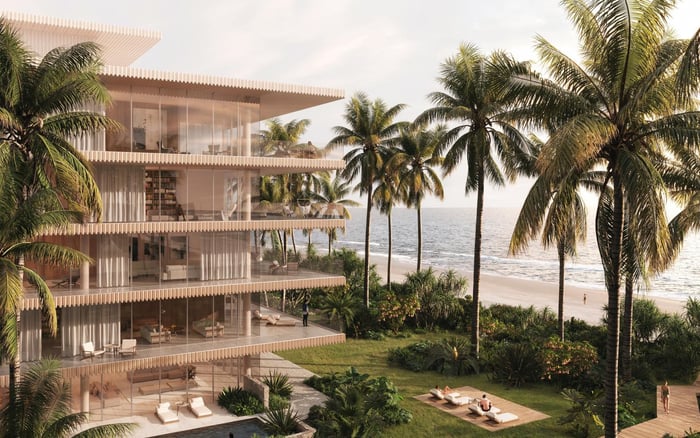
A privacy-first Palm Beach residence is defined less by spectacle than by controlled arrival, limited shared circulation and discreet daily operations. This guide ranks five residence profiles and outlines the questions buyers should resolve before committing.
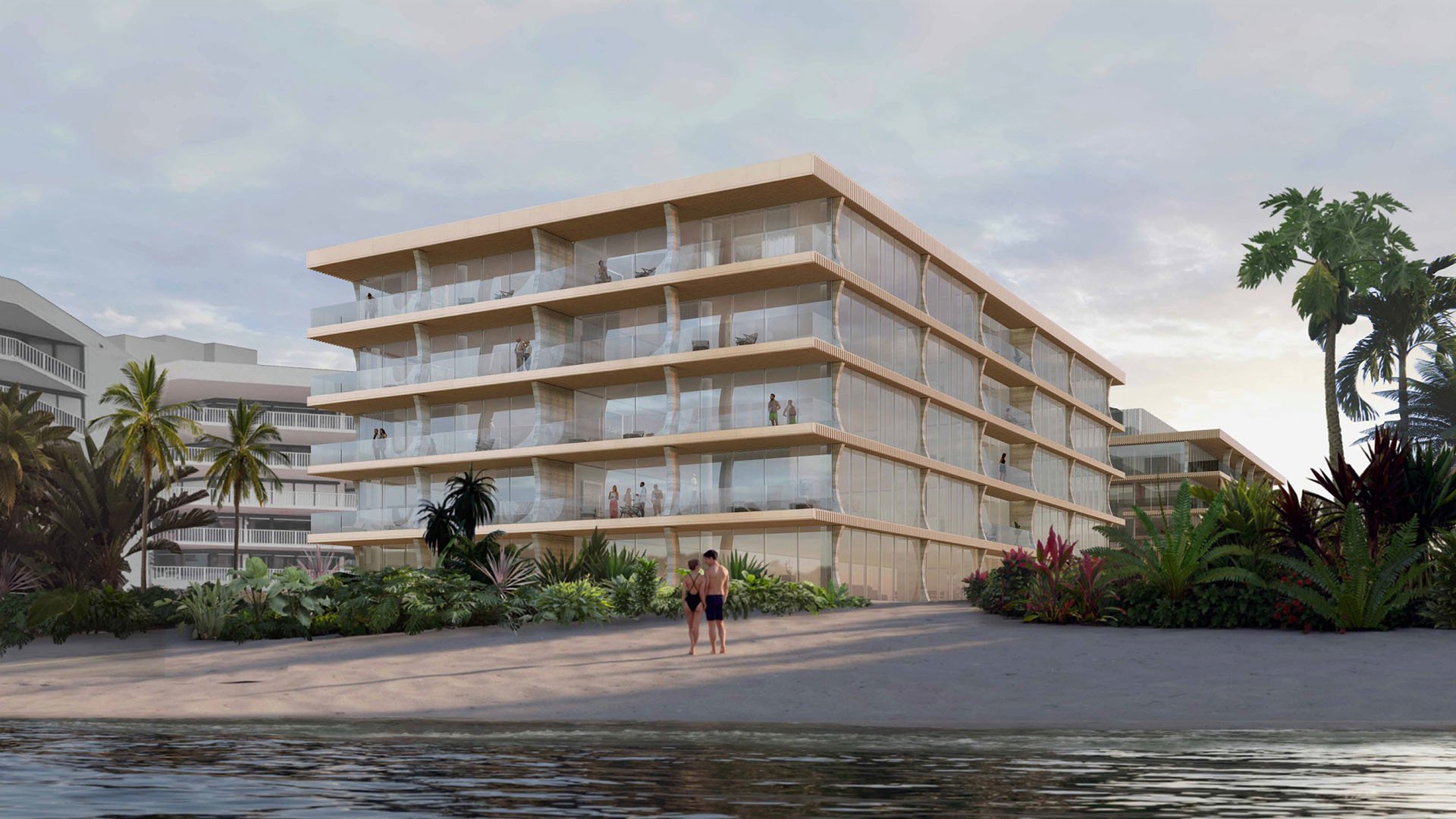
For a privacy-focused buyer, luxury is often defined by what does not intrude: crowded corridors, visible service activity, frequent elevator stops and unpredictable guest traffic. In Palm Beach, the most compelling residence is not necessarily the most lavishly presented. It is the one that enables a calm arrival, controlled circulation and a sense of separation throughout the day.
Low-density living should be assessed at several levels. Total residence count matters, but so do residences per floor, elevator allocation, guest access and the relationship between residential and service routes. A boutique property can still feel busy if its shared spaces are poorly organized, while a larger building may operate discreetly when access is carefully managed.
The following ranking identifies the five residence profiles that merit priority in a privacy-led search. Each should be evaluated through documents, plans and direct observation rather than inferred from branding alone.
1. Palm Beach Residences - market starting point
Palm Beach Residences
offers a natural starting point for buyers considering the area. In a privacy-led search, its value lies in opening a precise conversation about inventory, access and residential operations.
Before treating any offering as low density, request the current residence count, floor plan, elevator arrangement and guest-entry protocol. Confirm pricing, location and privacy specifications directly for the residence under consideration.
2. Limited-residence buildings - fewer households overall
A building with a genuinely limited residence count may provide a quieter shared experience, particularly when common spaces are proportioned to the number of households. The decisive figure is the current total, including combined residences or retained inventory that could affect occupancy.
Ask how many homes share the lobby, amenities, elevators and staff. A modest headline count matters only when the operational structure preserves separation.
3. Limited-units-per-floor residences - quieter vertical circulation
Units per floor can be more revealing than the building total. Fewer front doors on each level may reduce corridor traffic, elevator stops and incidental encounters near the residence.
Review the complete floor plate, not merely the interior plan. Confirm the location of service doors, refuse rooms, stairs and mechanical areas, as each can affect acoustic and visual privacy.
4. Private-arrival residences - controlled movement from curb to home
A private elevator, keyed landing or dedicated entry sequence can create a composed arrival. Yet the label alone is insufficient. Buyers should understand where guests register, how deliveries move and whether staff or contractors share any portion of the route.
The strongest configuration protects the entire journey from vehicle arrival to residence entry. It also provides a separate, well-managed service path without compromising convenience.
5. Security-led residences - discretion through operations
Privacy ultimately depends as much on people and protocols as on architecture. A security-led residence should have clear procedures for visitors, vendors, deliveries and after-hours access, supported by staffing appropriate to the property.
Request practical explanations rather than broad assurances. Concierge responsibilities, camera coverage, credential control and emergency access should be understood before purchase, while sensitive operational details remain appropriately confidential.
A buyer’s digital review may extend from Palm Beach into West Palm Beach, helping to organize questions before private appointments. Forté on Flagler West Palm Beach, Mr. C Residences West Palm Beach and The Ritz-Carlton Residences® West Palm Beach can serve as useful orientation points for direct inquiries.
The objective is not to infer privacy from a project name or polished imagery. It is to establish a consistent file for each property: total residences, residences per floor, entry sequence, elevator use, service circulation, security operations and current pricing. Palm Beach Residences can be assessed within the same disciplined framework.
For second-home ownership, operating rhythm deserves particular attention. Ask how the property handles an owner’s extended absence, authorized guests, household staff, deliveries and pre-arrival preparation. Waterfront positioning may be desirable, but it should never substitute for clear access control and well-defined management procedures.
Begin before entering the residence. Observe the curb, garage, lobby and elevator sequence at a realistic time of day. Note whether residents, guests, deliveries and service teams converge in the same spaces. The best arrival feels intuitive without feeling exposed.
Inside, listen near the entry, bedrooms and shared walls. Stand on terraces and at principal windows to assess sightlines. Then consider the floor plan in relation to neighboring homes, elevators and service spaces. Privacy is spatial, acoustic and operational.
Treat marketing categories with care. Terms such as boutique may describe a market position, but the purchase decision should rest on verified building details. Request written answers where possible, and have appropriate advisers review governing documents, budgets, rules and purchase terms.
What does low-density living mean in a luxury residence? It generally means fewer households sharing floors, elevators, amenities and arrival spaces, but buyers should verify the actual figures.
Is total unit count the best measure of privacy? No. Units per floor, elevator allocation, guest traffic and service circulation can be equally important.
Does a private elevator guarantee discretion? No. Its value depends on access controls, landing design and how guests, staff and deliveries are managed.
What should I ask about building security? Ask about visitor authorization, vendor access, credentials, staffing, camera coverage and emergency procedures.
Why should buyers review the complete floor plate? It reveals neighboring entries, shared walls, service rooms, stairs and elevator locations that may affect privacy.
How can I evaluate privacy during a tour? Follow the complete arrival route, observe circulation, test sightlines and listen for sound near shared boundaries.
Are amenities compatible with low-density living? They can be, provided capacity, access and operating practices are appropriate for the number of residents.
What matters for owners who are away frequently? Clear procedures for authorized guests, household staff, deliveries, inspections and pre-arrival preparation are essential.
Should privacy representations be confirmed in writing? Yes. Material details should be checked against current plans, documents, rules and direct written responses.
Can price establish whether a residence is private? No. Price does not replace evidence of density, access, circulation, security and day-to-day management.
For a discreet conversation and a curated building-by-building shortlist, connect with MILLION.
If branded residences are on your mind — as a home or as an allocation — we would be glad to share what we are seeing, privately.
Begin a quiet conversation